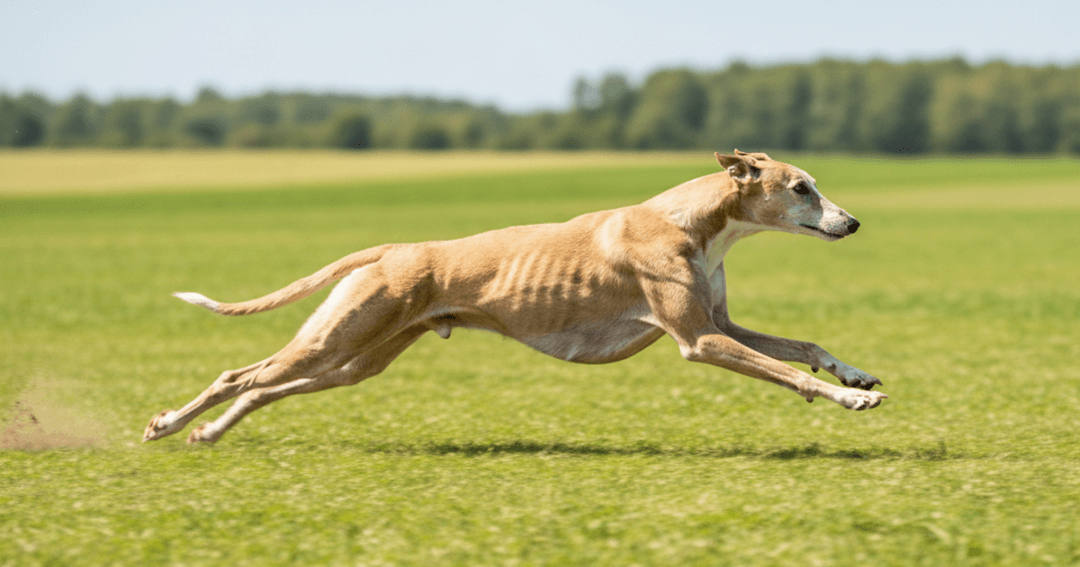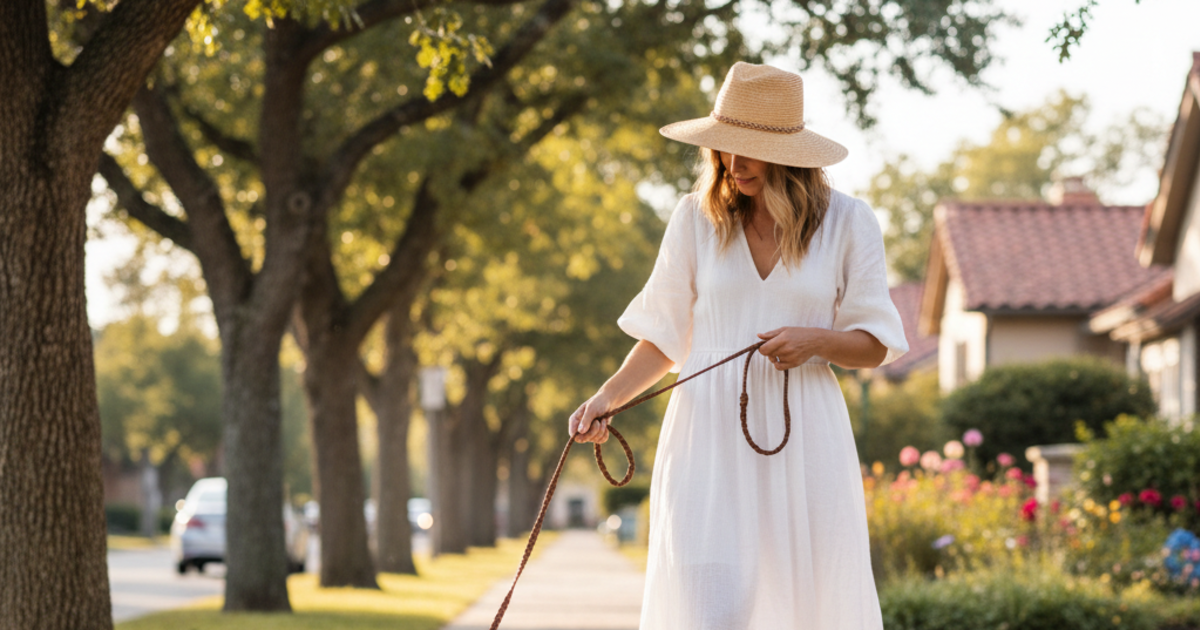
Start leash training a puppy indoors, introduce the collar or harness and leash gradually, reward your puppy for staying beside you with small treats, and stop moving whenever the leash goes tight. Keep sessions short and positive, and build up distance and distractions slowly.
A puppy who yanks the leash is not being stubborn. Pulling is natural, because puppies are curious, excited and walk faster than we do, and because pulling often works: it gets them where they want to go. The fix is to teach your puppy that walking beside you is more rewarding than pulling ahead. This guide covers gear, introducing the leash, a step-by-step loose-leash method, how long puppy walks should be, handling pulling, lunging and biting the leash, safety and how treats fit into your puppy's daily calories. Use the dog walking calculator to plan walks for your dog.
What you need
- A flat collar or a well-fitted harness. Harnesses are often more comfortable for small puppies and protect the neck. A front-clip harness can reduce pulling for some dogs.
- A standard 4-6 foot leash. Avoid retractable leashes during training, because they teach pulling and give little control.
- Small, soft treats. Pea-sized, easy to swallow and highly motivating, such as tiny pieces of cooked chicken or soft training treats.
- A treat pouch so rewards are quick.
- An ID tag and a microchip for safety.
- Poop bags.
Never use choke chains, prong collars or shock collars on a puppy. They can cause pain, fear and injury, and they are unnecessary.
Step 1: Introduce the collar or harness
- Let your puppy sniff the collar or harness, then give a treat.
- Put it on for a few minutes during play or meals, then take it off.
- Gradually increase the time so your puppy forgets it is there.
- Check the fit: you should be able to slide two fingers under the collar, and the harness should not rub or restrict movement.
Step 2: Introduce the leash indoors
- Clip the leash on and let your puppy drag it around while you supervise, rewarding calm behavior.
- Pick up the leash and follow your puppy for a few steps without pulling.
- Call your puppy and reward when it comes to you.
- Practice for just a few minutes, several times a day.
If your puppy bites or chews the leash, redirect to a toy or offer a treat when the leash is dropped. Do not play tug with it.
Step 3: Teach "stay beside me"
- In a quiet room or yard, hold a treat at your side at your puppy's nose level.
- Take a step. When your puppy moves next to you, say "yes" and reward right next to your leg.
- Take two steps, reward again. Gradually increase to five, ten and more steps between rewards.
- Add a cue such as "with me" or "let's go" once your puppy is reliably walking beside you.
- Keep treats coming at your puppy's side, not out in front, to encourage the right position.
Step 4: Teach that a tight leash stops the walk
- When the leash tightens, stop moving. Stand still like a tree.
- Wait for your puppy to look back or step toward you and loosen the leash.
- As soon as the leash slackens, say "yes," reward and move on.
- If your puppy continues to pull, turn and walk the other way, rewarding when it follows you.
- Stay consistent. Letting your puppy pull even sometimes teaches that pulling works.
Step 5: Take it outside
Check with your vet about when your puppy is safe to go out, since vaccinations matter. Until then, practice in your yard, in a car park that is free of other dogs or in a friend's vaccinated-dog-only space, and carry your puppy through high-risk places.
- Start in low-distraction places such as your yard or driveway.
- Reward often at first, every few steps.
- Add distractions slowly, such as quiet streets, then busier areas.
- Let your puppy sniff. Sniffing is mental exercise. Try structured "sniff breaks" followed by "let's go."
- End the session while your puppy is still doing well.
How far can a puppy walk?
A commonly used guideline is about five minutes of structured exercise per month of age, up to twice a day, until growth is finished. This guideline is only a starting point. Free play in a safe yard also counts, and puppies need plenty of sleep. Avoid forced long runs, jumping and repetitive hard exercise on pavement for young puppies, especially large breeds, because growing joints are vulnerable. Ask your vet about your puppy's breed and size.
Worked example
A 12 week (3 month) old puppy weighing 5 kg (11 lb).
- Walk length guideline: 3 months × 5 minutes = about 15 minutes per session, up to twice a day.
- Resting energy: RER = 70 × 5^0.75 = 70 × 3.34 = about 234 kcal.
- Daily calories: 234 × 3.0 (puppy under 4 months) = about 702 kcal.
- Treat budget (10%): about 70 kcal per day, including all treats.
- If a training treat is about 3 kcal, that is roughly 23 treats a day. Count them before meals.
- Reduce mealtime food by the same calories if you use many treats, or use part of the daily kibble as training rewards.
Use the dog calorie calculator for your own puppy's numbers.
Common leash problems and fixes
| Problem | What to try |
|---|---|
| Pulling ahead | Stop when the leash tightens, reward position by your side, change direction |
| Zigzagging | Walk in straight lines, reward when your puppy is beside you |
| Biting the leash | Redirect to a toy, drop the leash and reward calm behavior |
| Freezing or refusing to walk | Go slowly, use treats, stay in familiar areas, never drag the puppy |
| Lunging at dogs or people | Increase distance, reward calm behavior, ask a trainer for help |
| Overexcitement at the start | Wait until your puppy sits calmly before leaving, start with a few easy steps |
Safety tips
- Check the fit of collars and harnesses regularly as your puppy grows.
- Keep the leash loose and avoid jerking.
- Watch the weather. Hot pavement can burn paws and heat can be dangerous.
- Keep your puppy away from unknown dogs until vaccinated.
- Carry water on longer outings.
- Never leave a puppy tied up unattended.
When to get help
Contact a qualified trainer who uses positive methods if your puppy is very fearful, lunges at people or dogs, or does not improve after consistent practice. Fear and reactivity can need individual plans.
When to call your vet
Contact your vet if your puppy limps, resists walking, seems sore, coughs or gags excessively against a collar, has trouble breathing or tires unusually fast. For suspected poisoning from something picked up on a walk, call the ASPCA Animal Poison Control Center at 888-426-4435 or the Pet Poison Helpline at 855-764-7661 (fees may apply).
The bottom line
Leash training works best with patience, short sessions and lots of rewards for staying close. Practice indoors, then outside, and build up slowly. Plan your puppy's walks with the dog walking calculator, and keep treats within the daily calorie budget.
Frequently asked questions
PawCalculator Editorial
We combine veterinary references, published guidelines, and calculator-grade modeling. This article is for education, not a substitute for an exam.
+ Follow on PawTalk