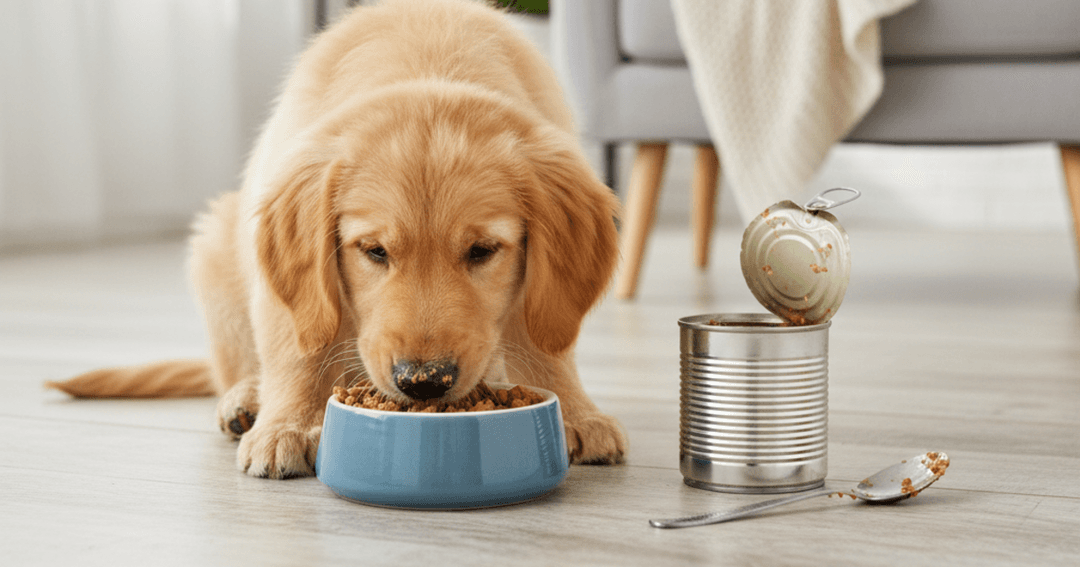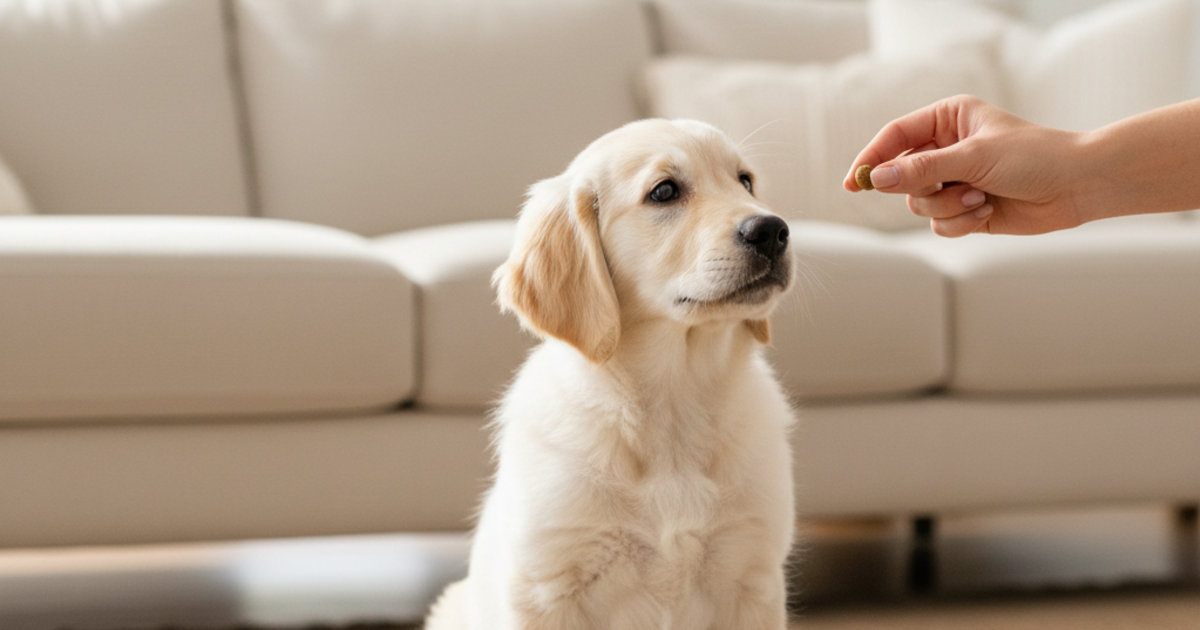
Good puppy training treats are tiny (pea-sized), soft, smelly, low in calories and made for puppies. Keep all treats to no more than about 10% of daily calories, count them as part of the daily food allowance and avoid treats with xylitol, artificial colors, excess salt or hard textures that can chip small teeth or choke.
Training a puppy means rewarding hundreds of small behaviors: sit, come, settle, potty outside. Treats are the most powerful tool for that, but they are also easy to overdo. A handful of commercial treats can equal a whole meal for a small puppy, and an overweight puppy is at risk of joint problems and a shorter life. This guide explains what to look for in a training treat, how many your puppy can safely have, how to calculate the budget, which ingredients to avoid, how to use food from your puppy's own meals, homemade ideas and how to train effectively with fewer calories. To work out your puppy's daily energy needs, use the dog calorie calculator.
What makes a good puppy training treat?
| Feature | Why it matters |
|---|---|
| Tiny size (pea-sized or smaller) | Allows many rewards without many calories, and your puppy can swallow quickly and keep focus |
| Soft and chewy | Quick to eat, easy on baby teeth, no crumbs to slow training |
| Strong smell | Keeps attention in distracting environments |
| Low calorie (ideally under 3-5 kcal per treat) | Prevents weight gain |
| Made for puppies or all life stages | Appropriate nutrition and size |
| Simple ingredient list | Fewer additives, easier to spot allergies |
| Single protein | Helpful if your puppy has a sensitive stomach |
| Good value | Training uses many treats |
How many treats can a puppy have?
The common veterinary guideline is that treats should make up no more than about 10% of daily calories, with the other 90% coming from a complete-and-balanced puppy food. Puppies need balanced nutrition for growth, so too many treats can crowd out their main diet and unbalance it.
Worked example: a treat budget
A 10 week old, 4 kg (8.8 lb) puppy.
- Resting energy: RER = 70 × 4^0.75 = 70 × 2.83 = about 198 kcal.
- Puppy factor of about 3: 198 × 3 = about 594 kcal per day.
- Treat budget at 10%: about 59 kcal per day.
- If each treat is 3 kcal: 59 ÷ 3 = about 19 treats per day.
- If the puppy is in a heavy training day, cut the dinner kibble by the same number of calories so the total stays on target.
- If using kibble as treats: if the kibble is 400 kcal per cup, each piece is about 2-4 kcal, so a few tablespoons covers dozens of rewards.
- Re-do the math every few weeks as your puppy grows.
Use the dog calorie calculator to estimate the daily need and 10% treat allowance.
Commercial treats: what to look for
- "Training treats" or "puppy treats" sized for small mouths.
- Calories per treat listed on the label or website. Many companies list kcal per treat or per piece.
- A named meat or protein as the first ingredient.
- A complete-and-balanced statement is not needed for treats, but they should say "for intermittent or supplemental feeding only."
- No artificial colors, flavors or unnecessary sugars.
- Texture: soft, moist treats are easiest. You can break larger soft treats into small pieces.
- A reputable brand with quality control and a recall-free record.
Ingredients to avoid
- Xylitol, an artificial sweetener extremely toxic to dogs, sometimes found in peanut butter, baked goods and some gum or mints. Always check peanut butter labels.
- Chocolate, cocoa and caffeine
- Grapes, raisins and currants
- Onions, garlic, chives and leeks
- Macadamia nuts
- Excess salt, sugar and artificial preservatives
- Artificial colors and flavors
- Hard, large or brittle chews that can break teeth or choke
- Rawhide and cooked bones, which can splinter or cause blockages
- Raw dough
- Alcohol
If your puppy eats something toxic, call your vet or the ASPCA Animal Poison Control Center at 888-426-4435, or the Pet Poison Helpline at 855-764-7661 (fees may apply).
Healthy food-based treat ideas
Small amounts of plain, safe human foods can make excellent, low-calorie treats. Cut into pea-sized pieces.
| Food | Notes |
|---|---|
| Plain cooked chicken or turkey (no skin, bones or seasoning) | High-value, high-protein |
| Small pieces of cooked lean beef | High-value, keep portions tiny |
| Plain cooked egg | Protein-rich |
| Carrot pieces | Low calorie, crunchy, good for teething when chilled |
| Green beans | Low calorie |
| Cucumber slices | Very low calorie and hydrating |
| Apple slices (no seeds or core) | Small amounts, natural sweetness |
| Blueberries | Small, low-calorie |
| Plain cooked sweet potato | Small pieces |
| Cheese (small bits, low-fat) | High-value, but fatty and can upset stomachs, use sparingly |
| Plain freeze-dried meat | Lightweight and smelly |
Introduce new foods one at a time and watch for tummy upset.
Use your puppy's own kibble
The simplest, cheapest, calorie-neutral approach is to use part of your puppy's daily kibble ration as training rewards. Measure the day's food, set aside a portion for training and feed the rest in meals. This prevents overfeeding and keeps nutrition balanced. For distracting environments, mix kibble with a few higher-value treats.
Homemade puppy training treats
Homemade treats can be economical and ingredient-controlled, but keep them simple and small.
- Baked chicken or liver bits: bake thin strips at a low temperature until dry, then cut small.
- Frozen puree cubes: plain pumpkin or banana puree frozen into small cubes for teething puppies.
- Mini oat and pumpkin bites: simple oat flour, plain pumpkin and egg, baked and cut small.
- Store carefully: refrigerate or freeze, and use within a few days to avoid spoilage.
Avoid any recipe with xylitol, onion, garlic, chocolate, raisins or heavy salt.
Tips for training with fewer calories
- Cut treats into tiny pieces, smaller than a pea for small breeds.
- Reduce meal portions on heavy training days.
- Mix rewards: use praise, play, toys and affection alongside treats.
- Train before meals, when your puppy is hungry and motivated.
- Use higher-value treats only for difficult tasks, such as recall around distractions.
- Fade treats gradually as behaviors become reliable, moving to intermittent rewards.
- Keep sessions short, 2-5 minutes, a few times per day.
- Weigh your puppy regularly and check body condition.
Treats for specific puppies
Toy and small breeds: use very tiny pieces, since calories add up quickly.
Large-breed puppies: avoid overfeeding to support steady bone growth, and keep treats low-calorie.
Sensitive stomachs: choose single-protein treats and introduce one at a time.
Allergic puppies: use treats with the same protein as your puppy's food, or ask your vet about hypoallergenic options.
Teething puppies: frozen carrots, chilled washcloths or puppy-safe teething treats can soothe gums. Always supervise.
Dental chews and long-lasting chews
Chews can occupy teething puppies, but choose carefully.
- Pick the right size so your puppy cannot swallow it whole.
- Avoid rawhide and hard bones, antlers or hooves, which can crack teeth.
- Supervise and take away small remaining pieces.
- Count calories, because many chews are calorie-dense.
Common mistakes
- Giving treats without counting them
- Using adult treats that are too large or hard
- Choosing treats with xylitol or harmful additives
- Feeding treats from multiple family members without coordination
- Over-relying on treats instead of praise and play
- Feeding treats right before meals, which reduces appetite
- Ignoring weight changes
When to call your vet
Call your vet if your puppy has persistent vomiting, diarrhea, itching or ear infections after trying new treats, if it is gaining weight too fast or if it ate something toxic. Ask your vet about the ideal weight and growth rate for your puppy's breed.
The bottom line
The best puppy training treats are tiny, soft, low-calorie and counted toward no more than 10% of daily calories. Use part of your puppy's kibble, add safe human foods in small pieces and avoid toxic ingredients like xylitol. Work out the treat budget with the dog calorie calculator.
Frequently asked questions
PawCalculator Editorial
We combine veterinary references, published guidelines, and calculator-grade modeling. This article is for education, not a substitute for an exam.
+ Follow on PawTalk