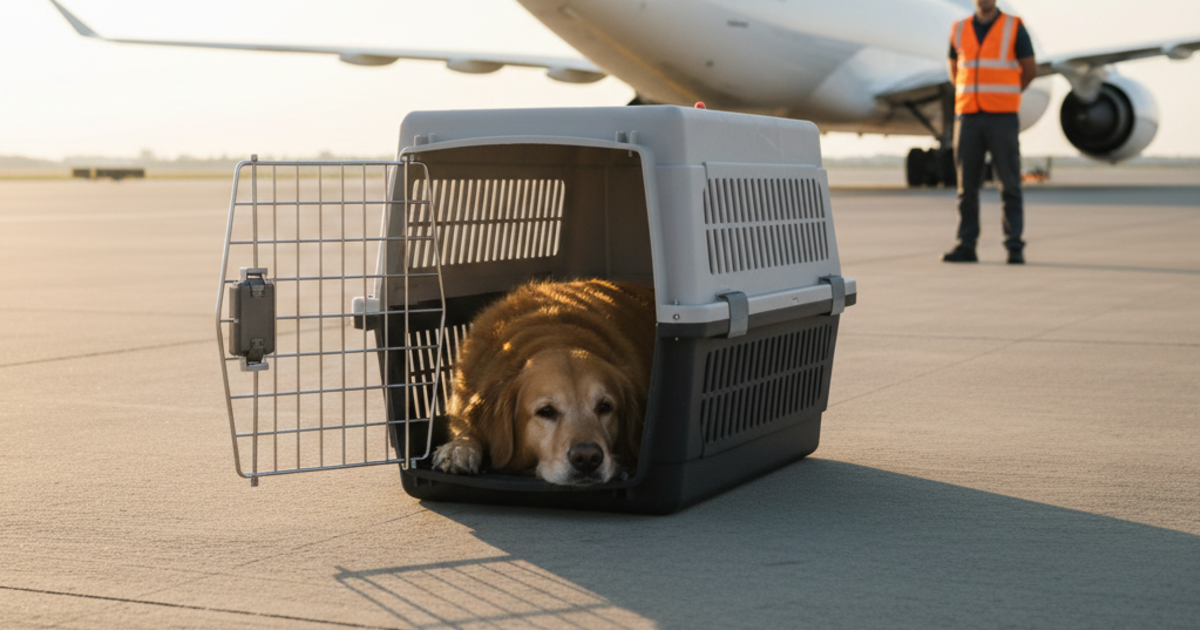
The myth: shipping a pet is basically shipping a box
Pet transport gets treated like a shipping-cost question — "how much to send my dog from A to B" — but the method you choose changes the price, the paperwork, and the risk profile in ways a flat shipping quote doesn't capture. Airline cargo, in-cabin flying, and professional ground transport are three genuinely different services with different rules, and picking the cheapest one without checking whether your pet actually qualifies for it is how owners end up with a canceled booking days before a move.
The three real options, and what actually drives the cost
In-cabin flying. The cheapest option when it's available, because the airline is charging a pet fee rather than a freight rate. The catch is strict size and weight limits — the pet plus carrier generally has to fit under the seat, which rules this out for most dogs larger than a small breed.
Airline cargo. Priced more like freight — driven by crate size and weight, route, and season, since temperature restrictions can push a pet's booking to a different time of year entirely. Airlines govern cargo pet shipments under IATA Live Animals Regulations, which set crate construction and ventilation standards. Many major US airlines also maintain breed embargoes for brachycephalic (snub-nosed) breeds — French Bulldogs, Pugs, Boston Terriers, and similar — in cargo, due to their documented elevated risk of respiratory distress at altitude and under stress.
Professional ground transport. Typically the most expensive per mile for long distances, but it avoids cargo-hold restrictions entirely and is often the only realistic option for brachycephalic breeds, elderly pets, or pets with health conditions that make flying cargo inadvisable. Cost is driven mainly by distance and whether the pet needs an exclusive (non-shared) vehicle.
| Method | Best for | What drives the cost |
|---|---|---|
| In-cabin flying | Small pets that fit under the seat | Airline pet fee (flat, route-independent) |
| Airline cargo | Medium-to-large healthy pets, non-restricted breeds | Crate size/weight, route, season |
| Ground transport | Brachycephalic breeds, senior pets, long distances with health concerns | Distance, shared vs. exclusive vehicle |
The paperwork that catches people off guard
Interstate and international pet travel in the US generally requires a health certificate issued by a USDA-accredited veterinarian within a specific window before travel (commonly 10 days, though the exact window depends on the destination and carrier), along with proof of current vaccinations. International travel adds requirements that vary significantly by destination country — from straightforward paperwork to lengthy quarantine periods — and these requirements should be confirmed directly with the destination country's authority well before booking, since rules change and vary widely.
Common mistakes people make
Booking cargo travel without checking seasonal embargoes. Most airlines restrict cargo pet shipments during extreme heat or cold, which can shift a planned move by weeks if booked too close to the date.
Assuming any small dog qualifies for in-cabin flying. Carrier dimensions and total weight limits (pet plus carrier) vary by airline, and being slightly over the limit means the booking gets rejected, not just charged more.
Not accounting for breed restrictions. Brachycephalic breeds are frequently barred from cargo entirely regardless of size, which owners of French Bulldogs and similar breeds often discover only when the booking is declined.
Booking ground transport too close to the move date. Professional pet transport companies often need weeks of lead time, especially for cross-country routes, and last-minute bookings can cost significantly more or simply be unavailable.
Skipping the health certificate timeline. A health certificate issued too early relative to the actual travel date can be rejected at check-in, particularly for international travel with strict windows.
Recommended tools
- Pet Transport / Shipping Cost Calculator — compare estimated costs across cargo, in-cabin, and ground transport
- Pet Travel Estimator — general cost and logistics planning for traveling with a pet
- Vet Cost Estimator — budget for the health certificate and pre-travel vet visit
- Pet Insurance Calculator — check whether travel-related incidents are covered under your plan
- Adoption Cost Calculator — useful if you're relocating a newly adopted pet and budgeting the full first-year picture
FAQs
What's the cheapest way to ship a pet? In-cabin flying is typically the cheapest option when your pet is small enough to qualify, since it's priced as an airline pet fee rather than a freight or ground-transport rate.
Can all dogs fly in cargo? No — many airlines restrict or fully embargo brachycephalic (snub-nosed) breeds from cargo due to documented respiratory risk, and most also impose seasonal temperature restrictions that can block a booking regardless of breed.
Do I need a health certificate to ship my pet? Yes, for interstate and international travel a USDA-accredited veterinarian's health certificate is generally required, issued within a specific window before travel that varies by destination.
How far in advance should I book pet transport? Several weeks at minimum for ground transport, and as early as possible for cargo flights given seasonal embargoes — booking close to the date limits your options and can raise the price.
Is professional ground transport safer than flying? For breeds or pets with health conditions that make flying risky, ground transport avoids cargo-hold conditions entirely and is often the recommended option, though it typically costs more for long distances.
What breeds are restricted from airline cargo? Brachycephalic breeds — including French Bulldogs, Pugs, Boston Terriers, and similar short-nosed breeds — face the most common restrictions, though specific embargo lists vary by airline.
The bottom line
The cheapest quote isn't useful if your pet doesn't actually qualify for that method — breed, size, and season rule out options before price ever enters the picture. Check eligibility first, then compare cost across whichever methods remain.
Frequently asked questions
PawCalculator Editorial
We combine veterinary references, published guidelines, and calculator-grade modeling. This article is for education, not a substitute for an exam.
+ Follow on PawTalk