An occasional sneeze in a bright, eating, playful kitten is usually normal, but frequent sneezing, especially with eye or nose discharge, is often an upper respiratory infection caused by viruses such as feline herpesvirus or calicivirus. See a vet the same day if your kitten has trouble breathing, stops eating, has green discharge or is very young or lethargic, because kittens can worsen quickly.
Sneezing is one of the most common reasons new kitten owners call the vet. In many cases the cause is mild, such as dust or a tickle in the nose. In others it is the first sign of a contagious respiratory infection that spreads easily in shelters, litters and multi-cat homes. This guide explains why kittens sneeze, how to tell a harmless sneeze from a problem, the common causes, what to do at home, how vets diagnose and treat it, how to prevent spread and when to seek urgent care. To budget for care, use the vet cost estimator.
Is kitten sneezing normal?
Occasional sneezing is normal, just as in people. Kittens may sneeze after:
- Playing in dust or sniffing litter
- Smelling strong scents, such as perfume or cleaning products
- Waking from a nap or stretching
- Mild irritation from dry air
- Excited or rough play
A single sneeze here and there, with no other symptoms, is usually nothing to worry about. Repeated sneezing, sneezing fits or any other signs deserve attention.
Common causes of frequent sneezing
| Cause | Typical signs | Notes |
|---|---|---|
| Feline herpesvirus (FHV-1) | Sneezing, watery or goopy eyes, nasal discharge | Very common in kittens, can flare with stress |
| Feline calicivirus | Sneezing, nasal discharge, mouth ulcers | Part of the upper respiratory complex |
| Bacterial infections (Bordetella, Chlamydia, Mycoplasma) | Thick discharge, congestion | Often secondary to viruses |
| Irritants and allergens | Sneezing without fever, clear discharge | Dust, smoke, scented litter, sprays |
| Foreign material in the nose | Sudden violent sneezing, pawing at the nose | Grass, litter or plant material |
| Dental or sinus problems | Chronic sneezing, nasal discharge | Less common in kittens |
| Fungal infections | Chronic nasal discharge | Uncommon |
| Congenital issues | Chronic sneezing since birth | Cleft palate or airway abnormalities |
| Post-vaccination reaction | Mild sneezing after intranasal vaccine | Usually brief |
Upper respiratory infections, often called "cat colds" or "cat flu," are by far the most common cause in kittens.
Signs it is an upper respiratory infection
- Frequent sneezing
- Watery or goopy eyes, squinting
- Runny nose with clear, yellow or green discharge
- Congestion, noisy breathing or snoring
- Drooling or mouth ulcers (calicivirus)
- Reduced appetite, since kittens eat by smelling their food
- Lethargy or fever
- Coughing or gagging in some cases
What you can do at home for a mild case
If your kitten is still alert, eating, drinking and breathing normally, you can help while contacting your vet.
- Keep your kitten warm and comfortable in a quiet, draft-free space.
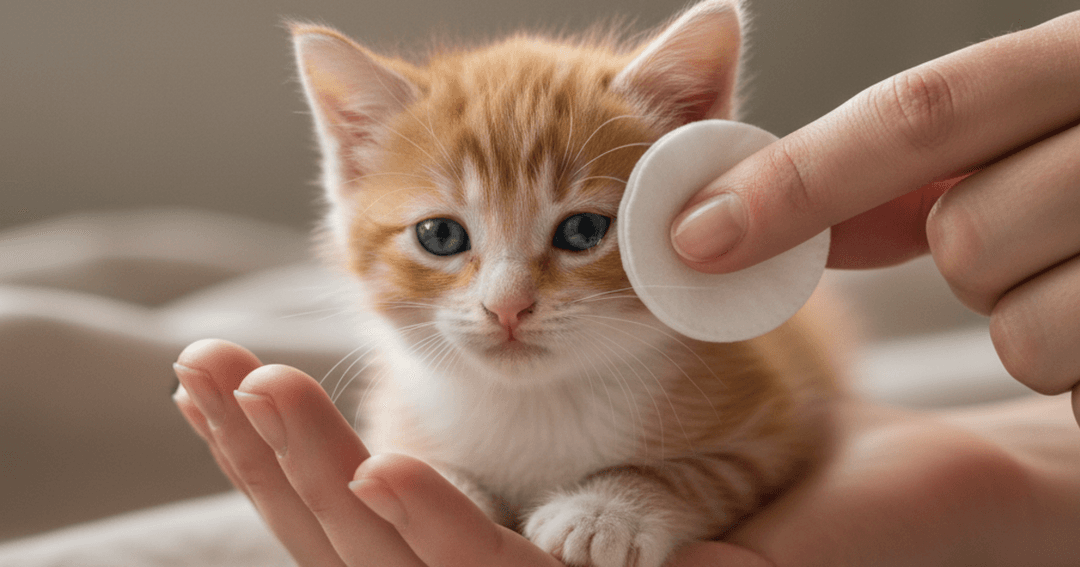
- Wipe eyes and nose gently with a warm damp cloth, using a fresh area each time.
- Use steam. Sit with your kitten in a steamy bathroom for 10-15 minutes, keeping safe and supervised, to loosen congestion.
- Tempt appetite. Warm wet food slightly to boost smell, and offer small, frequent meals.
- Encourage water intake with fresh water or a fountain.
- Isolate from other cats to limit spread.
- Reduce irritants. Avoid scented litter, aerosol sprays, candles and smoke.
- Monitor closely and write down symptoms.
Do not give human cold or flu medications, which can be toxic to cats, including acetaminophen, decongestants and many others.
Worked example: when to wait and when to go
Two 10 week old kittens both sneeze.
- Kitten A sneezes twice after playing in the litter area, is eating, purring and breathing normally. Reasonable to monitor at home for a day or two and mention it at the next vet visit.
- Kitten B sneezes repeatedly, has yellow discharge from both eyes and nose, and ate only half its meal. This kitten needs a vet visit within 24 hours, and sooner if appetite drops further.
- Add up red flags for each kitten. Any breathing difficulty, refusal to eat or lethargy is a same-day concern.
- Plan costs with the vet cost estimator, and remember early care is usually less expensive than treating a severe infection.
When to see a vet
Book a vet visit if your kitten:
- Sneezes repeatedly for more than a day or two
- Has colored (yellow or green) discharge from the nose or eyes
- Has squinting or eye ulcers
- Has reduced appetite
- Seems lethargic or has a fever
- Is under 8 weeks old and sneezing with any other sign
- Has mouth sores or drooling
- Has had no vaccinations
Emergency signs: go to a vet right away
- Open-mouth breathing, wheezing or labored breathing
- Blue or pale gums
- Not eating or drinking for more than a few hours in a young kitten
- Extreme lethargy or collapse
- Heavy green or bloody discharge
- Severe eye problems, such as a closed or cloudy eye
- Fever with weakness
How vets diagnose and treat it
- Physical exam, including eyes, nose, mouth and lungs
- Temperature and hydration check
- PCR swab for herpesvirus, calicivirus and other pathogens, in some cases
- Eye stain to check for ulcers
- X-rays, if pneumonia is suspected
- Treatment: antibiotics if a bacterial infection is suspected, antiviral medication or lysine for herpesvirus in some cases, eye medications, fluids, appetite stimulants and nutritional support
- Hospitalization for severe cases with dehydration or breathing problems
Most mild cases improve within 7-14 days with supportive care, but herpesvirus can become a lifelong, on-and-off condition that flares during stress.
Is it contagious?
Often yes, especially viral infections. Cats spread viruses through sneezes, saliva, shared bowls and contaminated hands and surfaces.
- Isolate sick kittens from other cats.
- Wash hands after handling a sick cat.
- Clean bowls, bedding and toys.
- Keep new kittens separate from resident cats until they have been examined.
- Disinfect surfaces. Calicivirus is hardy, so use a bleach solution (1 part bleach to 32 parts water) on suitable surfaces, rinsed well, or a veterinary-recommended disinfectant.
Cat respiratory viruses do not usually infect people or dogs, although some bacterial causes such as Bordetella can occasionally affect other species.
Prevention
- Vaccinate on schedule. The FVRCP vaccine protects against herpesvirus and calicivirus, though it reduces rather than eliminates disease.
- Reduce stress, since it can trigger flares.
- Provide clean, well-ventilated housing.
- Avoid crowded or high-risk environments until vaccinated.
- Choose unscented, low-dust litter.
- Feed a good-quality kitten diet to support immunity.
- Quarantine new cats for at least a week or two.
Allergy or irritant sneezing
If your kitten sneezes mostly after litter use or when exposed to certain scents, switch to unscented, low-dust litter and avoid sprays, candles and strong cleaners. If sneezing persists, see your vet to rule out infection.
When to call your vet
Call the same day for any kitten with colored discharge, poor appetite, lethargy, breathing changes or sneezing that lasts more than a couple of days. Kittens under 8 weeks should be seen sooner, since they can deteriorate fast. For general guidance, your vet clinic can often triage by phone.
The bottom line
A stray sneeze is normal, but frequent sneezing with discharge, poor appetite or any breathing trouble is a reason to see the vet, since respiratory infections are common in kittens and can worsen quickly. Keep your kitten warm and hydrated, isolate it from other cats and avoid human medications. Plan for care costs with the vet cost estimator.
Frequently asked questions
PawCalculator Editorial
We combine veterinary references, published guidelines, and calculator-grade modeling. This article is for education, not a substitute for an exam.
+ Follow on PawTalk