A kitten eye infection usually shows up as watery or goopy discharge, squinting, redness, swelling or eyes stuck shut. Most cases come from upper respiratory infections such as feline herpesvirus, and young kittens can lose vision if untreated, so see a vet promptly rather than relying on home remedies.
Kittens are especially prone to eye problems. Their immune systems are still developing, they are often raised in busy shelters or litters where viruses spread easily, and a small infection can turn into an ulcer or permanent damage in days. This guide explains the signs of a kitten eye infection, the common causes, what you can safely do at home while arranging care, why popular home remedies can make things worse, how vets diagnose and treat the problem, and how to prevent recurrences. To plan for the cost of a visit, use the vet cost estimator.
Signs of a kitten eye infection
- Discharge that is clear and watery, or yellow, green or brown and thick
- Eyes crusted or stuck shut, especially after sleep
- Squinting or holding an eye closed
- Redness of the white of the eye or the lining of the lids
- Swelling of the eyelids or the tissue around the eye
- A visible third eyelid (a membrane covering part of the eye)
- Pawing or rubbing at the face
- Cloudiness or a bluish or white spot on the surface of the eye
- Sneezing, nasal discharge, low energy or poor appetite, which suggest a wider respiratory infection
Common causes
| Cause | What it looks like | Notes |
|---|---|---|
| Feline herpesvirus (FHV-1) | Watery then goopy eyes, sneezing, sometimes ulcers | Very common in kittens, can recur with stress |
| Feline calicivirus | Eye and nose discharge, mouth ulcers | Often part of a respiratory complex |
| Chlamydia felis or Mycoplasma | Conjunctivitis, often starting in one eye | Bacterial causes need prescription antibiotics |
| Bacterial infection | Thick yellow-green discharge | Often secondary to a virus |
| Foreign material or scratches | One eye affected, squinting | Scratches from play or litter dust |
| Eyelid abnormalities | Chronic tearing from birth | A vet can check for rolled eyelids |
| Blocked tear ducts | Constant watery eye | Common in flat-faced breeds |
| Fleas or parasites on severely ill kittens | General illness with eye signs | Needs full veterinary care |
Why kittens are at higher risk
Many kittens carry herpesvirus from birth or catch it from the mother or littermates, and the virus can flare when they are stressed by weaning, rehoming or vaccination. Shelter and foster environments increase exposure. Severe infections can seal the eyelids shut, damage the cornea and in rare cases lead to blindness, so early treatment matters.
What you can safely do at home while arranging care
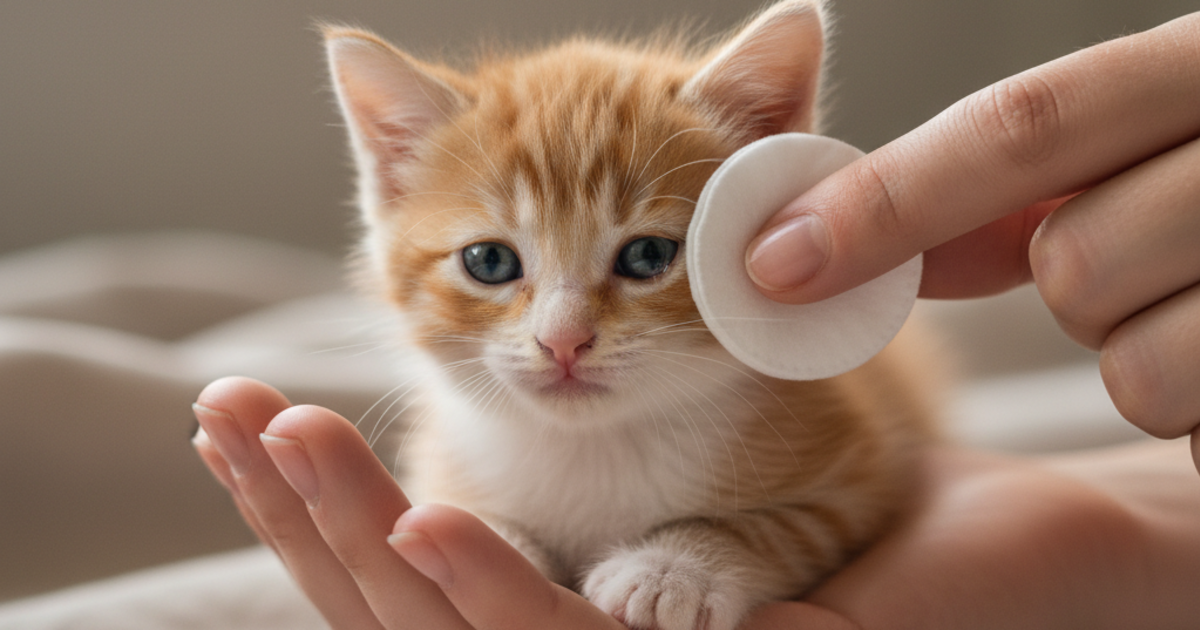
- Wipe gently. Use a clean cotton ball or soft cloth soaked in warm (not hot) plain water. Use a fresh cotton ball for each eye and wipe from the inner corner outward.
- Soften crusts first. Hold a warm damp cloth against the eye for a few seconds before wiping.
- Keep the kitten warm, hydrated and eating. Tempt appetite with warmed wet food if the nose is blocked.
- Isolate from other cats until a vet has examined the kitten, since many causes are contagious.
- Wash your hands between handling cats.
- Take a photo of the eye to show how it looks over time.
Home remedies to avoid
- Human eye drops (including redness relievers): some ingredients can be harmful or mask a problem.
- Leftover antibiotic drops or ointments: the wrong medication can worsen ulcers. Steroid-containing products can be dangerous if the cornea is damaged.
- Tea bags, honey, colloidal silver or essential oils: these can irritate the eye or contain bacteria, and they delay proper treatment.
- Saline made at home: unsterile solutions can introduce bacteria. Plain warm water on a cotton ball for external wiping is the safest option.
- Waiting several days to see if it clears: an untreated corneal ulcer can worsen quickly.
Worked example: how fast should you act?
A 9 week old kitten wakes with one eye half closed and yellow crust.
- Check red flags: squinting, swelling, cloudiness, not eating or sneezing? Any of these means see a vet within 24 hours.
- Clean the eye gently with warm water and a fresh cotton ball.
- Isolate the kitten from other cats at home.
- Call the vet that day. For a kitten this young, same-day or next-day examination is ideal.
- Expect treatment such as antibiotic ointment, lysine or antiviral medication for herpesvirus, and supportive care.
Many mild infections improve within a week of proper treatment, but herpesvirus can come and go through life.
How a vet diagnoses and treats it
- Exam with a bright light and magnification to check the eyelids, third eyelid and cornea.
- Fluorescein stain to detect corneal ulcers, which glow green under blue light.
- Tear production test and sometimes eye pressure checks.
- Swabs or PCR tests to identify herpesvirus, calicivirus, chlamydia or mycoplasma.
- Medication: antibiotic ointments, antiviral drops or oral antivirals for herpesvirus, pain relief for ulcers and sometimes oral antibiotics.
- Supplements: some vets recommend L-lysine for herpesvirus, though evidence is mixed. Ask before giving it.
- E-collar or soft cone to prevent rubbing.
- Fluids and nutritional support for sick kittens.
Costs vary widely depending on diagnostics and medications. The vet cost estimator can help you budget, and early treatment is nearly always cheaper than treating an ulcer or a complication.
Red flags that need a vet today
- Eye held shut or squinting hard
- Cloudy, blue or white spot on the eye
- Swollen or bulging eyelids
- Blood or green-brown pus
- Bulging or visibly sunken eye
- Refusing food or very low energy
- Trouble breathing or open-mouth breathing
- A newborn or very small kitten with eyes still sealed shut beyond the normal opening period (usually 7-14 days)
- Multiple kittens in a litter affected
Eyes sealed shut in neonatal kittens
Kittens are born with eyes closed and normally open them around 7-14 days. If a kitten's eyes open early but bulge, swell or ooze pus, or if the eyes fail to open or the lids look swollen, contact a vet immediately. Do not pry the eyelids apart.
Preventing kitten eye infections
- Vaccinate on schedule. The FVRCP vaccine helps protect against herpesvirus and calicivirus, though it may not prevent all infections.
- Keep the environment clean and reduce crowding.
- Minimize stress during transitions, and keep routines steady.
- Quarantine new cats before introductions.
- Wash hands and bowls between cats in multi-cat or foster households.
- Keep litter low-dust.
- Maintain good nutrition and parasite control.
Cost and planning
Eye infections are common enough that it is worth setting aside an emergency fund for a new kitten. Typical visit costs depend on location, and a corneal ulcer or a stay for a respiratory infection can cost much more than a simple exam. Plan with the vet cost estimator, and consider pet insurance while your kitten is young and healthy.
When to call your vet
Call the same day for any squinting, thick discharge, swelling, cloudiness or accompanying cold signs. Go to an emergency clinic for a bulging eye, severe swelling, a kitten that will not eat or breathes with its mouth open, or sudden blindness signs such as bumping into furniture.
The bottom line
A kitten eye infection is common but should not be left to heal alone. Clean the eye gently with warm water, isolate the kitten, skip human drops and home remedies, and see a vet promptly for diagnosis and prescription treatment. Budget for care with the vet cost estimator.
Frequently asked questions
PawCalculator Editorial
We combine veterinary references, published guidelines, and calculator-grade modeling. This article is for education, not a substitute for an exam.
+ Follow on PawTalk