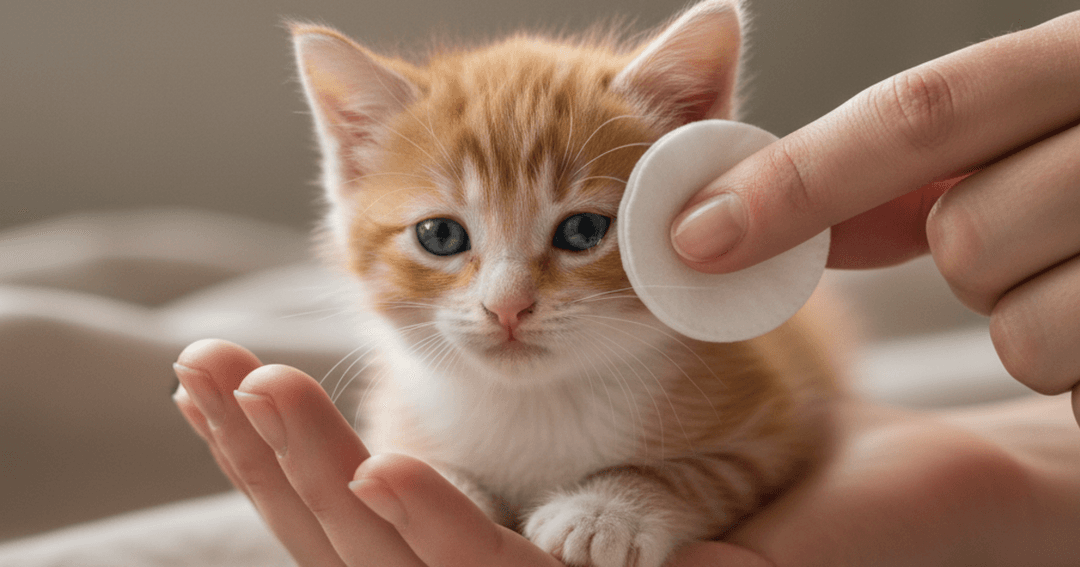
Fleas are more than an itch for kittens: heavy infestations can cause life-threatening anemia. Only use products labeled for cats and for your kitten's exact age and weight, never use dog flea products or home remedies with essential oils, and call your vet first for kittens under about 8 weeks or 2 lb.
Finding fleas on a kitten is stressful, because the usual advice for adult cats does not apply. Tiny kittens cannot regulate body temperature, have small blood volumes and are sensitive to chemicals their livers cannot yet process. This guide explains how to confirm fleas, what is safe at each age and weight, what to do for kittens too young for medication, how to treat your home and other pets and how to avoid dangerous mistakes. If you want to plan for vet costs, try the vet cost estimator.
How to tell if your kitten has fleas
- Flea dirt: black specks in the fur that turn reddish-brown when placed on a damp white paper towel (digested blood).
- Live fleas: small, dark, fast insects, most visible on the belly, base of the tail and neck.
- Scratching, biting or restless behavior
- Hair loss or scabs around the neck and tail base
- Pale gums, weakness or cold ears and paws in severe cases, which signal anemia
Run a fine-toothed flea comb through the fur over a white towel. Dip combed-out fleas in soapy water to kill them.
Why fleas are dangerous to kittens
A kitten has a very small amount of blood. A heavy flea burden can drain it quickly, causing anemia, weakness, collapse and death if untreated. Fleas also carry tapeworms and can transmit other infections. Young kittens with pale gums, lethargy or cold bodies are an emergency.
Which flea treatments are safe for kittens?
Safety depends on the specific product. Labels set a minimum age and weight, and those limits differ by brand and active ingredient. The table below shows the kinds of limits that commonly appear on cat flea product labels. Always verify the current label and confirm with your vet.
| Kitten age or weight | Typical safe approach |
|---|---|
| Under about 4 weeks or under about 2 lb | Flea comb, gentle warm bath if vet advises, treat the environment. No medication unless your vet directs it |
| From about 4 weeks and 2 lb | Some fast-acting oral products are labeled for this age. Ask your vet |
| From about 8 weeks and 2 lb | Several topical and oral cat-specific products are labeled for kittens at this age |
| About 10 weeks | Some flea collars labeled for cats become allowed |
| Around 6 months | Certain longer-lasting oral products become eligible |
Do not guess. Weigh your kitten on a kitchen scale and read the packaging for the exact minimum.
Never use these on kittens
- Dog flea and tick products, especially those containing permethrin, which can cause severe tremors and seizures in cats and can be fatal.
- Adult cat products on a kitten under the labeled age or weight.
- Essential oils such as tea tree, eucalyptus, pennyroyal or citrus oils, which can be toxic to cats.
- Flea shampoos for dogs.
- Over-the-counter powders and sprays not labeled for cats.
- Combining products without vet guidance.
If your kitten is exposed to a dog flea product, call the ASPCA Animal Poison Control Center at 888-426-4435 or the Pet Poison Helpline at 855-764-7661 right away (fees may apply).
Treating kittens too young for medication
For very young kittens, vets generally recommend gentle, non-chemical methods.
- Warm the room. Chilling is a serious risk for tiny kittens.
- Flea comb the kitten every day and drown the fleas in soapy water.
- Bathe only if your vet recommends it, using lukewarm water and a small amount of mild, unscented dish soap or a kitten-safe shampoo. Wet the body, avoid the face, rinse thoroughly and dry the kitten completely with a warm towel.
- Treat the environment (see below), since most fleas live off the cat.
- Treat the mother cat, if present, with a vet-approved product, because she is a source of fleas for the litter.
- Call your vet. They can advise products for small kittens and check for anemia.
Worked example
You find fleas on a 6 week old kitten weighing 1.5 lb (680 g).
- Check weight against labels. Most cat products require at least 2 lb for kittens, so the kitten is under the limit.
- Do not apply any flea product at home.
- Start combing twice daily, drowning fleas in soapy water.
- Check gum color and activity. Pale gums or weakness mean urgent care.
- Call your vet the same day and ask about a kitten-safe option.
- Treat the home and the mother cat at once.
- Weigh every day to track growth. When the kitten reaches 2 lb and the age on the label, ask your vet which product to start.
Treating your home
Adult fleas are only about 5% of the infestation. Eggs, larvae and pupae live in carpets, bedding and furniture.
- Wash bedding and soft toys in hot water weekly.
- Vacuum floors, rugs and furniture daily for two weeks and empty the canister outdoors.
- Treat all pets in the household with products labeled for each species. Never put a dog product on a cat.
- Use pet-safe indoor flea control only if your vet agrees, and keep kittens out of treated rooms until dry.
- Keep it up for at least 3 months, because pupae can hatch weeks later.
Preventing fleas in kittens
- Start prevention as soon as your kitten is old enough. Ask your vet at the first visit.
- Keep new pets on prevention before introducing them.
- Keep kittens indoors, which lowers exposure.
- Check dogs and other pets regularly, since they can bring fleas inside.
- Follow the dosing schedule exactly and use the correct weight band.
When to call your vet
Call the same day for any flea infestation in a kitten under 8 weeks. Go to an emergency clinic immediately if your kitten has pale or white gums, is limp, cold, breathing fast or will not nurse or eat. Also call for tremors, drooling, vomiting or twitching after any flea product, which can signal a toxic reaction. Costs vary, so the vet cost estimator can help you plan.
The bottom line
Fleas are dangerous for tiny kittens, and safety depends on age, weight and choosing cat-specific products. For the youngest kittens, comb, warm and call your vet. Once your kitten reaches the label limits, use only veterinary-recommended prevention and treat the home too. Plan for care costs with the vet cost estimator.
Frequently asked questions
PawCalculator Editorial
We combine veterinary references, published guidelines, and calculator-grade modeling. This article is for education, not a substitute for an exam.
+ Follow on PawTalk