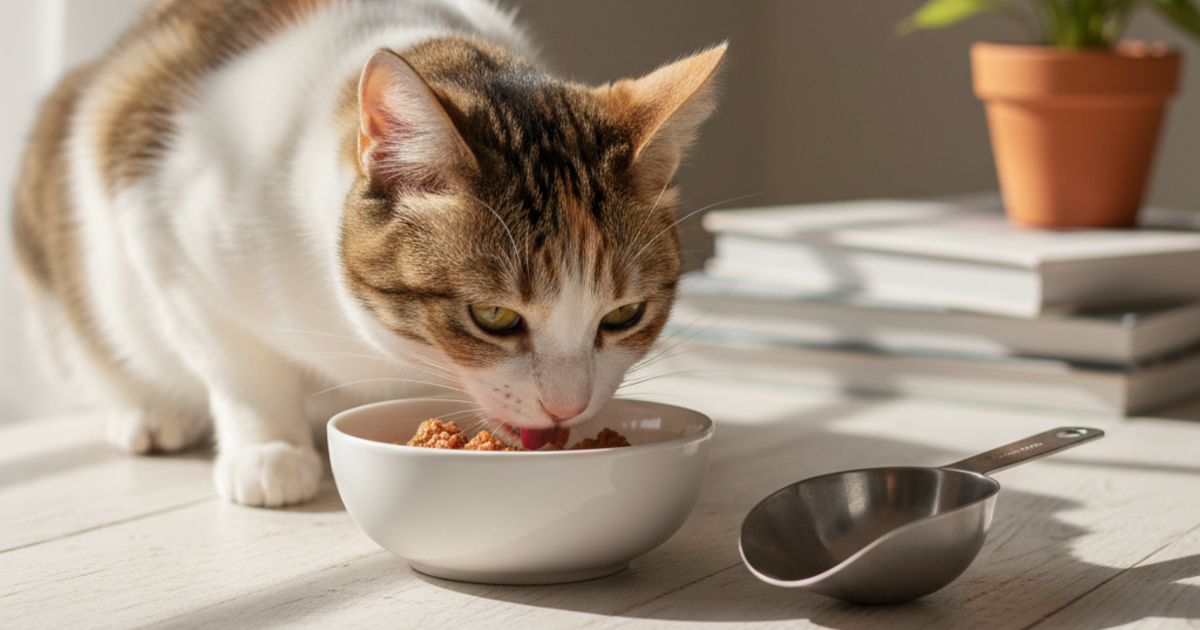
Most diabetic cats do best on a high-protein, low-carbohydrate diet, usually canned food, fed in measured meals timed with insulin as your vet directs. Lower carbs reduce blood sugar spikes and can lower insulin needs, and some cats go into remission. Never change food, portions or insulin without veterinary guidance, because insulin dosing depends on a consistent diet.
Feline diabetes mellitus is common, especially in overweight, middle-aged and older cats. Unlike dogs, many cats with diabetes can improve dramatically with the right diet, weight loss and insulin therapy, and a meaningful number can reach remission. Food is therefore part of the treatment, not just a side issue. This guide explains how diet affects blood sugar in cats, what to look for in a diabetic cat food, how wet and dry compare, how to calculate calories and portions, how feeding and insulin timing work together, how to handle weight, picky eaters and hypoglycemia, and what to ask your vet. To estimate daily calories, use the cat calorie calculator.
Why diet matters in feline diabetes
Cats are obligate carnivores. Their bodies are built to run on protein and fat, with very little dietary carbohydrate, so high-carb foods can cause bigger swings in blood sugar. Obesity also causes insulin resistance, which is a major risk factor for type 2 diabetes in cats. A diabetic diet aims to:
- Reduce post-meal glucose spikes by lowering carbohydrates
- Maintain muscle with high-quality protein
- Support a healthy weight, since obesity worsens insulin resistance
- Provide steady, predictable nutrition that matches insulin timing
What to look for in a diabetic cat food
| Factor | What to aim for |
|---|---|
| Carbohydrate content | Low, commonly under about 10% of calories (metabolizable energy) for strict low-carb diets; many vets accept up to about 12-15% |
| Protein | High, from animal sources |
| Fat | Moderate, which adds calories without raising blood sugar, but watch overall calories |
| Fiber | Moderate fiber may help some cats, but is not required |
| Form | Canned (wet) food is usually preferred |
| Completeness | Complete and balanced for adult maintenance |
| Consistency | The same food from day to day |
Prescription diabetic or low-carbohydrate diets exist, as do over-the-counter canned foods that happen to be low in carbs. Your vet can recommend options suited to your cat.
How to find the carb percentage
Cat food labels do not list carbohydrates. You can estimate them from the guaranteed analysis, using as-fed or dry-matter percentages.
- Add up protein + fat + moisture + ash (use about 2% for canned food if ash is not listed; about 6% for dry).
- Subtract the total from 100 to get the carbohydrate percentage as fed.
- Convert to calories: carbs provide about 3.5 kcal per gram, protein about 3.5 and fat about 8.5 (modified Atwater values).
- Compute % of calories from carbs = (carb grams × 3.5) ÷ total kcal.
Some brands publish carb values on their websites, or your vet can help.
Worked example: estimating carbs in a canned food
A can's guaranteed analysis lists: protein 10%, fat 6%, fiber 1%, moisture 78%. Ash is not listed, so assume 2%.
- Total of known parts: 10 + 6 + 78 + 2 = 96%.
- Carbohydrate (as fed): 100 − 96 = about 4% (this includes the fiber).
- Per 100 g of food: 10 g protein, 6 g fat, 4 g carbs.
- Calories: protein 10 × 3.5 = 35, fat 6 × 8.5 = 51, carbs 4 × 3.5 = 14, total 100 kcal per 100 g.
- Carbs as % of calories: 14 ÷ 100 = about 14%. That is borderline; look for a lower-carb option if your vet recommends under 10%.
This is an estimate, and manufacturers list calories on the can, which is more reliable for total energy.
Wet vs dry for diabetic cats
| Feature | Wet (canned) | Dry (kibble) |
|---|---|---|
| Carbohydrates | Usually much lower | Often higher because starches hold kibble together |
| Moisture | High, which supports hydration and kidney health | Low |
| Satiety | Often more filling per calorie | Calorie-dense, easy to overeat |
| Cost | Higher | Lower |
| Convenience | Needs refrigeration after opening | Easy to store |
| Insulin timing | Easier to measure meals exactly | Free-feeding makes timing harder |
Canned food is generally preferred, but a low-carb dry food may be used if wet is not possible. Discuss your options with your vet.
How much should a diabetic cat eat?
Calories depend on your cat's weight, body condition and goals. A rough way to calculate:
- Ideal weight cat: resting energy requirement (RER) = 70 × (ideal weight in kg)^0.75. A typical maintenance amount is about 1.0-1.2 × RER for neutered indoor cats.
- Overweight cat needing weight loss: feed to the ideal weight, often about 0.8 × RER of ideal weight, but only under veterinary supervision, because rapid weight loss can be dangerous for cats.
Worked example: portions for a diabetic cat
A 6 kg (13 lb) overweight diabetic cat with an ideal weight of about 5 kg (11 lb).
- RER at ideal weight: 70 × 5^0.75 = 70 × 3.34 = about 234 kcal.
- Gradual weight-loss target at about 0.8 × RER: 234 × 0.8 = about 187 kcal per day. Many vets start closer to maintenance for the ideal weight and adjust.
- If the canned food is 90 kcal per 85 g can: 187 ÷ 90 = about 2.1 cans per day.
- Split into two meals of about 1 can each, timed with insulin as your vet directs.
- Weigh every 2 weeks. A safe weight loss rate is about 0.5-1% of body weight per week.
- Recheck with your vet because insulin needs often fall as weight drops.
For a quick estimate of your cat's own numbers, use the cat calorie calculator.
Meal timing and insulin
Insulin and food must work together. Most cats are treated with insulin injections twice a day, about 12 hours apart, given with or shortly after a meal. The usual approach:
- Feed a measured meal at the time of each injection.
- Confirm your cat is eating before giving insulin. If your cat does not eat, call your vet before giving the full dose.
- Keep meals consistent in timing, size and type.
- Limit treats and choose low-carb ones, such as freeze-dried meat or plain cooked chicken in tiny amounts.
- Avoid free-feeding high-carb dry food. Some vets allow grazing on low-carb wet food, but follow your vet's plan.
- Keep a log of meals, insulin doses, thirst, urination and energy.
Remission
Some diabetic cats go into remission, meaning they no longer need insulin, especially if treated early with a low-carb diet and good glucose control. Remission is not a cure, and diabetes can return, so keep feeding a low-carb diet and keep up regular monitoring.
Weight management
Obesity is a leading risk factor for feline diabetes, and weight loss can improve insulin sensitivity. But cats should not lose weight too quickly. Rapid loss or fasting can cause hepatic lipidosis (fatty liver), which is life-threatening. Aim for slow, steady loss under your vet's supervision.
Underweight diabetic cats
Some diabetic cats lose weight despite eating more because they cannot use glucose properly. These cats need higher calories and careful treatment. Weight loss with increased appetite and thirst is a sign to see your vet promptly.
Picky cats and food switches
Cats can be stubborn about food changes, and refusing to eat is dangerous for a cat on insulin.
- Transition gradually, mixing the new food with the old over 1-2 weeks, with your vet's agreement.
- Warm canned food slightly to boost aroma.
- Try different textures and flavors within low-carb options.
- Never leave a cat without food for more than a day. Call your vet if your cat refuses to eat.
- Tell your vet about food changes since insulin doses may need adjusting.
Hypoglycemia: the emergency to know
Too much insulin, missed meals or increased activity can cause low blood sugar (hypoglycemia). Signs include:
- Weakness, wobbliness or lethargy
- Trembling or twitching
- Glassy eyes, confusion or disorientation
- Seizures or collapse
If you see these signs, call your vet or emergency clinic immediately. Your vet may advise rubbing a small amount of corn syrup on the gums if your cat is conscious, but follow your vet's instructions and do not force food into an unconscious cat.
Treats and extras to avoid
- High-carb treats and kibble-based snacks
- Foods with sugars, corn syrup or starches listed high in the ingredients
- Table scraps that are starchy or sweet
- Milk, which can upset digestion in many cats and adds sugar
Monitoring
Your vet may recommend:
- Regular blood glucose curves at the clinic or at home
- Fructosamine tests to check long-term control
- Urine tests for glucose and ketones
- Routine weight checks
- Home glucose monitoring with a glucometer, if you and your vet agree
When to call your vet
Contact your vet right away if your diabetic cat stops eating, vomits, is lethargic, seems wobbly, has seizures, drinks and urinates much more, loses weight or has a sweet or fruity odor on the breath. These can signal hypoglycemia, diabetic ketoacidosis or other complications and need urgent care.
The bottom line
Diabetic cats generally do best on measured meals of a high-protein, low-carb canned food, timed with insulin and managed with your vet. Keep the diet consistent, control calories and weight gradually and watch for low blood sugar. Estimate daily calories with the cat calorie calculator.
Frequently asked questions
PawCalculator Editorial
We combine veterinary references, published guidelines, and calculator-grade modeling. This article is for education, not a substitute for an exam.
+ Follow on PawTalk