Predict Your Kittens' Coat Colors
Your inputs
Results update live as you type.
Your results
Live — updates as you change inputs.
Kitten coat probabilities (simplified)
× mix
Most likely
Black-based
~50%
Tabby pattern
~40%
Orange (sex-linked)
Depends on parent sex & carriers
Simplified model — actual genetics involve many more genes.
Veterinary reference only
Simplified model covering the major genes — other genes can cause variation not modeled here.
Predict Your Kittens' Coat Colors
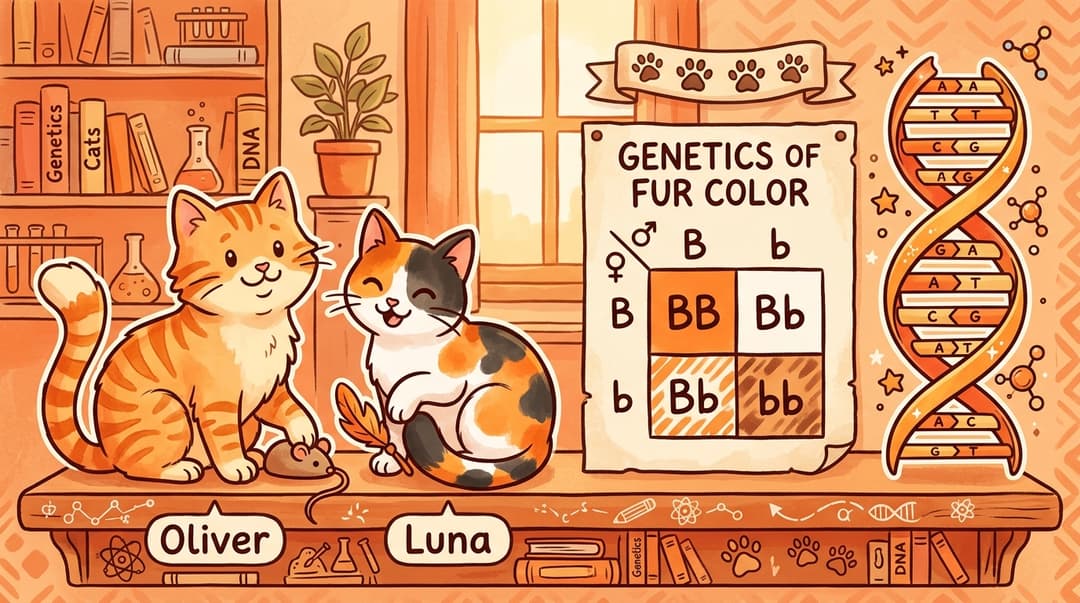
Cat coat color follows a well-mapped set of genetic rules — orange coloring is X-linked (which is why the vast majority of orange cats are male, and why calico/tortoiseshell patterns, which require two different X chromosomes, are almost always female), while black/brown base color, dilution (turning black to gray/blue), and white spotting are controlled by separate genes that combine to produce the visible pattern. This calculator walks through parent coat colors and estimates likely kitten outcomes based on these known inheritance patterns — genuinely educational content grounded in feline genetics, not just a novelty generator.
How to use this calculator
Select each parent's color/pattern. The calculator applies known feline coat-color inheritance rules — including the X-linked orange gene and separate genes for dilution and white spotting — to estimate likely kitten outcomes and their approximate odds.
Coat color inheritance basics
| Gene | What it controls | Inheritance pattern |
|---|---|---|
| Orange (O) | Orange vs. black/brown base | X-linked — males need one copy, females need two |
| Dilution (d) | Black→blue/gray, orange→cream | Autosomal recessive |
| White spotting (S) | Amount of white patching | Variable, incomplete dominance |
| White masking (W) | Solid white, can mask all other color genes | Autosomal dominant |
Understanding your results
The predicted outcomes are probabilities across a litter, not a guarantee for any individual kitten — coat-color genetics involves recessive traits that can hide in a parent's own genotype without showing in their coat, which is exactly how two black cats can occasionally produce an orange kitten if both happen to carry a hidden copy. This is why real litters sometimes show a coat color that looks "impossible" from the parents' visible coloring alone — it isn't impossible, it's a recessive combination the calculator's probability model accounts for even when the visible parent colors don't obviously suggest it. One health-relevant note unrelated to color prediction itself: white cats with blue eyes have a notably higher rate of congenital deafness linked to the same genes controlling pigmentation, worth knowing if a white-masking outcome is likely in your litter.
Why calico and tortoiseshell patterns are almost always female. These patterns come from X-inactivation — each cell in a female cat (XX) randomly deactivates one X chromosome, creating patches of cells expressing each X's color gene. Males (typically XY) only have one X, so they can't produce the same patchwork effect except through a rare chromosomal anomaly (XXY), which is why male calicos are genuinely uncommon and often noted as a genetic curiosity.
Tabby patterning is a separate gene system from base color. The tabby pattern (mackerel, classic/blotched, spotted, ticked) is controlled by its own set of genes independent of the color and dilution genes — which is why you can have an orange tabby, a black (technically brown) tabby, and a blue/gray tabby, all showing the same pattern in different base colors.
Why this actually matters for breeders and curious owners alike
For anyone planning a litter deliberately, understanding these inheritance rules is more than a curiosity — it's the practical difference between predicting likely outcomes and being genuinely surprised by them. A breeder aiming for a specific coat color combination benefits from knowing which parent traits are dominant versus recessive, since two visibly similar-looking cats can carry very different hidden genotypes that produce meaningfully different kitten outcomes. For an owner who simply ended up with an unplanned litter (a common scenario with unspayed cats that have outdoor access), this calculator offers a way to understand after the fact why a litter turned out the way it did — seeing an unexpected color show up isn't a sign anything went wrong, it's usually just a recessive gene neither parent's coat revealed on its own.
The genetics behind some especially distinctive patterns
A few visually striking patterns are worth understanding beyond the basic gene table, since they come up often in questions about kitten predictions. Tortoiseshell-and-white (sometimes called "tortie-and-white" or informally "calico" when white patching is extensive) combines the X-inactivation mechanism described above with the separate white-spotting gene, which is why the exact placement and amount of white varies so much even between littermates with identical color genetics — white spotting is influenced by additional factors beyond simple inheritance, making its exact pattern less precisely predictable than the underlying color genes themselves. Point coloration (the darker face, ears, paws, and tail seen in Siamese-pattern cats) works through yet another separate mechanism — a temperature-sensitive form of pigmentation where cooler body areas develop darker color, which is why point-pattern kittens are often born nearly white and develop their characteristic points over the following weeks as their body temperature regulation matures.
When to consult a professional
For health, dosage, or nutrition decisions, always confirm calculator output with your veterinarian. This tool provides reference estimates, not medical advice.
Questions about this calculator
Orange coloring is carried on the X chromosome; males (XY) only need one copy to be orange, while females (XX) need both X chromosomes to carry it, making orange females statistically less common.
The math, openly documented.
Inputs
Enter the details that affect your estimate.
weight · age · breed
Normalize
Validate ranges and convert units when needed.
lbs ↔ kg
Calculate
Veterinary or industry-standard formulas applied.
result = f(inputs)
Results
Clear outputs with context and disclaimers.
display + notes
More from Fun

Articles from Insights


Got an edge case the calculator can't handle?
247 active threads about dog nutrition right now. Verified vets and experienced owners answer within hours.