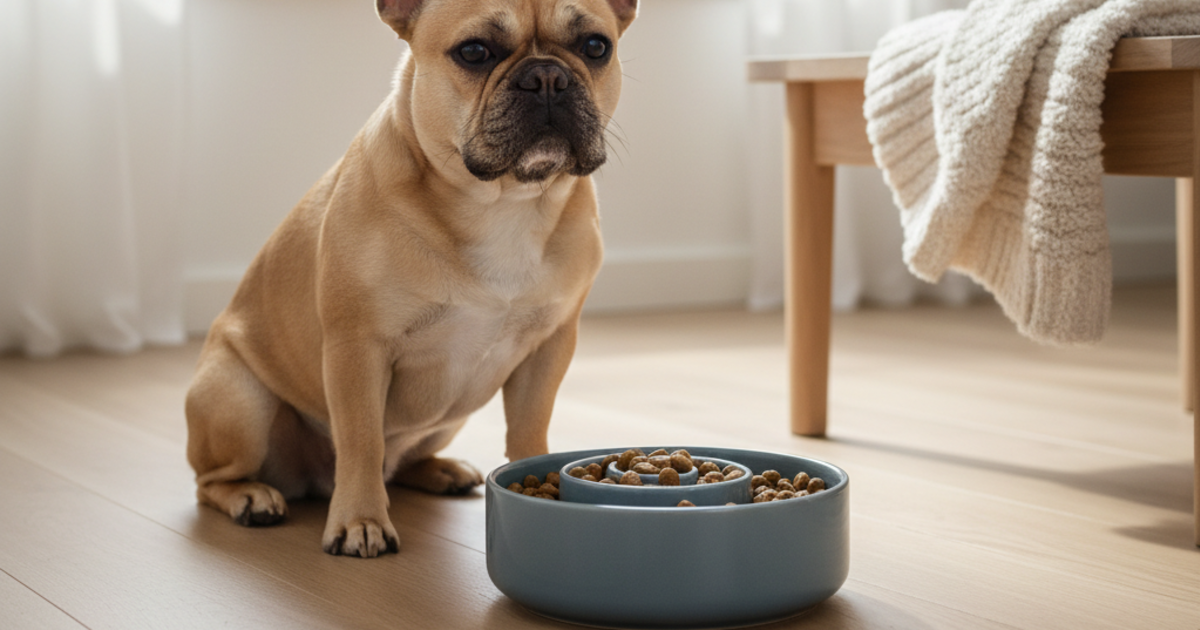
The best dog food for a French Bulldog is a complete and balanced diet that keeps them lean, suits a sensitive stomach and skin, and comes in a kibble shape they can pick up with a short muzzle. Weight control matters most, because extra pounds make breathing and joint problems worse.
French Bulldogs typically weigh 16-28 lb (7-13 kg), and they're prone to skin allergies, gas, obesity and breathing problems linked to their flat faces (brachycephalic airway syndrome). Their compact bodies, modest exercise tolerance and tendency to gulp air make feeding them a bit different from feeding a typical dog. This guide covers Frenchie nutrition needs, what to look for on the label, common food issues, feeding habits that help, a worked calorie example and when to call your vet. Get a personalized portion from the dog food calculator.
Frenchie nutrition needs
- Lean body condition. Excess weight strains the airway, spine and joints, and can make breathing noticeably worse.
- Digestive comfort. Frenchies often swallow air while eating, and many are sensitive to certain proteins or high-fiber, gas-producing ingredients.
- Skin and coat support. Skin fold infections, yeast and allergies are common.
- Moderate calories. They're compact dogs with modest exercise needs, especially in hot weather when they can't exercise much.
- Heat awareness: they overheat easily, which affects how much activity and thus how many calories they burn.
What to look for on the label
- AAFCO statement: complete and balanced for growth, adult or all life stages.
- Moderate fat and calorie density, with clear kcal per cup.
- Named protein sources, and a formula your Frenchie tolerates.
- Omega-3 fatty acids (fish oil, for example) for skin and coat support.
- Kibble shape: flat-faced dogs often do better with kibble designed for short muzzles, or shapes that are easy to pick up.
- Reputable maker: nutritionist on staff, quality control, feeding trials.
- Digestible ingredients that don't cause gas in your dog.
Common food issues
- Food allergies: beef, chicken, dairy and wheat are the most commonly reported culprits in dogs, but Frenchies also have many environmental allergies. The only reliable test is a vet-guided elimination diet; see our guide to hypoallergenic dog food.
- Gas: slow feeding and avoiding sudden diet changes can help. Very high-fiber or fermentable ingredients may worsen it for some dogs.
- Soft stools: ask your vet if diarrhea persists.
- Obesity: a few extra pounds are a big deal in a 25 lb dog.
Feeding tips
- Use a slow-feeder bowl or puzzle feeder to reduce gulping and air swallowing.
- Feed two or three small meals rather than one large one.
- Raise the bowl slightly if your vet agrees.
- Measure food with a scale and count treats.
- Avoid exercise right after meals or in hot weather; Frenchies overheat easily.
- Keep water available and shaded spots cool.
Worked example
Meet Gus, a neutered 13 kg (28.7 lb) Frenchie who is a bit chunky.
- Ideal weight target: 12 kg (26.5 lb). RER at 12 kg: 70 × 12^0.75 = 70 × 6.45 = about 451 kcal.
- For gentle weight loss, feed about 1.0 × RER of the ideal weight = about 450 kcal a day (ask your vet to confirm).
- On a food with 360 kcal per cup: 450 ÷ 360 = about 1.25 cups a day, split into 2-3 meals.
- Weigh every 2 weeks. Aim to lose about 1-2% of body weight a week.
- Reassess with your vet after 4-6 weeks.
See the dog food calculator weight loss mode and check body condition with the dog BMI calculator.
Puppy Frenchies
French Bulldog puppies need a food labeled for growth. They're a medium-sized breed, so standard puppy food works, but portions matter to avoid excess weight. Feed 3 meals a day until about 6 months, then 2.
When to call your vet
Call for breathing difficulty, snoring that's suddenly worse, blue or pale gums, persistent itching or skin infections, vomiting, diarrhea, weight loss or gain, or a bloated belly. Labored breathing is an emergency.
Frequently asked questions
PawCalculator Editorial
We combine veterinary references, published guidelines, and calculator-grade modeling. This article is for education, not a substitute for an exam.
+ Follow on PawTalk