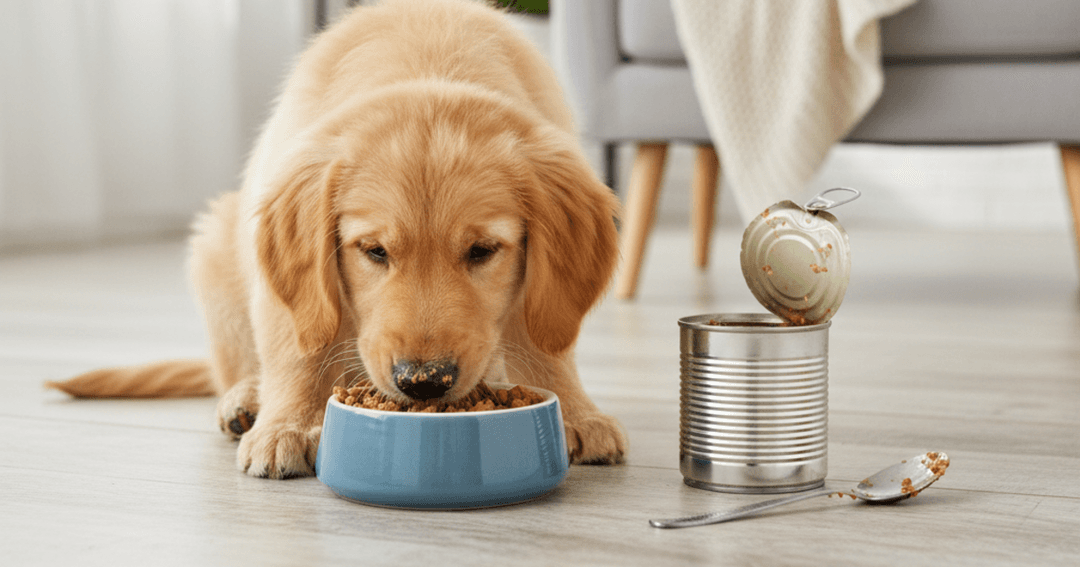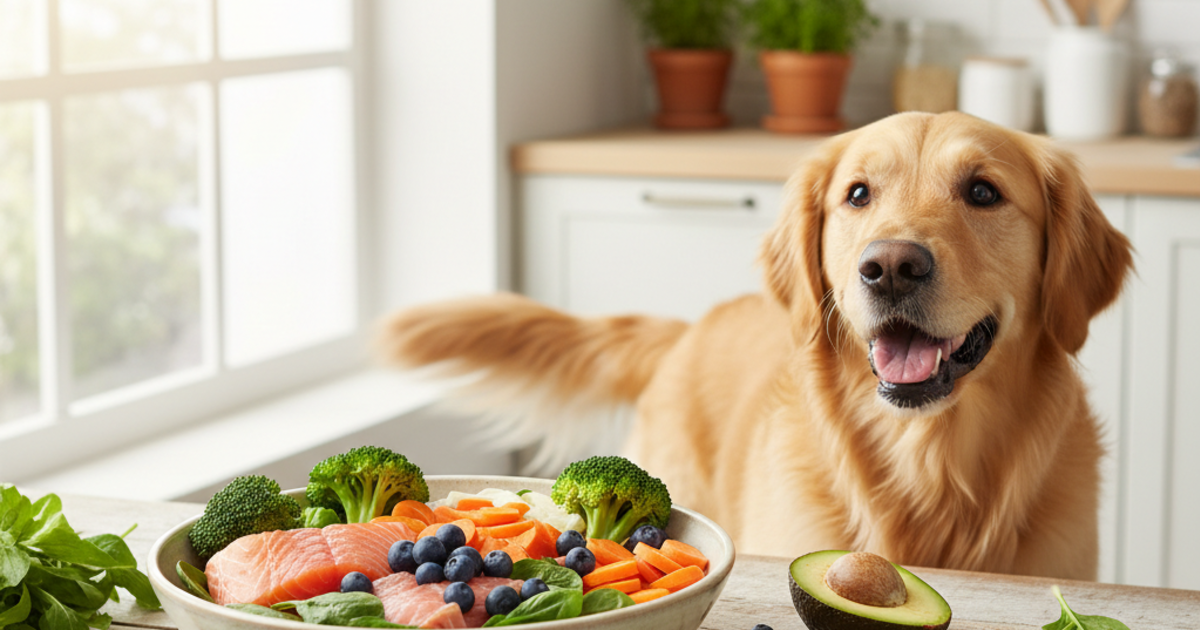
Organic dog food is made with ingredients grown without synthetic pesticides, fertilizers, antibiotics or GMOs, under USDA organic rules. There is no strong evidence that organic food is healthier for dogs than a high-quality conventional diet, so it is mainly a values and preference choice that costs more. Completeness, balance and quality control matter more than the organic label.
Walk down any pet food aisle and "organic" appears alongside "natural," "holistic" and "human-grade," often with a higher price tag. Many owners assume organic means healthier, but the label is about how ingredients were produced, not about whether the diet is better balanced for a dog. This guide explains what organic means in pet food, how the USDA label categories work, how organic compares with natural, what research does and does not show, how much more you will pay, how to read an organic label and how to decide. To portion any food correctly, use the dog food calculator.
What "organic" means for pet food
In the United States, pet food labeled organic follows the National Organic Program rules under the USDA, with some added guidance from AAFCO for pet food labeling. Organic production generally means:
- Crops are grown without most synthetic pesticides, synthetic fertilizers, sewage sludge or irradiation, and without genetically engineered seeds.
- Animals are raised on organic feed, with access to the outdoors, and without antibiotics or added growth hormones.
- Processing avoids many artificial preservatives, colors and flavors, and separates organic from non-organic ingredients.
- Certification is carried out by USDA-accredited certifying agents, with annual inspections.
The four USDA organic label tiers
| Label claim | What it means |
|---|---|
| "100% Organic" | All ingredients (excluding water and salt) are certified organic. May use the USDA seal |
| "Organic" | At least 95% of ingredients are organic. May use the USDA seal |
| "Made with Organic [ingredients]" | At least 70% organic ingredients. Cannot use the USDA seal, and the organic ingredients may be named on the front |
| Specific organic ingredients only in the ingredient list | Less than 70% organic. Organic may be mentioned only in the ingredient list |
Water and salt are not counted in the percentage, and vitamins and minerals required for a complete diet are allowed in organic pet food within specific rules.
Organic vs natural vs human-grade
| Term | Meaning |
|---|---|
| Organic | Regulated by USDA, with certification and inspection |
| Natural | AAFCO definition: derived from plant, animal or mined sources without chemically synthesized additives, except trace vitamins, minerals and similar nutrients. Not the same as organic |
| Human-grade | Ingredients and manufacturing meet standards for human food. Requires specific facility compliance |
| Holistic, premium, gourmet | No legal definition |
| Grain-free | A formula type, not a quality or organic claim |
A food can be natural but not organic, organic but not human-grade, or human-grade without being organic.
What the research says
There is little direct research showing that organic dog food improves health outcomes compared with conventional food. Points worth knowing:
- Nutrient content. Organic ingredients are not proven to have higher nutritional value for dogs.
- Pesticide residues. Organic ingredients tend to have lower synthetic pesticide residues, but conventional pet food ingredients are regulated and typically fall below safety limits.
- Antibiotics and hormones. Organic meat comes from animals raised without routine antibiotics, which some owners value for environmental reasons and antibiotic resistance concerns.
- Safety. Organic does not mean free of bacteria. Contamination recalls have occurred in organic and conventional foods.
- Digestibility. There is no consistent evidence that organic foods are more digestible.
- Allergies. Organic status does not reduce the risk of food allergies, which are triggered by the protein, not the farming method.
In short, a well-formulated conventional food from a company with strong quality control is likely just as nutritious as an organic one. The organic label is about farming practices.
What actually matters more than organic
- Complete and balanced for your dog's life stage, backed by an AAFCO statement.
- Formulation expertise. Look for companies employing a board-certified veterinary nutritionist or PhD animal nutritionist.
- Quality control and feeding trials. Brands that test finished products and conduct feeding trials give added confidence.
- Appropriate calories and protein for your dog's size, age and activity.
- Transparent sourcing and recall history.
- A diet your dog likes and digests well, with firm stools and a healthy coat.
Possible downsides of organic dog food
- Higher price, often 20-100% more than conventional foods of similar quality.
- Limited choice, especially for therapeutic or breed-specific formulas.
- Not always better balanced. Some small organic brands have limited nutritional expertise.
- Possible gaps. A diet that fails to meet life-stage needs can harm a dog regardless of organic status.
- Shorter shelf life if preservatives are limited, so storage matters.
- Cost pressure can tempt owners to underfeed or skip medical diets.
Possible upsides
- Lower synthetic pesticide exposure in ingredients.
- Animal welfare and environmental values that matter to some owners.
- Fewer artificial additives, which suits owners who prefer simple ingredient lists.
- Peace of mind for people who buy organic for themselves.
Worked example: what does organic cost?
A 20 kg (44 lb) adult dog eating about 1,000 kcal per day.
- Conventional kibble at 3,700 kcal per kg and $3.50 per kg: 1,000 ÷ 3.7 = about 270 g per day, which costs about $0.95 per day, or about $345 per year.
- Organic kibble at 3,700 kcal per kg and $7.00 per kg: 270 g × $7 per kg = about $1.89 per day, or about $690 per year.
- Difference: about $345 per year in this example.
- For a 40 kg dog eating twice as much, the difference roughly doubles to about $690 per year.
- Prices vary by brand and country. Always check calories per kg, because cheaper-per-pound foods can cost more per day if they are less calorie-dense.
Use the dog calorie calculator to find your dog's daily energy need and compare cost per 1,000 kcal across foods.
How to read an organic dog food label
- Check the front claim. "100% Organic," "Organic," or "Made with Organic" each mean different things.
- Look for the USDA seal and the name of the certifying agent.
- Find the AAFCO statement. It should say the food is complete and balanced for a life stage, ideally via feeding trials or formulation to AAFCO profiles.
- Read the ingredient list. Check whether the protein sources are organic and where they fall in the list.
- Check calories per cup or kg to compute daily cost.
- Look at the guaranteed analysis for protein, fat, fiber and moisture.
- Review the manufacturer's contact details and recall history.
Is organic worth it for your dog?
It can be reasonable if:
- It fits your budget without making you reduce portions or skip vet care.
- You value organic farming practices and animal welfare standards.
- The food still meets AAFCO standards for your dog's life stage.
- Your dog does well on it.
It may not be worth it if:
- The extra cost strains your finances.
- Your dog has a medical condition that needs a prescription or therapeutic diet.
- You are choosing organic over formulation quality.
Ways to improve diet quality without going fully organic
- Choose a food from a company with veterinary nutritionists.
- Add fresh vegetables like carrots or green beans as low-calorie toppers.
- Buy organic only for toppers or treats if you want some organic in the diet.
- Rotate proteins gradually if your dog tolerates it, ask your vet first.
- Keep portions and body condition in check. Obesity harms health far more than non-organic ingredients do.
Special diets and medical conditions
Dogs with kidney disease, diabetes, pancreatitis or allergies often need prescription or carefully chosen diets. Organic foods are rarely designed for these conditions, so talk to your vet before switching.
When to call your vet
See your vet before changing diets if your dog has a medical condition, is a puppy or senior or has recurring digestive upset. Contact your vet for persistent vomiting, diarrhea, itching, weight changes or changes in appetite after a diet change.
The bottom line
Organic dog food is mainly about how ingredients were grown, not proof of a healthier dog. A complete, balanced, well-made conventional diet is likely just as good, so choose organic if it matches your values and budget. Work out the right portion with the dog food calculator.
Frequently asked questions
PawCalculator Editorial
We combine veterinary references, published guidelines, and calculator-grade modeling. This article is for education, not a substitute for an exam.
+ Follow on PawTalk