
Cephalexin Dosage for Dogs: Chart by Weight
Your inputs
Results update live as you type.
Your results
Live — updates as you change inputs.
Cephalexin reference (prescription only)
399 mg twice daily (22 mg/kg)
FDA label (Rilexine-style)
ISCAID-style range
272–544 mg twice daily (15–30 mg/kg)
Approx. tablets at selected strength
1.5 × 300 mg per dose (verify scoring)
Course length entered
28 days — finish only as prescribed
Antibiotics require a veterinary diagnosis. Never use leftover antibiotics.
2025 guidance increasingly prefers topical therapy first for superficial pyoderma — your vet decides.
Store chewables securely; they are palatable.
Veterinary reference only
Prescription antibiotics only with a vet diagnosis. Never use leftovers.
Keep going with a related calculator.
What the cephalexin label and guidelines say for dogs
Cephalexin is a first-generation cephalosporin antibiotic. Vets prescribe it mainly for bacterial skin infections such as pyoderma, and sometimes for certain urinary and soft-tissue infections. The FDA-approved labeling for dogs uses 22 mg per kg twice daily for specific skin infections. The ISCAID guidelines, which set out how veterinarians should use antibiotics in small animals, have historically listed 15 to 30 mg per kg twice daily for first-generation cephalosporins. The calculator shows both reference ranges so you can see how the numbers relate.
That range is for understanding a prescription. It is not a reason to start an antibiotic. Antibiotics should be given only after a vet has examined the dog and, where needed, tested the infection. Using them without a diagnosis can hide the real problem and encourage resistant bacteria.
Worked example: a 10 kg (22 lb) dog
The label rate for a 10 kg dog is 22 × 10 = 220 mg per dose, twice daily. The ISCAID range gives 15 × 10 = 150 mg to 30 × 10 = 300 mg per dose, twice daily. The label figure sits inside the guideline range.
Now compare with a 20 kg (44 lb) dog. The label rate is 440 mg per dose, and the guideline range is 300 to 600 mg per dose. The numbers scale with weight, which is why a capsule that suits a large dog can be far too much for a small one.
These are reference figures for understanding a prescription. Your vet chooses the actual dose, the strength and the duration.
Reading the calculator result
- Enter your dog's weight. The calculator converts pounds to kilograms automatically.
- Read the result as a range, not a single number.
- Compare the range with the directions your vet wrote on the prescription.
- Note the number of days and the capsule or tablet strength. The total course is set by the vet, and many skin infections need several weeks.
If your prescription does not match the range, do not change it on your own. Call the prescribing vet or the dispensing pharmacy for clarification.
Human cephalexin is not the same
Human cephalexin (Keflex) capsules are sold at strengths such as 250 mg and 500 mg, and they are made for people. A dog prescription is worked out from the dog's weight and the infection, so the strength on the bottle may be different. Do not use a human bottle without a vet telling you the exact dose for your dog. Human products can also contain inactive ingredients that differ from the veterinary product.
Many searches for "cephalexin 500 mg dog dosage" come from owners holding a human bottle. The honest answer is that the number on a human label is not designed around dog weight, and a 500 mg capsule can be far too much for a small dog and wrong for a large one.
Side effects and when to call
- Common: vomiting, diarrhoea or reduced appetite, often mild and short-lived. Giving the dose with food can help some dogs.
- Stop and call your vet: hives, facial or lip swelling, difficulty breathing, severe vomiting or diarrhoea, or blood in the stool.
Allergic reactions to cephalosporins are possible. A dog with a previous reaction to penicillin or other antibiotics should be checked before starting, because cross-reactions are not unusual.
Why finishing the course matters
Antibiotics should be given for the full prescribed course, even if your dog looks better after a few days. Stopping early can allow the infection to return, and it can leave the most resistant bacteria alive. If you are struggling to give the medicine, tell your vet rather than skipping doses.
If the skin infection does not improve, or gets worse, the vet may want to check for a culture or change the antibiotic. Keep the prescription bottle and any culture results so the follow-up is easy.
Giving tablets and capsules
Some dogs take capsules easily hidden in food. Others need a pill pocket or a gentle hold at the head. Never force a capsule into a dog's mouth, because it can be inhaled. If your dog will not take it, ask the vet whether a liquid or a different formulation is available.
Cephalexin and other antibiotics
Vets sometimes switch antibiotics if a culture shows a different bacterium or the infection is not responding. Do not swap antibiotics yourself, even if you have leftovers from an earlier course. Using leftover antibiotics can give the wrong drug for the infection and contribute to resistance.
Skin infections in dogs
Skin infections are often secondary to another problem, such as allergies, parasites or hormone disease. The antibiotic treats the infection, but the underlying cause may need its own treatment. Ask your vet whether anything else should be checked if the infection keeps coming back.
Related tools and guides
- Apoquel Dosage Calculator for allergy-related itch and skin
- Carprofen Dosage Calculator for pain and inflammation
- Benadryl Dosage Calculator
- Toxicity Calculators hub
Emergency or unsure?
Call your vet or ASPCA Animal Poison Control — available 24/7.
Questions about this calculator
It depends on the dog's weight, the infection and the vet's plan. The reference ranges are 22 mg per kg twice daily on the FDA label for certain skin infections, and 15 to 30 mg per kg twice daily in ISCAID guidance for first-generation cephalosporins. For a 10 kg dog, the label figure is 220 mg per dose. Follow the dose your vet prescribed.
The math, openly documented.
Inputs
Weight, use case, and product strength where relevant.
weight · tablet_mg · use
Formula
Published veterinary reference dosing math.
dose = f(weight_kg)
Output
Reference range with safety notes.
mg · tablets · frequency
Disclaimer
Not a prescription — vet confirmation required.
reference only
More from Health
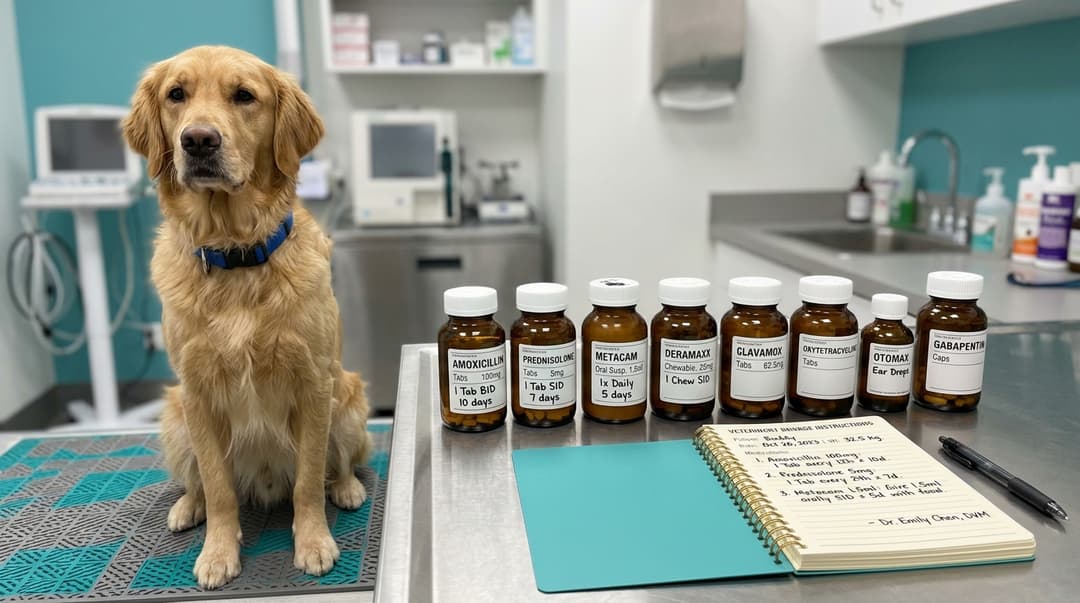
Dog Medication Dosage Reference Hub
Hub for all dog medication reference tools.
Open tool
Benadryl Dosage for Dogs, By Weight
Weight-based diphenhydramine reference with tablet conversion.
Open tool
Understanding Meloxicam Dosing for Dogs
NSAID loading and maintenance dose reference.
Open toolArticles from Insights



Got an edge case the calculator can't handle?
247 active threads about dog nutrition right now. Verified vets and experienced owners answer within hours.