The myth: one round of puppy shots and you're done
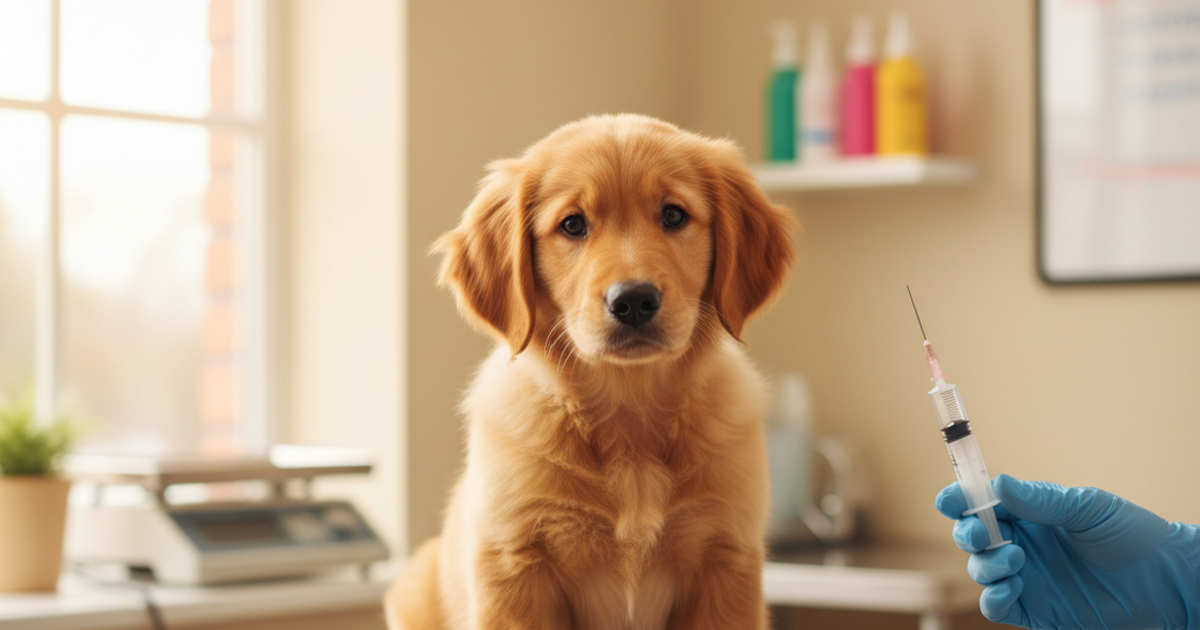
A lot of new owners hear "puppy shots" and picture a single vet visit. In reality, a puppy vaccination series is exactly that: a series, usually three to four visits spaced a few weeks apart. That's not a vet office padding out appointments. Young puppies still carry maternal antibodies from their mother's colostrum, and those antibodies can neutralize a vaccine before the puppy's own immune system gets a chance to respond. Nobody knows exactly when that maternal protection wears off in an individual puppy, so vets stack the doses until the window closes. Skip the later boosters and you can end up with a puppy who looks vaccinated on paper but isn't actually protected.
Core vaccines: non-negotiable for every puppy
The American Animal Hospital Association (AAHA) splits canine vaccines into core and non-core. Core vaccines protect against diseases that are widespread, severe, or a public health risk, and every puppy should get them regardless of lifestyle:
- Distemper: a virus that attacks the respiratory, GI, and nervous systems, still fatal in a large share of unvaccinated dogs that catch it.
- Adenovirus (canine hepatitis): usually bundled into the same combo shot as distemper.
- Parvovirus: the one most owners have actually heard of, because it's the reason puppies can't go to the dog park before they're fully vaccinated. Parvo attacks the intestinal lining and is spread through contaminated feces, soil, and surfaces that can stay infectious for months.
- Parainfluenza: often included in the same combo.
- Rabies: required by law in all 50 states, though the minimum age and exact booster interval are set at the state level.
Distemper, adenovirus, and parainfluenza are usually given together as a single combo injection, commonly labeled DHPP or DA2PP depending on the manufacturer.
Non-core vaccines: based on where your puppy actually lives
Non-core vaccines aren't optional because they're less important. They're optional because not every dog is exposed to the disease. Your vet decides these based on region, lifestyle, and how much contact your puppy has with other dogs or wildlife.
- Bordetella (kennel cough): usually required before daycare, boarding, or group training classes.
- Leptospirosis: bacteria spread through infected urine and contaminated water, a real risk for dogs with any yard, park, or hiking access, not just "outdoorsy" dogs.
- Lyme disease: relevant in tick-heavy regions.
- Canine influenza (H3N2/H3N8): recommended for dogs in daycare, boarding, or shows where they're around a lot of other dogs.
A typical puppy vaccine timeline
Every vet clinic adjusts timing slightly, and your puppy's actual schedule should come from your vet, not a blog post. But this is the shape AAHA's current guidelines follow:
| Age | What typically happens |
|---|---|
| 6–8 weeks | First DHPP dose. Bordetella if entering daycare or a puppy class early. |
| 10–12 weeks | Second DHPP dose. Leptospirosis and Lyme started here if your vet recommends them for your area. |
| 14–16 weeks | Third DHPP dose. Rabies, once your puppy meets your state's minimum age (commonly 12–16 weeks). |
| 16–18 weeks | Final DHPP booster. AAHA's 2022 guidelines specifically call for a dose no earlier than 16 weeks, because that's when maternal antibody interference has reliably cleared in most puppies. |
| 12 months | DHPP and rabies boosters, plus any non-core vaccines your dog still needs based on lifestyle. |
| Every 1–3 years after | Core vaccines are commonly labeled for 3-year immunity once your dog is an adult; non-core vaccines are usually annual if the exposure risk is ongoing. |
Common mistakes owners make with the vaccine schedule
Stopping after two doses because the puppy "seems fine." The final booster at 16–18 weeks isn't optional padding: it's the dose most likely to land after maternal antibodies have fully cleared. A puppy who never gets it can have gaps in protection that don't show up until they're exposed to parvo or distemper.
Assuming indoor puppies don't need core vaccines. Parvovirus survives in soil and on surfaces for months, and it comes inside on shoes, other pets, and your own hands. "Indoor only" reduces exposure; it doesn't eliminate it.
Treating rabies law as a suggestion. Rabies vaccination timing and re-vaccination intervals are set by state law, not preference, and most boarding facilities, groomers, and even some parks will ask for proof.
Vaccinating for everything "just in case." Over-vaccinating with non-core shots your dog doesn't need adds cost and unnecessary immune load without a matching benefit. This is exactly why the core/non-core split exists: let your vet match the shots to your dog's actual risk.
Not asking about titers. For some adult dogs with a documented vaccine history, a titer test can confirm existing immunity instead of automatically re-vaccinating. It's not right for every situation (and isn't typically an option for rabies, due to legal requirements), but it's worth asking your vet about if you're trying to minimize unnecessary boosters.
Losing track of what's actually due. Between core boosters on a 1-to-3-year cycle and non-core shots on an annual one, it's easy to lose the thread. A written schedule from your vet, saved somewhere you'll actually check, avoids the "wait, was that shot due last month?" scramble.
Recommended tools
- Vaccination Schedule: build a personalized puppy-to-senior vaccine timeline instead of estimating from a general chart.
- Vaccination Cost Calculator: see what your specific core and non-core vaccine plan is likely to cost, broken down by required vs. lifestyle-based shots.
- Vet Cost Estimator: estimate your dog's full annual vet spend, not just vaccines.
- Pet Insurance Calculator: check whether coverage would offset routine and unexpected vet costs for your specific dog.
- Pet Age Calculator: useful once your dog moves off the puppy schedule and onto adult booster intervals.
The bottom line
The puppy vaccine series looks like a lot of vet visits because it's solving a real biological problem: nobody can predict exactly when maternal antibodies stop interfering in an individual puppy, so the schedule stacks doses until the window is reliably closed. Stick with the full series through 16–18 weeks, keep rabies current with your state's law, and let your vet (not a generic chart) decide which non-core vaccines actually match your dog's life. Use the Vaccination Schedule tool to build a timeline specific to your puppy's age and start date, so you're never guessing what's due next.
Frequently asked questions
PawCalculator Editorial
We combine veterinary references, published guidelines, and calculator-grade modeling. This article is for education, not a substitute for an exam.
+ Follow on PawTalk