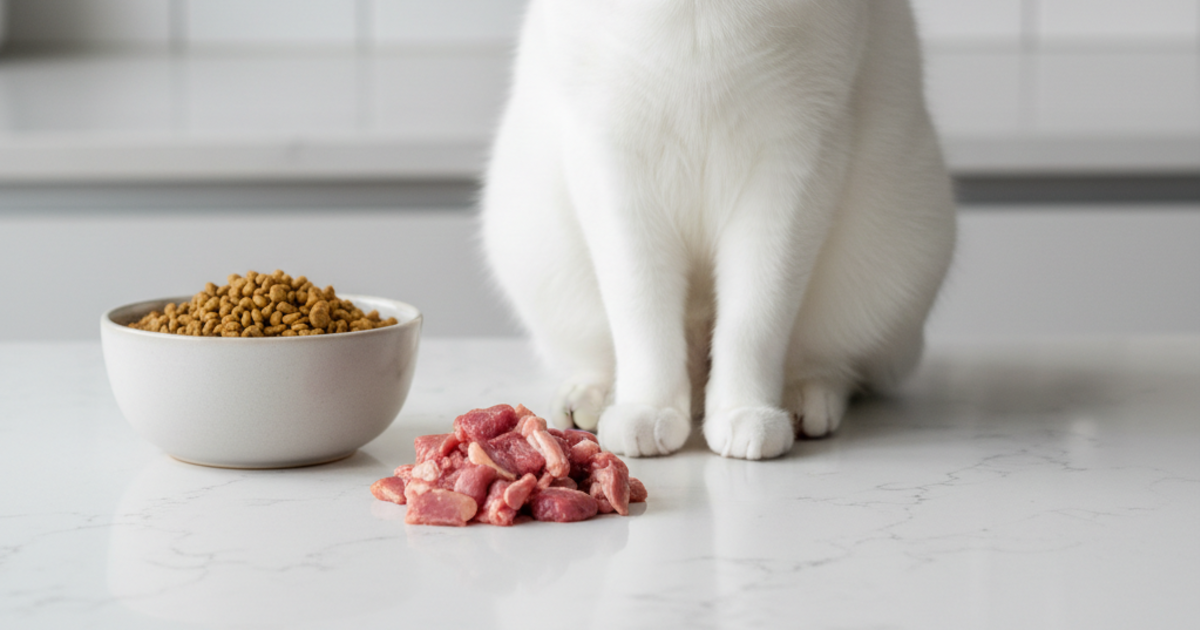
Hypoallergenic cat food uses hydrolyzed proteins (broken into tiny pieces the immune system does not recognize) or a novel protein your cat has never eaten, to avoid triggering a food allergy. It is used in a strict 8-12 week trial under veterinary guidance, not as a general upgrade for healthy cats.
When a cat has constant itching, over-grooming, skin sores or chronic vomiting and diarrhea, a food allergy or intolerance may be one of the possible causes. A "hypoallergenic" diet is the main tool for finding out. This guide explains how food allergies show up in cats, how these diets work, the difference between hydrolyzed and novel-protein foods, how to run a proper food trial, what can go wrong, how to portion the food and what happens after the trial. Use the cat food calculator to set your cat's daily calories before you start.
What is a food allergy in cats?
A food allergy is an immune reaction to a specific ingredient, almost always a protein. The most commonly reported triggers in cats are beef, fish, dairy and chicken. Symptoms can include:
- Itchy skin, especially around the face, ears and neck
- Over-grooming, hair loss and scabs
- Small crusty bumps along the back and neck, sometimes called miliary dermatitis
- Recurrent ear infections
- Vomiting or loose stools
- Chronic soft stool or flatulence
Many of these signs also occur with fleas, environmental allergies and infections, so a vet should rule out other causes first. Food allergy is thought to be a minority of itchy-cat cases, and environmental allergy and flea allergy are more common.
Food allergy vs food intolerance
| Feature | Food allergy | Food intolerance |
|---|---|---|
| Mechanism | Immune reaction to a protein | Digestive reaction, not immune-mediated |
| Typical signs | Itching, skin lesions, ear infections, sometimes GI signs | Vomiting, diarrhea, gas |
| Onset | Can develop after months or years of eating the same food | Often soon after eating the ingredient |
| Diagnosis | Elimination diet trial | Elimination diet trial |
Both are managed by identifying and avoiding the trigger, which is why the trial is the same.
How hypoallergenic cat foods work
Hydrolyzed protein diets
The protein is broken into very small fragments by a process called hydrolysis. The immune system generally does not recognize the fragments as allergens. These diets are typically prescription, and are often the vet's first choice for a food trial.
Novel protein diets
These use a protein your cat has not eaten before, for example duck, rabbit, venison or kangaroo, usually with a limited ingredient list. They work only if the protein is truly new to your cat, so the history of what your cat has eaten matters.
Over-the-counter "hypoallergenic" or limited-ingredient foods
Labels like "limited ingredient" or "sensitive" are not regulated the same way as prescription diets. Some are cross-contaminated with other proteins, so they are less reliable for a diagnostic trial.
| Diet type | How it helps | Best for | Notes |
|---|---|---|---|
| Hydrolyzed protein | Tiny protein fragments avoid immune reaction | Food trials, suspected allergy | Usually prescription |
| Novel protein | A protein not previously eaten | Cats with known diet history | Must be new to your cat |
| Limited ingredient (OTC) | Fewer ingredients | Mild sensitivity | Cross-contamination possible |
Wet or dry for a food trial?
Both can work. Wet food adds moisture, which is good for urinary health, and is easier to portion by the can. Dry food is convenient but denser in calories. Many vets allow either form from the same prescription line. Pick the one your cat will reliably eat, because refusing food is the main reason trials fail.
How to run a food trial
A food trial is the only reliable way to confirm a food allergy.
- Visit your vet to rule out parasites, infections and other causes.
- Choose one diet recommended by your vet and feed only that.
- Run it for 8-12 weeks. Skin signs can take that long to improve.
- Offer nothing else: no treats, flavored medications, table scraps or flavored chews, and keep other pets' food out of reach.
- Track symptoms in a diary (itch level, vomiting, stool quality).
- Rechallenge if advised. Your vet may reintroduce the old food to confirm the allergy.
Even a small slip, such as a lick of tuna, can restart the reaction and confuse the result.
Making the trial work in a real home
- Multi-cat homes: feed cats in separate rooms or use microchip feeders so the trial cat cannot eat other cats' food.
- Outdoor cats: hunting and scavenging can ruin a trial. Keep the cat indoors during the trial if possible.
- Medications and supplements: ask your vet for protein-free or compatible versions.
- Family members: make sure everyone knows no treats or scraps are allowed.
- Litter and toys: these are fine, but avoid food-scented toys.
- Check the label every time you buy, because brands change formulas.
Worked example
A 4.5 kg (10 lb) neutered adult cat starting a hydrolyzed diet.
- Resting energy: RER = 70 × 4.5^0.75 = 70 × 3.09 = about 216 kcal.
- Daily need: 216 × 1.2 (neutered adult) = about 260 kcal.
- If the food is 360 kcal per cup: 260 ÷ 360 = about 0.72 cup per day.
- Split into 3-4 meals, about 0.18-0.24 cup each.
- Weigh every 2 weeks and adjust the amount by about 10% if weight drifts.
Prescription diets can differ in calorie density, so always use the number on your bag, not a generic chart.
How to switch foods
Transition over about 7-10 days unless your vet advises otherwise, mixing more of the new food each day. For a strict trial, some vets prefer a quicker switch. Follow their directions. If your cat refuses the new food for more than a day, contact your vet rather than waiting, since cats that stop eating can develop fatty liver disease.
What if the trial works?
If signs improve over 8-12 weeks, your vet may ask you to rechallenge with the old food. If symptoms return within days, a food allergy is confirmed. You can then either stay on the trial diet long term or, with your vet, test individual ingredients to find a cheaper, more varied diet your cat tolerates.
What if it does not work?
If there is no improvement after a full, strict trial, food allergy is less likely, and your vet may look at environmental allergies, flea allergy, infections or other conditions. A slip in the trial is the most common reason for poor results, so be honest with your vet about any extras.
Do all cats need hypoallergenic food?
No. Healthy cats without signs of allergy do not need it. Using it "just in case" can be expensive and may make future diagnosis harder, because you will have used up your cat's novel options.
Common mistakes
- Self-diagnosing and skipping the vet check
- Using an over-the-counter limited-ingredient food for a diagnostic trial
- Giving treats or flavored medications during the trial
- Stopping after 3-4 weeks, before skin signs can improve
- Letting other pets share the food bowl
- Not tracking symptoms
When to call your vet
Contact your vet for persistent itching, hair loss, skin sores, repeated ear problems, ongoing vomiting or diarrhea, or weight loss. Seek urgent care if your cat has facial swelling, difficulty breathing, collapse or repeated vomiting with lethargy. For suspected poisoning, call the ASPCA Animal Poison Control Center at 888-426-4435 or the Pet Poison Helpline at 855-764-7661 (fees may apply).
The bottom line
Hypoallergenic cat food is a diagnostic and management tool, not a general upgrade. Work with your vet, keep the trial strict and measure portions with the cat food calculator.
Frequently asked questions
PawCalculator Editorial
We combine veterinary references, published guidelines, and calculator-grade modeling. This article is for education, not a substitute for an exam.
+ Follow on PawTalk