People act like this is a hard decision. It isn't - once you're honest about what you actually want from a dog.
Golden Retrievers and Labradors are frequently described as interchangeable, and in a few ways they are. Both are friendly, both are trainable, both are good with children, both shed constantly. If you put one in a room with a stranger they've never met, neither is likely to cause a problem.
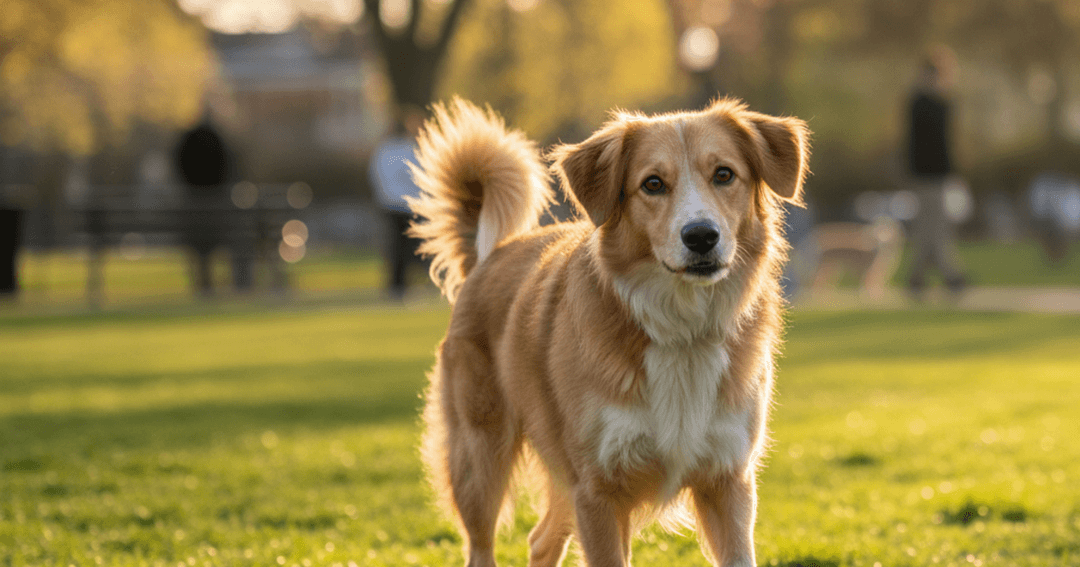
But spend a week with each breed and the differences become obvious. Goldens are emotionally attuned - they read the room, they mirror household moods, they can be clingy in a way some owners find endearing and others find exhausting. Labs are more bulletproof - higher energy, more independent, less sensitive to household dynamics, more likely to knock something over and look entirely unrepentant about it.
Which of those sounds better to you is probably which breed you should get.
Here's the full breakdown for owners who want to go deeper than that.
Where They Came From - and Why It Still Matters
Both breeds were developed as retrieving gun dogs, but their specific origins shaped meaningfully different working styles that persist in domestic temperament today.
The Labrador Retriever originated in Newfoundland, Canada - not Labrador, despite the name - bred by fishermen to retrieve nets and fish from cold water. The breed was later refined in Britain as a gun dog. Labs were selected for endurance, enthusiasm, and the ability to work independently across long distances. That working history produced a dog that is high-drive, highly food-motivated, and capable of functioning without constant human direction.
The Golden Retriever was developed in the Scottish Highlands in the mid-1800s by Lord Tweedmouth, who crossed a yellow retriever with a Tweed Water Spaniel. Goldens were specifically bred for close, cooperative work with hunters - operating within sight of the handler, responding to subtle cues, retrieving game gently and returning to hand reliably. That history produced a dog that is more handler-focused, more emotionally responsive, and more sensitive to correction.
Both breeds share webbed feet, double coats, and a genetic fondness for carrying things in their mouths. The difference is in how they relate to people: Goldens want to work with you, Labs want to work for you, and they're quite comfortable getting on with it.
Temperament: The Real Differences
Golden Retrievers are frequently described as emotionally intuitive. They notice when someone in the household is upset. They adjust their behaviour to match the energy around them. They seek physical closeness - a Golden that isn't leaning on someone or following someone around is a Golden that's asleep. Breeders and long-time owners use the word "clingy" with affection.
This emotional attunement makes them exceptional therapy and support dogs. It also means they're more sensitive to raised voices, household stress, and harsh training. A Golden that's frequently scolded becomes anxious in a way that a Lab typically doesn't.
Labrador Retrievers are more emotionally resilient - less affected by household mood, faster to bounce back from a correction, more consistently cheerful regardless of what's happening around them. They're also more independently motivated, which manifests as both a strength (they'll play happily by themselves if exercised) and a challenge (they'll get into things if not managed).
Labs are less likely to develop separation anxiety. They're also less likely to pick up on subtle social cues that would cause a Golden to adjust its behaviour. This reads as confidence in some contexts and obliviousness in others.
One practical implication: for households with young children whose moods are unpredictable and loud, Labs often handle the chaos more easily. For households that want a dog deeply tuned to the emotional life of the family, Goldens are hard to beat.
Energy Levels and Exercise Needs
Both breeds need significant daily exercise. Neither is a casual-walk dog as a young adult. That said, there are differences in energy profile.
Labs tend to have higher peak energy and a longer active phase in their day. A young Lab that hasn't been adequately exercised will find something to do - usually something you'd rather it didn't. The destructive phase in Labs can run well into their second or third year. An exercised Lab is a calm, pleasant housemate. An under-exercised Lab is a 70-pound wrecking ball with selective hearing.
Labs also have three colour variants - black, yellow, and chocolate - and anecdotally (with some supporting data) chocolate Labs have been observed to be higher-strung and shorter-lived on average than black and yellow Labs. The difference may relate to selective breeding pressures for the chocolate colour rather than working temperament.
Goldens have high energy in their youth but typically settle into a more moderate adult energy level more gracefully than Labs. They still need daily exercise - an hour is a reasonable minimum for a young adult - but the transition from "puppy chaos" to "manageable adult" tends to happen more smoothly.
Both breeds love water. If you have access to a lake, river, or beach, both will thank you for it.
Grooming and Shedding
This is where the breeds diverge most practically, and where the most owners make an underestimated choice.
Golden Retrievers have a long, feathered double coat that sheds year-round with heavy seasonal blowouts in spring and autumn. They require brushing 2-3 times a week minimum to prevent matting - more during shedding season. The feathering on the tail, ears, chest, and legs collects debris and mats if ignored. Professional grooming every few months helps manage the coat.
Labrador Retrievers have a short, dense double coat that also sheds year-round with heavy seasonal shedding. The individual hairs are short but produced in enormous quantity. Lab fur embeds into fabric in a way that requires a dedicated lint roller habit. Grooming requirements are much lower - a brush once or twice a week is sufficient - but the volume of shed hair is comparable to a Golden despite the shorter coat.
Neither breed is suitable for people who are genuinely sensitive to dog hair in their home. Both shed significantly more than owners expect. The question is whether you prefer visible tufts of longer hair (Golden) or a fine layer of short embedded fur on every surface (Lab).
Health Considerations
Both breeds have breed-specific health concerns that prospective owners should understand.
Golden Retrievers have a well-documented elevated cancer rate. Studies - including a large UC Davis study - have found that Goldens have among the highest cancer mortality rates of any breed, with some data suggesting over 60% will develop cancer in their lifetime. The most common types are hemangiosarcoma, lymphosarcoma, mast cell tumours, and osteosarcoma.
This doesn't mean you shouldn't get a Golden. It means:
- Pet insurance from day one, before any diagnosis makes coverage impossible
- Annual vet checks with particular attention to lumps
- Bloodwork from age seven onwards
- Awareness that the average lifespan of 10-12 years may be shorter in practice
Goldens are also prone to hip and elbow dysplasia. Reputable breeders will have OFA (Orthopedic Foundation for Animals) health clearances for both parents. Don't skip this check.
Labrador Retrievers share the hip and elbow dysplasia risk with Goldens - OFA clearances matter here too. Labs have lower cancer mortality rates than Goldens but are prone to obesity (the food motivation that makes them so trainable also makes them voracious), exercise-induced collapse (EIC) in working lines, and progressive retinal atrophy in some lines.
Chocolate Labs, as mentioned, show slightly lower average lifespans in some studies - around 10.7 years compared to 12.1 years for black and yellow Labs. The cause isn't fully understood but may relate to the genetics of coat colour and their association with certain health traits.
Both breeds: buy from breeders who health-test, not from anyone who can't show you OFA clearances on both parents.
Training
Both breeds are among the most trainable dogs in existence. The difference is in how they respond to training.
Goldens are more sensitive to tone and emotion. Positive reinforcement works well; harsh corrections tend to produce anxious shutdown rather than behaviour change. They learn quickly and retain reliably. They want to please their owner specifically, which makes them highly responsive to handler-focused training.
Labs are more reward-motivated than relationship-motivated. They respond extremely well to food-based training - the food drive that makes them steal sandwiches is the same drive that makes them work for treats with single-minded focus. They're more bounce-back after corrections, less likely to be set back by firm handling, and often easier to train for tasks that require persistence over sensitivity.
For first-time dog owners, both are forgiving choices. Neither requires specialist training experience. Both benefit enormously from puppy classes started early - not for basic obedience, but for socialisation with dogs and people before habits are set.
The Comparison at a Glance
| Golden Retriever | Labrador Retriever | |
|---|---|---|
| Temperament | Emotionally attuned, sensitive, handler-focused | Resilient, independent, consistently cheerful |
| Energy | High in youth, settles moderately | High sustained energy, longer puppy phase |
| Grooming | High - long coat, mats, 2-3x weekly brushing | Lower - short coat, still heavy shedding |
| Health concern | Elevated cancer rate, hip/elbow dysplasia | Obesity risk, hip/elbow dysplasia, EIC |
| Lifespan | 10-12 years | 10-12 years (chocolates slightly lower) |
| Training style | Relationship-motivated, positive-reinforcement | Food-motivated, high drive, resilient |
| Best for | Households wanting emotional attunement | Households wanting resilient, high-energy companion |
Which One Is Actually Right for You
Get a Golden if:
- You want a dog deeply tuned to the emotional life of your household
- Your family includes children who will actively engage with the dog and benefit from its sensitivity
- You're committed to regular grooming and can handle the coat maintenance
- You want a dog that will work closely with you and be genuinely responsive to your mood
- You're prepared for the cancer risk and have pet insurance sorted from the start
Get a Lab if:
- You have an active household that needs a dog to keep up with, not slow down for
- You have young children whose noise and unpredictability won't faze the dog
- You want lower grooming overhead (still high shed volume, lower grooming effort)
- You want a highly food-trainable dog for working tasks, sport, or obedience training
- You prefer a dog that's emotionally resilient rather than emotionally attuned
Consider an adult rescue of either breed if: You want a known quantity. Puppies of both breeds are excellent at concealing future temperament. An adult rescue dog that's been fostered in a home with children and assessed for specific behaviour gives you actual information rather than breed-average expectations.
Use the PawCalculator Breed Selector and Compatibility Checker to filter both breeds against your specific household - activity level, children's ages, living space, and allergy considerations all affect which is the better fit.
Are Goldens or Labs better with very young children - under 3? Both are good, but Labs are slightly more physically resilient and less emotionally reactive to the chaos of toddlers. A Golden may become anxious in a persistently loud, unpredictable environment. Both require supervision with young children regardless of breed reputation.
Which breed is easier to train for a first-time owner? Marginally Labs, because their food motivation creates a reliable training lever. Goldens are also easy but require a softer touch - if a first-time owner tends toward frustration and raised voices, a Lab will recover more easily.
Do Labs or Goldens shed more? Comparable overall volume. Golden fur is longer and more visible on surfaces. Lab fur is shorter and embeds more deeply into fabric and carpet. Neither is a low-shed breed.
Which lives longer? Similar average lifespans of 10-12 years. Golden Retrievers have a higher cancer mortality rate that can shorten that range. Standard and yellow Labs trend slightly longer than chocolate Labs on average.
Can either breed be left alone during work hours? Both can manage 4-5 hours with appropriate exercise before and after. Beyond 8 hours daily is too long for either breed without dog walker intervention. Labs handle solitude slightly better than Goldens, which are more prone to separation anxiety.
Use the Breed Selector to compare both breeds side-by-side against your household criteria, and the Dog Food Calculator to estimate daily feeding requirements for either breed.
Partner picks for this guide
As an Awin affiliate, Paw Calculator may earn a commission from qualifying purchases. Prices and availability can change.


Frequently asked questions
PawCalculator Editorial
We combine veterinary references, published guidelines, and calculator-grade modeling. This article is for education, not a substitute for an exam.
+ Follow on PawTalk