How Long Are Cats Pregnant?
Cat gestation runs about 63 to 65 days from conception — roughly 9 weeks, noticeably shorter than a dog's ~63-day-on-average-but-more-variable cycle or a human's 40 weeks. Because cats are induced ovulators (ovulation is triggered by mating rather than happening on a fixed cycle), the exact conception date can be harder to pin down than the mating date — which is exactly why the Cat Pregnancy Calculator works from the mating date and estimates a due date range rather than a single fixed day.
Signs of Pregnancy in Cats
Early signs are subtle and easy to miss:
- "Pinking up" — nipples become noticeably pink and slightly enlarged around 2-3 weeks
- Mild appetite changes — some cats show a brief decrease early on, then a marked increase later
- Weight gain — becomes noticeable from about week 4 onward
- Behavioral changes — increased affection or, less commonly, increased irritability
- Abdominal enlargement — visible from roughly week 5-6
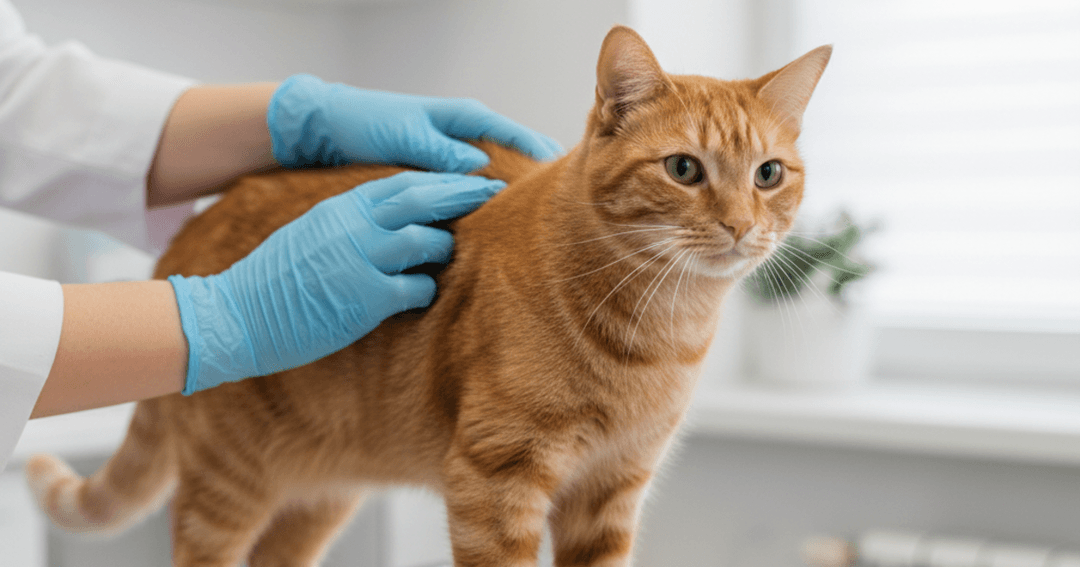
A vet can typically confirm pregnancy by gentle abdominal palpation starting around day 17-25, or via ultrasound as early as day 15-18.
Week-by-Week Gestation Timeline
| Week | What's Happening |
|---|---|
| 1-2 | Fertilization and implantation; no visible signs yet |
| 3 | Nipples begin "pinking up" |
| 4 | Kittens' skeletons begin forming; slight weight gain starts |
| 5 | Abdomen begins to visibly enlarge; vet can often confirm via ultrasound |
| 6 | Kittens' movements may become detectable by gentle palpation |
| 7 | Rapid kitten growth; mother's appetite typically increases significantly |
| 8 | Mother may start "nesting" behavior, seeking a quiet, secluded spot |
| 9 (63-65 days) | Labor typically begins; kittens are born |
Use the Cat Pregnancy Calculator with your cat's mating date to get a projected due date window rather than counting weeks manually.
How Many Kittens Should You Expect?
Average litter size is 4-6 kittens, though first litters tend to run smaller (often 1-4) and litter size generally increases slightly with the mother's age, up to a point. Breed also plays a role — Siamese and Oriental breeds tend toward larger litters, while some purebred lines run smaller on average.
Preparing for Labor
Set up a nesting box in a quiet, low-traffic area about a week before the due date — a low-sided box lined with soft, washable bedding works well.
Know the signs labor is starting: restlessness, nesting behavior intensifying, appetite loss in the final 24 hours, and a drop in body temperature (below 100°F) roughly 12-24 hours before labor begins.
Have an emergency vet contact ready. Most cat births are uneventful and don't need intervention, but knowing who to call — and having transport ready — if labor stalls or a kitten seems stuck matters more once labor has already started than after.
Don't intervene unnecessarily. Cats are generally well-equipped to handle labor on their own; the main job is providing a calm, private space and watching from a distance rather than hovering.
When to Call the Vet During Labor
Contact your vet if:
- More than 2-3 hours pass between kittens with visible straining and no kitten delivered
- Your cat seems to be in visible distress or pain beyond normal labor contractions
- More than 60-70 minutes of active, hard straining without a kitten appearing
- It's been more than 24 hours since labor started and you suspect kittens remain undelivered
Spay Timing and Future Pregnancies
If this wasn't a planned pregnancy, spaying after the kittens are weaned (typically 8 weeks) prevents future litters — cats can go into heat again within days to a few weeks of giving birth, and back-to-back litters put real strain on a mother cat's body. The Pet Insurance Calculator is worth a look before the litter arrives too, since kitten wellness visits and vaccinations add up quickly in the first few months.
Common Mistakes People Make
Assuming the mating date equals the conception date. Because cats are induced ovulators and often mate multiple times over several days, conception timing has some natural variability — which is why due date calculators give a range, not a single day.
Panicking over normal labor pacing. Gaps of 30-60 minutes between kittens are common and not automatically a problem; the concerning threshold is closer to 2-3 hours with visible straining.
Skipping the pre-birth vet check. A quick vet visit mid-pregnancy can confirm approximate litter size via ultrasound or X-ray, which helps you know roughly how many kittens to expect and flag if delivery might need extra attention.
Not planning for the spay afterward. Weaning-then-spay is easy to forget once kittens arrive, but a fertile mother cat can be pregnant again within weeks of giving birth if not separated from an intact male.
Recommended Tools
- Cat Pregnancy Calculator — Enter the mating date for an estimated due date and gestation timeline.
- Dog Pregnancy Calculator — Same logic, adjusted for canine gestation length, if you're managing both.
- Cat Food Calculator — Pregnant and nursing cats need significantly more calories; adjust portions as the pregnancy progresses.
- Vet Cost Estimator — Budget for prenatal checks, the birth itself, and kitten vaccinations.
- Pet Name Generator — Because naming a whole litter is its own project.
Estimate Your Cat's Due Date
Cat pregnancies move fast — about 9 weeks start to finish — which doesn't leave much runway to prepare once you know.
→ Use the Cat Pregnancy Calculator to get an estimated due date from your cat's mating date.
Frequently asked questions
PawCalculator Editorial
We combine veterinary references, published guidelines, and calculator-grade modeling. This article is for education, not a substitute for an exam.
+ Follow on PawTalk