The myth: the cheapest litter is the cheapest option
It's tempting to grab whatever clumping clay litter is on sale and assume that's the budget-friendly choice, but litter cost isn't just about price per bag — it's price per bag combined with how much you actually need to use and how often you need to fully change it. A cheaper litter that clumps poorly or needs more frequent full changes can end up costing about the same, or more, than a pricier litter that's more efficient per use.
What actually drives monthly litter cost
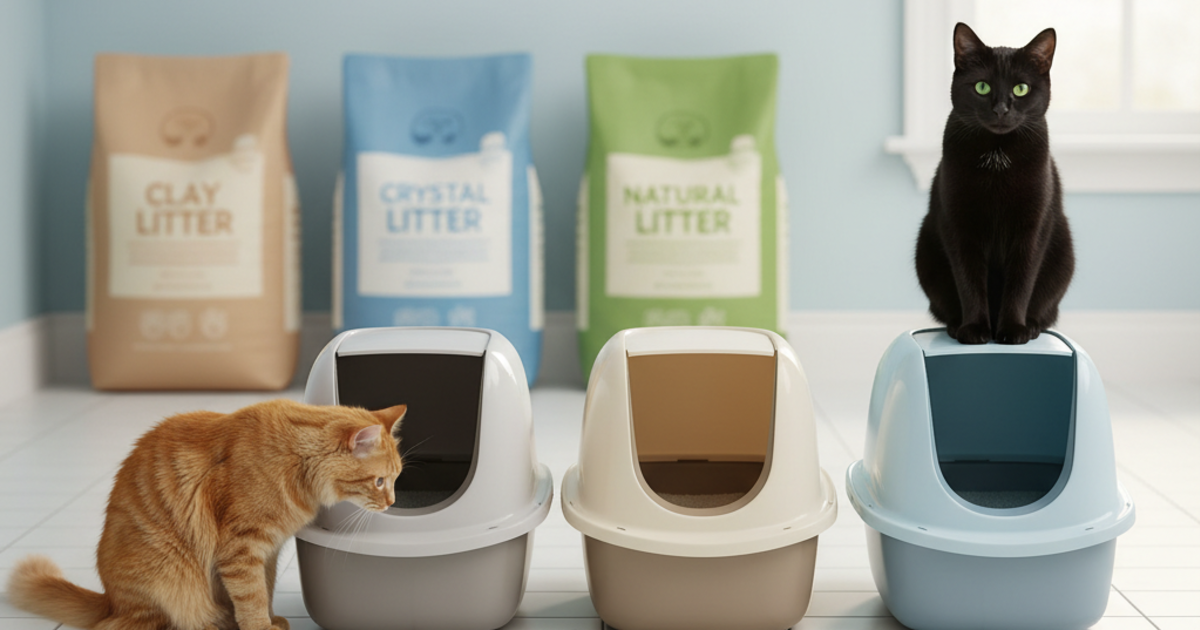
Litter type. Clumping clay is typically the least expensive per pound but often needs a full change more frequently. Crystal/silica litter tends to cost more upfront but can last longer between full changes for odor control. Natural litters (pine, corn, walnut, tofu-based) vary widely in price and usage rate, with some clumping tighter and lasting longer per pound than others.
Number of cats and number of boxes. A widely cited veterinary behavior guideline — often summarized as the "n+1 rule" — recommends one litter box per cat, plus one extra, to reduce house-soiling and litter box avoidance issues. That means a two-cat household ideally runs three boxes, which directly multiplies the litter volume needed compared to a single-cat home.
Change frequency. Daily scooping extends how long a full change can wait, but full changes still need to happen regularly regardless of scooping habits, and multi-cat households typically need more frequent full changes than single-cat homes.
| Litter type | Relative cost per lb | Typical usage pattern |
|---|---|---|
| Clumping clay | Lowest | Often needs more frequent full changes |
| Crystal / silica | Higher | Can extend time between full changes |
| Natural (pine, corn, walnut, tofu) | Varies widely | Usage rate depends heavily on specific product |
Common mistakes people make
Buying the cheapest litter without checking usage rate. A litter that requires more volume per box, or more frequent full changes, can erase the per-pound savings entirely.
Ignoring the "one box per cat plus one" guideline. Running too few boxes for the number of cats in the house isn't just a litter cost issue — it's a recognized cause of house-soiling and litter box avoidance in multi-cat homes.
Forgetting add-on costs. Litter mats, box liners, and odor-control additives are recurring costs that don't show up if you only price the litter itself.
Switching litter types abruptly. Cats can reject an unfamiliar litter texture, and veterinary behavior guidance generally recommends a gradual transition — an abrupt switch that gets rejected wastes the cost of the new litter entirely.
Not adjusting for life stage or health changes. Kittens and cats with certain health conditions may need more frequent litter changes, which shifts the real monthly cost above a healthy adult cat's typical usage.
Recommended tools
- Litter Cost Calculator — compare monthly litter costs across clumping clay, crystal, and natural litter types
- Litter Box Calculator — get the right cleaning schedule for single and multi-cat homes
- Cat Cost Calculator (lifetime & monthly) — see how litter fits into your cat's full monthly and lifetime budget
- Multi-Pet Household Cost Calculator — combine litter with food, vet care, and grooming across every pet in the house
- Cat Food Calculator (portions) — budget the other major recurring cat expense alongside litter
FAQs
How much does cat litter cost per month? It depends heavily on litter type, number of cats, and number of boxes — clumping clay is typically the cheapest per pound, but usage rate and change frequency affect the real monthly total more than sticker price alone.
Does litter type change the real cost? Yes — a cheaper litter that needs more frequent full changes or heavier daily use can end up costing about the same as a pricier, more efficient option.
How many litter boxes do I actually need? A widely cited guideline recommends one box per cat plus one extra, both to reduce house-soiling risk and because it directly affects how much litter you'll go through.
Does switching litter types save money? It can, but abrupt switches risk a cat rejecting the new litter — a gradual transition protects both the switch's success and the cost of the litter you just bought.
Are natural litters worth the extra cost? It depends on the specific product's usage rate and your priorities — some natural litters use less per change or offer better odor control, offsetting a higher per-pound price, while others don't.
How does multi-cat ownership change litter budgeting? Cost scales with both the number of cats and the number of boxes recommended for that many cats, so multi-cat households should budget litter well above a simple per-cat multiple of single-cat costs.
The bottom line
Litter cost is a per-use calculation, not a per-bag one — the cheapest bag on the shelf isn't necessarily the cheapest month, especially once box count and change frequency are factored in for multi-cat households.
Frequently asked questions
PawCalculator Editorial
We combine veterinary references, published guidelines, and calculator-grade modeling. This article is for education, not a substitute for an exam.
+ Follow on PawTalk