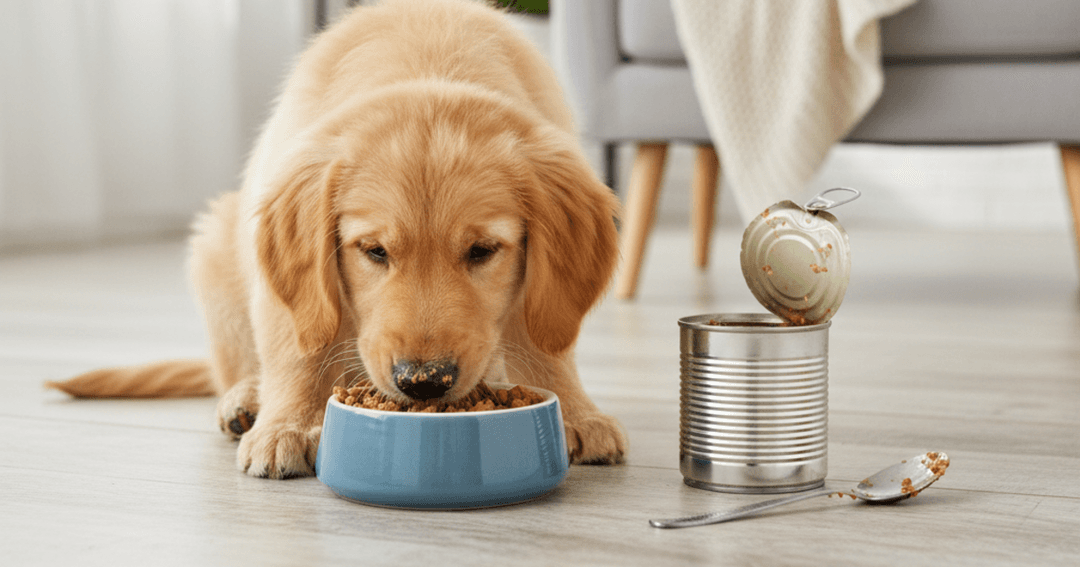
Fresh dog food is gently cooked, refrigerated or frozen food, usually delivered by subscription. It can be tasty and highly digestible, but it generally costs more than kibble. Compare brands on cost per day, calories per ounce, a complete-and-balanced AAFCO statement and nutritionist oversight, then portion by calories.
Fresh dog food has grown quickly because owners like seeing real ingredients and many dogs love it. But brands differ in nutrition, pricing, packaging and customization. Rather than naming a "winner," this guide shows you how to compare brands fairly, calculate your real daily cost, portion correctly, store the food safely and decide whether full or partial fresh feeding fits your budget. Use the dog food calculator to find your dog's daily calories first.
What counts as "fresh" dog food?
Fresh dog food typically means whole-food ingredients, lightly cooked or minimally processed, kept cold and sold with a short shelf life. It is different from:
- Kibble: extruded, shelf-stable and dry.
- Canned food: cooked in the can, shelf-stable.
- Raw food: uncooked, with extra food safety considerations for dogs and people.
- Homemade diets: only safe when formulated by a veterinary nutritionist, because most online recipes are not balanced.
- Freeze-dried or air-dried food: shelf-stable and lightly processed, but not the same as refrigerated fresh food.
How fresh food is made
Most fresh brands cook ingredients at lower temperatures than kibble extrusion, then chill or freeze them in pre-portioned packs. Recipes typically combine a named meat, vegetables, a fat source and a vitamin and mineral premix to make the diet complete. The gentler cooking may preserve some nutrients, though there is little head-to-head evidence that fresh diets improve health outcomes in healthy dogs. The clearest advantages are palatability, moisture and ingredient visibility.
How to compare fresh dog food brands
| Factor | What to look for |
|---|---|
| AAFCO statement | "Complete and balanced" for your dog's life stage, ideally by feeding trial or formulation |
| Nutritionist | A board-certified veterinary nutritionist or a qualified team formulating recipes |
| Calories per ounce or pound | Needed to portion correctly |
| Ingredient transparency | Named proteins, vegetables and supplements listed |
| Customization | Portion sizing, allergy-friendly recipes, life-stage recipes |
| Delivery and packaging | Frozen vs refrigerated, flexibility to pause or skip |
| Cost per day | Calculated for your dog's weight |
| Safety record | Recall history and testing practices |
| Trial options | Starter boxes or discounts that let you test acceptance |
Ask each company for an actual calorie figure and a feeding guideline for your dog's weight. If a brand cannot tell you its calories, that is a red flag.
Questions to ask before you subscribe
- Is every recipe complete and balanced for my dog's life stage, or only some of them?
- Who formulates the recipes, and what are their credentials?
- Do you run feeding trials or test finished products?
- What are the calories per ounce or pound for each recipe?
- How do you ship, and what happens if a delivery is delayed?
- Can I pause, skip or cancel without penalty?
- What is the full price per day for my dog's weight, including shipping?
- Have you had recalls, and how were they handled?
Worked example
A 10 kg (22 lb) neutered adult dog, comparing fresh food to kibble. All prices and calorie figures are illustrative, so use your own quotes.
- Resting energy: RER = 70 × 10^0.75 = 70 × 5.62 = about 394 kcal.
- Daily need: 394 × 1.6 = about 630 kcal.
- If the fresh food has 1,200 kcal per pound: 630 ÷ 1,200 = about 0.53 lb, roughly 8.4 oz per day.
- If the plan costs $6 per pound: 0.53 × $6 = about $3.15 per day, or roughly $95 a month.
- Compare with a budget kibble at roughly $0.53 per day for the same calories, and decide what the difference is worth to you.
- Partial feeding option: use fresh for half the calories and kibble for the rest, and cut the cost roughly in half, to about $1.85 per day.
- Scale for size: a 30 kg dog needs roughly twice the calories, so the same plan would cost about double.
Treat these numbers as an illustration of the method, not a price quote.
Cost per day across dog sizes
| Dog size | Approx. daily calories | Example fresh cost per day at $6/lb and 1,200 kcal/lb |
|---|---|---|
| 5 kg (11 lb) | 375 kcal | About $1.90 |
| 10 kg (22 lb) | 630 kcal | About $3.15 |
| 20 kg (44 lb) | 1,060 kcal | About $5.30 |
| 30 kg (66 lb) | 1,435 kcal | About $7.20 |
Small dogs are the most affordable to feed fresh. For large dogs, many owners choose a mixed approach.
Portion fresh food carefully
Fresh foods are often less calorie-dense than kibble, so portions look large. Follow the company's recommendation, then weigh your dog every 2-4 weeks and adjust. Do not eyeball scoops, because the weights and densities differ between brands. Use a kitchen scale for accuracy, and remember to count treats within the 10% allowance.
Pros and cons
Pros
- Highly palatable, great for picky eaters
- Real, recognizable ingredients
- Convenient pre-portioned packs
- Often higher moisture
- Easy to adjust calories by pack size
Cons
- Costs more than kibble
- Needs freezer or fridge space
- Short shelf life once thawed
- Not every brand is complete and balanced
- Dependent on deliveries
- Softer stools in some dogs during the switch
Mixing fresh food with kibble
Partial feeding is a practical compromise. Set the total daily calories first, assign part of them to fresh food and the rest to kibble, and reduce each portion accordingly. Do not simply add fresh food on top of a full kibble ration, which will cause weight gain. Choose a kibble that is complete and balanced so the overall diet stays safe.
Storage and safety
- Keep it cold: follow the label for freezing and refrigeration.
- Thaw in the fridge, not on the counter.
- Use within the time on the label once thawed, usually a few days.
- Wash bowls and hands after feeding.
- Do not refreeze thawed food.
- Do not leave food out for more than about 20-30 minutes, less in warm weather.
- Check packs on arrival. If the box arrives warm and the food has thawed completely, contact the company.
Switching to fresh food
Mix the fresh food with the old food over 7-10 days to avoid digestive upset. Watch stool quality, appetite and energy.
- Days 1-3: 25% fresh, 75% old
- Days 4-6: 50% fresh, 50% old
- Days 7-9: 75% fresh, 25% old
- Day 10: 100% fresh, if desired
Stools are often smaller and softer on fresh diets. Slow down if diarrhea develops.
Common mistakes
- Assuming fresh means complete. Check the AAFCO statement for every recipe.
- Feeding by volume instead of weight.
- Ignoring total cost, including shipping and price changes.
- Overfeeding because packs look large, or underfeeding because of cost.
- Switching suddenly.
- Leaving thawed food out.
When fresh food may not suit
Dogs on prescription diets, those with kidney, pancreatic or heart conditions or those needing strict nutrient control should only change food under vet guidance. Puppies, especially large-breed puppies, need foods formulated for growth with controlled calcium, so check the label carefully.
When to call your vet
Contact your vet if your dog has vomiting, diarrhea, weight loss, reduced appetite, itching or lethargy after a diet change. For suspected poisoning, call the ASPCA Animal Poison Control Center at 888-426-4435 or the Pet Poison Helpline at 855-764-7661 (fees may apply).
The bottom line
The best fresh dog food brand is the one that is complete and balanced, fits your budget and your dog thrives on. Work out calories with the dog food calculator, then compare real quotes.
Frequently asked questions
PawCalculator Editorial
We combine veterinary references, published guidelines, and calculator-grade modeling. This article is for education, not a substitute for an exam.
+ Follow on PawTalk