Dog Harness Size Chart & Calculator
Your inputs
Results update live as you type.
Your results
Live — updates as you change inputs.
Harness sizing
24" measured → plan ~24.5"
Chest (with fit room)
No universal harness standard — brand charts differ.
Weight-only sizing is less accurate; prefer chest girth.
Veterinary reference only
Confirm with each brand's published size chart before purchase.
Keep going with a related calculator.
Find the harness size that fits your dog
A harness should fit snugly without rubbing, and it should not slip off when your dog pulls or shakes. The measurement that matters most is chest girth: the widest point around the ribcage, just behind the front legs. Neck girth is a secondary check, mostly for small dogs and dogs with short necks. Use the calculator above to convert a chest measurement into a suggested harness size and check the fit against the two-finger rule.
Brand size charts vary a lot, so treat the size bands here as a starting point. Always compare your chest measurement with the specific brand's chart before you buy, and check whether the chart uses chest girth or neck girth. Many charts also list a weight range, but chest shape matters more than weight.
Worked example: measuring and choosing a size
Suppose you measure your dog's chest at 22 inches. You open a brand's chart and see sizes labelled by chest range. If 22 inches sits near the top of the small band, check the chart's note on whether to size up. Many brands advise choosing the larger size when between two, then tightening the straps to fit.
Now suppose the same dog's chest measures 22 inches, but the brand's medium band starts at 23 inches. The dog is below the medium range, so the small size is the right choice. The fit check after putting the harness on is the final test.
These examples show the method, not a specific brand's sizes. Always use the chart from the product you are buying.
How to measure chest girth
- Use a soft tape measure. A cloth tape works better than a metal one.
- Measure around the widest part of the chest, just behind the front legs.
- Keep the tape level and snug, but not tight. You should be able to fit two fingers under it.
- Measure twice and use the larger reading if the two differ by more than half an inch.
Measure while your dog stands relaxed, with its weight even on all four legs. A dog that is excited, crouching or lying down gives misleading readings. If your dog has a thick coat, measure over the fur as it lies naturally.
The two-finger rule, and how to check it
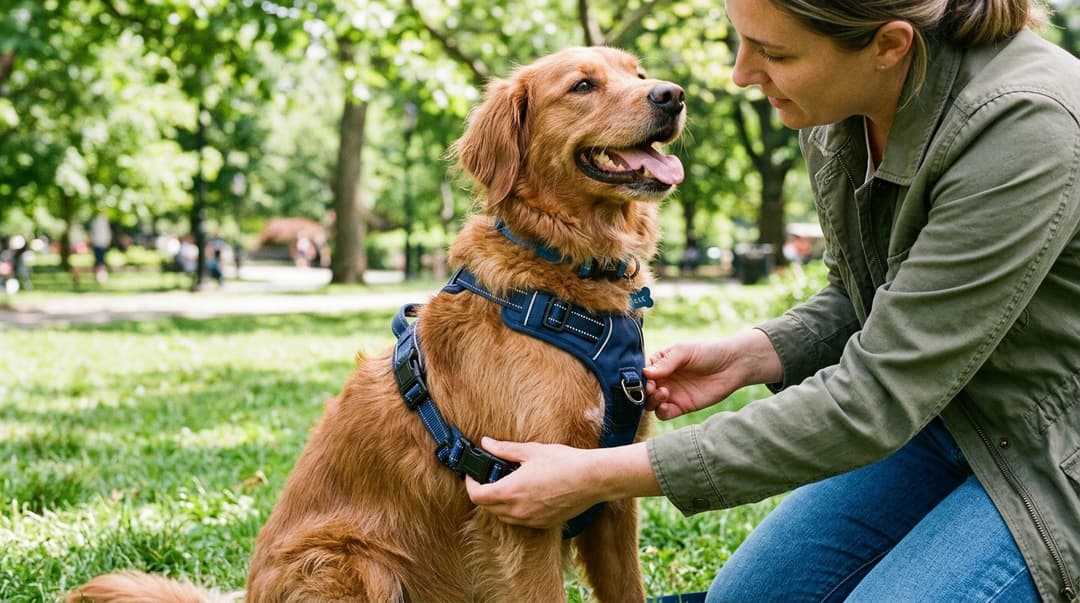
Once the harness is on, slide two fingers under each strap and under the chest plate. If you cannot fit two fingers, the harness is too tight. If a whole hand fits, it is too loose. Check the fit on a walk, not only at home, because a harness that seems right when the dog is standing still can shift once it starts to pull.
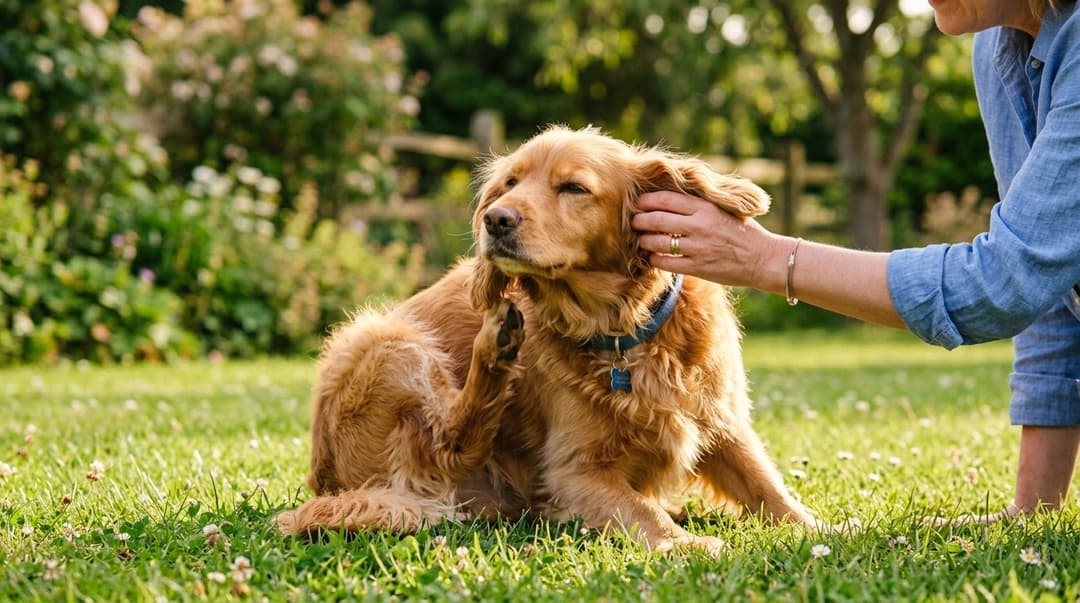
Look for signs of a bad fit after a walk: red patches or rubbing under the armpits, hair loss where the straps sit, or the dog repeatedly scratching or backing out of the harness. Any of these means the fit needs adjusting.
Harness types and what to look for
- Step-in harnesses: easy to put on, and popular for dogs who dislike having a harness pulled over the head.
- Overhead harnesses: more secure for dogs who pull, but they need care to fit correctly so the straps do not press on the throat.
- Front-clip harnesses: reduce pulling by turning the dog gently toward you on the lead. They are often recommended for strong pullers, but they need to be used with training, not as a quick fix.
- Back-clip harnesses: comfortable for relaxed walkers, but they can encourage pulling in some dogs.
- Vest-style harnesses: wide chest panels that spread pressure, useful for dogs with a deep chest.
Whichever style you choose, check that the chest plate sits flat, the straps do not cross the windpipe, and the buckles are easy to undo in an emergency.
Puppies and growing dogs
Puppies grow quickly, so measure every few weeks in the first year, and expect to change size several times. Adjustable harnesses help during growth, but still check the fit at each size change. A harness that stops fitting can rub the skin and cause sores, so do not wait until the strap is fully extended before you resize.
Harness and collar together
A harness is not a replacement for a collar in every case. Many owners keep a collar for ID tags and a harness for walks, and a dog with a sensitive neck or a history of tracheal trouble may do better on a harness for everyday use. For collar sizing, see the Dog Collar Size Calculator. Neck measurements belong on the collar page, and chest measurements belong here.
Harness safety checks
- Check the fit every few weeks, and always after a change in weight or coat.
- Do not leave a harness on a dog unsupervised in a crate or a kennel, where it can catch on something.
- Check the stitching and the buckles regularly, especially on dogs who chew.
- Remove a wet harness after walks so the skin can dry.
Related tools and guides
- Dog Collar Size Calculator
- Dog Crate Size Calculator
- Dog Size Calculator for adult breed size
- Dog Sizing Calculators hub
Questions about this calculator
Snug, but not tight. You should be able to slide two fingers under each strap and under the chest plate. If the straps dig in, rub the skin or leave marks after removal, the harness is too tight. If a whole hand fits under the strap, it is too loose and may slip.
The math, openly documented.
Inputs
Enter the details that affect your estimate.
weight · age · breed
Normalize
Validate ranges and convert units when needed.
lbs ↔ kg
Calculate
Veterinary or industry-standard formulas applied.
result = f(inputs)
Results
Clear outputs with context and disclaimers.
display + notes
More from Lifestyle
Dog Collar Size Chart & Calculator
dog collar size chart: Find your dog's collar size from neck measurement, with a size chart and the two-finger fit check
Open tool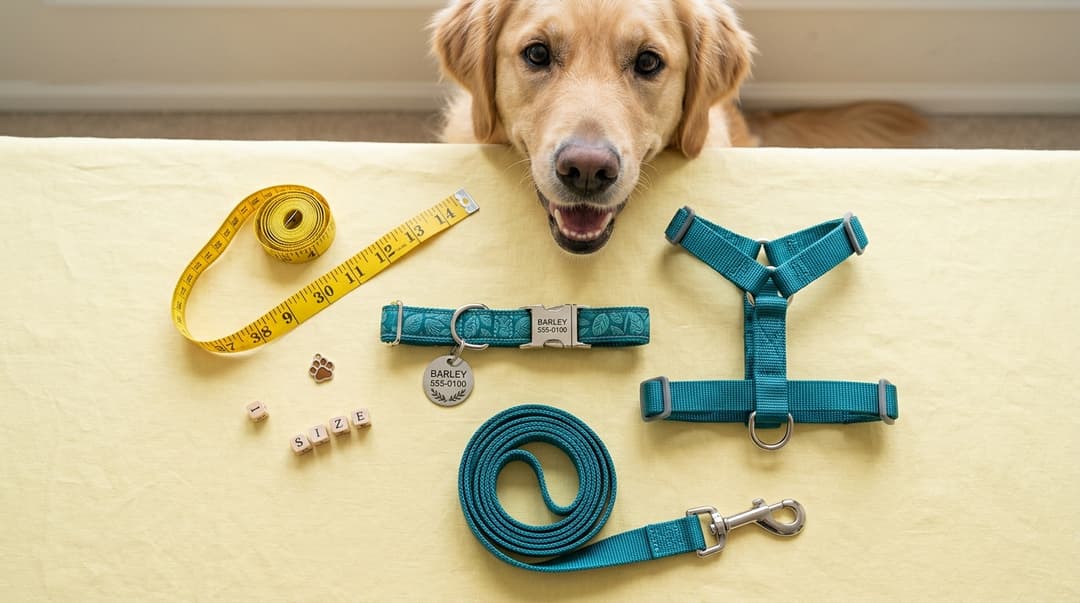
Dog sizing calculators
dog sizing calculator: Measure once, size correctly — crate (home & airline), harness, collar, and puppy adult-size tool
Open tool
Pet cost calculators
pet cost calculator: Estimate monthly and lifetime pet costs — dog and cat ownership, adoption first-year, multi-pet, gr
Open toolArticles from Insights


Got an edge case the calculator can't handle?
247 active threads about dog nutrition right now. Verified vets and experienced owners answer within hours.