Feeding your dog might seem simple, but it is one of the most misunderstood parts of pet care. Many dog owners either overfeed or underfeed without realizing it, which can lead to obesity, malnutrition, and serious health issues over time.
If you have ever wondered how much food your dog really needs, you are not alone. This is one of the most searched questions online and widely discussed in pet communities.
This guide will help you understand exactly how much to feed your dog based on weight, age, and activity level.
Why Proper Feeding Matters
The amount you feed your dog directly affects overall health. Proper nutrition helps maintain:
- Healthy body weight
- High energy levels
- Strong immune system
- Better digestion
- Longer lifespan
Many studies show that a large percentage of dogs are overweight, mainly due to incorrect portion sizes.
How Much Should You Feed Your Dog?
There is no single answer because every dog is different. However, feeding depends on three main factors:
Weight. Your dog's weight is the starting point for calculating food intake.
Age. Puppies need more calories for growth, adult dogs need balanced maintenance, and senior dogs usually require fewer calories.
Activity level. Active dogs burn more calories and need more food, while less active dogs need smaller portions.
Dog Feeding Chart: General Guide
| Dog Weight | Daily Calories | Cups of Dry Food (Approx) |
|---|
| 5 kg | 200–300 kcal | ½ – 1 cup |
| 10 kg | 400–500 kcal | 1 – 1.5 cups |
| 20 kg | 700–900 kcal | 2 – 3 cups |
| 30 kg | 900–1,200 kcal | 3 – 4 cups |
| 40+ kg | 1,200+ kcal | 4+ cups |
This is only a general guide and may vary depending on the dog.
Use a Dog Food Calculator
Instead of guessing, it is better to use a calculator for accurate results. The Dog Food Calculator works out food requirements based on:
- Weight
- Age
- Activity level
- Breed size
This helps you get a more precise feeding recommendation.
If you want that recommendation narrowed down further, the Dog Food Calculator by Weight & Age lets you enter your dog's exact weight and age bracket to get a single tailored portion instead of a broader range.
How Often Should You Feed Your Dog?
Puppies should be fed more frequently because they are growing:
- 2 to 3 months: 4 meals per day
- 3 to 6 months: 3 meals per day
- 6 to 12 months: 2 meals per day
Adult dogs should generally be fed twice a day. Senior dogs may need one or two meals depending on their health. Consistency in feeding time is very important.
Signs You Are Overfeeding Your Dog
Overfeeding is a common issue. Look for these signs:
- Weight gain
- Low activity
- No visible waistline
- Heavy breathing
- Constant begging
Many owners mistake begging for hunger, but it is often just behavior. If you're not sure which category your dog actually falls into, the Is My Dog Overweight? Calculator walks through the same body-condition checks a vet would use.
Signs You Are Underfeeding Your Dog
Underfeeding can cause serious health issues. Watch for:
- Visible ribs
- Low energy
- Weight loss
- Weakness
- Poor coat condition
Types of Dog Food
Different food types affect how much you should feed.
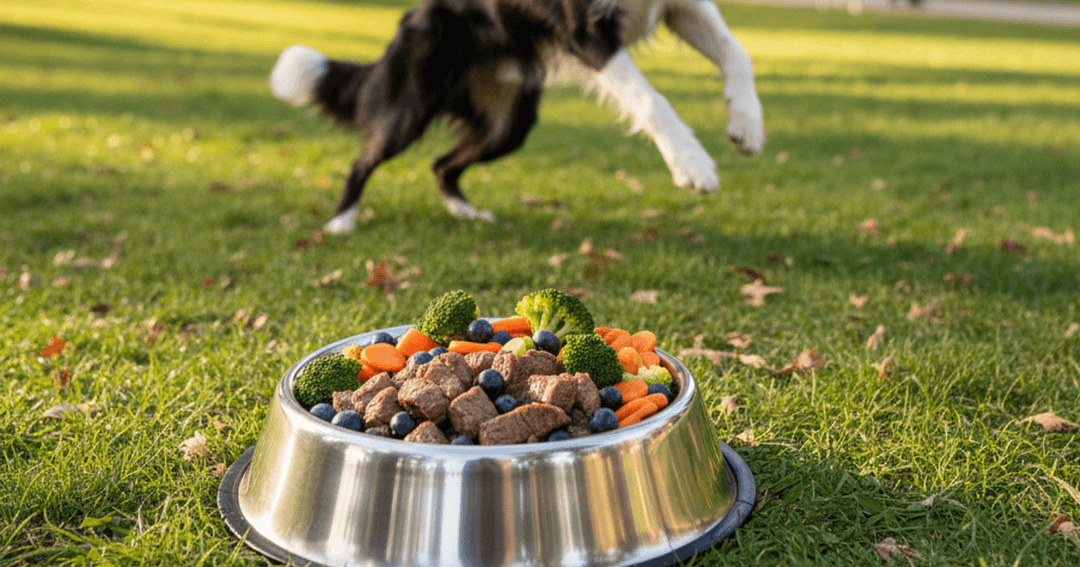
Dry food. Easy to measure, affordable, and commonly used.
Wet food. Contains more moisture and is usually more appealing to dogs.
Raw diet. High in protein but requires careful planning.
Feeding Based on Lifestyle
- Active dogs need more calories because they burn more energy.
- Indoor or less active dogs need fewer calories.
- Working dogs require a high-protein, high-energy diet.
Special Cases
- Pregnant dogs require increased calorie intake. The Dog Pregnancy Calculator can help you track her gestation timeline so you know when to step portions up.
- Sick dogs need a diet recommended by a veterinarian.
- Overweight dogs require controlled feeding and calorie reduction, and the Dog Feeding Calculator — Weight Loss Mode builds in a more conservative deficit than just cutting portions blindly.
Common Feeding Mistakes
Many dog owners make simple mistakes such as:
- Guessing portion sizes
- Feeding table scraps
- Leaving food out all day
- Not adjusting diet with age
- Ignoring calorie content
Important Tip
Different dog foods have different calorie levels. One cup of one brand may not be equal to another. Always check the calorie information on the packaging.
Feeding your dog correctly is one of the most important parts of responsible pet ownership. Instead of guessing, rely on accurate data and monitor your dog regularly.
→ Use the Dog Food Calculator