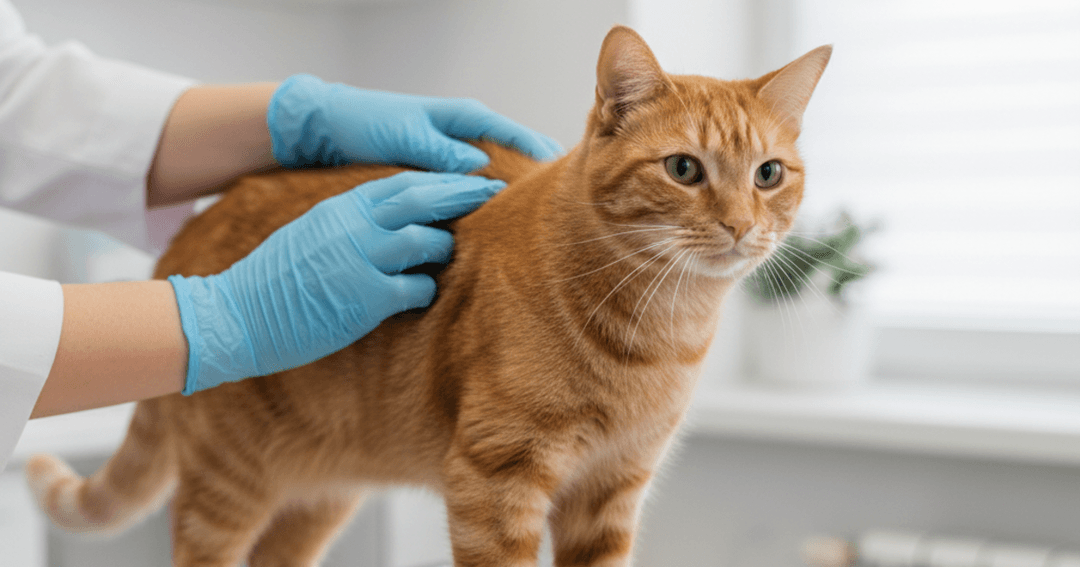
Cat weight loss is not the same as dog weight loss or human weight loss. The physiology is different in one specific way that makes this topic genuinely dangerous if handled incorrectly: crash dieting in cats causes hepatic lipidosis — fatty liver disease — which can be fatal.
This isn't a distant, unlikely risk. A cat that goes from overeating to significantly restricted calories — even for 48–72 hours — can begin mobilising fat reserves to the liver faster than the liver can process them. The liver backs up with fat deposits, fails progressively, and the cat becomes sicker, eats less, which accelerates the cycle.
The practical consequence: cat weight loss must be slow. Deliberately, intentionally, boringly slow. The target is 0.5–1% of body weight per week, not per month, not per day. For a 14-pound cat, that's roughly 1–1.4 ounces per week. At that rate, reaching a healthy 10-pound target takes 6–9 months. That timeline is correct and non-negotiable.
Why Cats Get Fat
The mechanism is simple but worth understanding because it determines the solution.
Domestic cats are obligate carnivores whose ancestral diet was small prey — mice, birds, voles — with each meal averaging around 30 calories. They evolved eating multiple small meals throughout the day. Commercial cat food, especially dry kibble left in a bowl, delivers food continuously in a format far higher in carbohydrates than a cat's ancestral diet and with none of the hunting effort that preceded each meal.
The predictable result: cats eat more calories than they expend, gain weight, become less active, which reduces caloric expenditure further, which makes weight management harder.
Three specific factors that drive feline obesity:
Free feeding (ad libitum): A cat with continuous access to food typically eats more than it needs. Cats can self-regulate on wet food reasonably well; they tend not to self-regulate on dry kibble, which is calorically dense and highly palatable.
Spay/neuter: Neutered cats have lower resting energy requirements than intact cats — somewhere around 20–30% lower. A cat fed on pre-neuter intake after neutering gains weight predictably. Most owners don't adjust food quantities post-neutering, and the weight accumulates gradually over years.
Indoor-only lifestyle: Less opportunity for the natural movement that outdoor access provides. Indoor cats that don't receive active play or enrichment often become sedentary.
Age: Middle-aged and senior cats have progressively lower metabolisms. A food quantity that maintained a healthy weight at age 3 may produce gradual weight gain by age 8 with no other changes.
Calculating the Safe Calorie Target
The standard veterinary formula for feline weight loss:
Step 1: Determine ideal body weight Not current weight — ideal weight. For most domestic cats, healthy adult weight ranges from 8–10 lbs (3.6–4.5 kg), varying by sex, bone structure, and breed. Your vet can confirm the target weight from body condition score assessment. Using current weight for the calculation maintains the overweight state; you need the target.
Step 2: Calculate RER at ideal weight RER (kcal/day) = 70 × (ideal weight in kg)^0.75
For a cat whose target weight is 4.5 kg (10 lbs): RER = 70 × (4.5)^0.75 = 70 × 3.34 = 234 kcal/day
Step 3: Apply a weight loss multiplier For safe feline weight loss, feed at 80% of RER calculated at ideal weight: 234 × 0.8 = 187 kcal/day
This is the starting daily calorie target. The PawCalculator Cat Weight Loss Calculator runs this calculation automatically — enter your cat's current weight, target weight, age, and activity level.
Step 4: Convert to food portions Divide the calorie target by the kcal/cup (or kcal per can, or per gram) of your chosen food. This number is on every cat food label or the manufacturer's website. Different foods have dramatically different caloric density — a wet food might be 100 kcal per 3 oz can; a dry food might be 380–420 kcal per cup. Measure accurately.
Reducing Calories Without Triggering Hepatic Lipidosis
The hepatic lipidosis risk is real from the starting line. The approach:
Never reduce more than 20% of current calories in a single step. If your cat currently eats 300 kcal/day, don't drop straight to 187 kcal. Drop to 240 first, hold for 2 weeks, then to 210, hold for 2 weeks, then to the target. This gradual reduction gives the body time to adjust its fat mobilisation rate.
Don't start a weight loss programme during any illness or stress period. A cat that's already eating less due to illness, dental pain, a new pet, or a house move has elevated hepatic lipidosis risk before you add calorie restriction. Get the stressor resolved or managed first.
Set a floor. No cat should be fed below 60 kcal per kg of current body weight per day during weight loss — this represents the practical minimum below which hepatic lipidosis risk becomes clinically significant. Calculate this floor before starting; if your target calorie figure is below it, the target is too aggressive.
Watch for appetite disappearance. An overweight cat that suddenly stops eating during a weight loss programme is not showing compliance — it's showing a problem. Loss of appetite in a dieting overweight cat should trigger a vet visit within 24 hours.
Food Format: Wet vs Dry for Weight Loss
Wet food has meaningful advantages for feline weight loss:
Volume vs calories. Wet food is 75–85% water. A cat eating a 3 oz can at 100 kcal gets a much larger physical volume of food than the same calories from kibble. Volume contributes to satiety signals even if the caloric content is identical. This is one reason cats on calorie-restricted dry food diets often remain hungry in ways that make compliance difficult.
Protein proportion. Wet foods tend to have higher protein-to-calorie ratios than dry foods. During weight loss, maintaining protein intake is critical to preserve lean muscle mass — the same concern as in dogs and humans. A cat losing weight on a high-protein wet food diet loses more fat and less muscle than one on a high-carbohydrate dry food diet.
Moisture intake. Weight loss in cats on dry food diets often produces concentrated urine, which increases urinary crystal and stone risk. Wet food's moisture content reduces this risk during the calorie restriction period.
The practical approach: switch primary feeding to wet food during weight loss, with dry food eliminated or used only as a very small portion of the daily calorie budget.
Feeding Frequency During Weight Loss
Multiple small meals work better than one or two large ones, for two reasons:
- Smaller meals spread throughout the day reduce peak appetite and associated food-seeking behaviour, making calorie restriction easier to maintain
- Smaller meals reduce the risk of the cat skipping a meal entirely (which is where hepatic lipidosis risk begins)
Ideal: 3–4 small meals per day from a measured daily total. Automatic feeders set at regular intervals make this manageable for working households.
If the cat vocalises between meals — and they will, because calorie restriction reliably causes cats to ask for more food — the meal schedule holds. The cat is not sick; it is hungry and has learned that vocalising produces food. Capitulating to this pattern undoes the programme.
The Role of Play and Activity
Exercise directly contributes modestly to cat weight loss — a few additional calories per session. The caloric expenditure from cat play is modest compared to the deficit created by diet. Don't rely on exercise to do the work of calorie restriction.
What play does contribute meaningfully: muscle mass preservation during weight loss. Cats that engage in active play during a weight loss programme retain more lean muscle than sedentary cats on the same calorie restriction. Active muscle tissue is metabolically valuable — preserving it produces a better compositional outcome even when the scale shows the same number.
Two 10-minute interactive play sessions per day is a realistic target for most cats. Wand toys, feather toys, anything that activates the prey drive and produces sustained running or jumping. Build this into the routine from the start of the weight loss programme, not as an afterthought.
Monitoring Progress
Monthly weigh-ins, not daily. Daily weight fluctuates too much to be informative and creates anxiety for owners. Monthly captures the trend.
Target rate: 0.5–1% body weight per week. For a 14-pound cat, 1.1–1.4 oz per week. After one month, the cat should have lost approximately 5–6 oz. If losing faster than this, increase calories slightly — rapid weight loss increases hepatic lipidosis risk. If not losing after 4 weeks at the calculated calorie target, reduce by a further 5–10% and recheck.
Body condition score alongside scale weight. A cat can lose weight that shows on the scale while losing muscle mass rather than fat — a bad outcome. Monthly BCS assessment (can be done by the vet at check-ins, or with practice at home) confirms whether the loss is compositional improvement or lean mass loss.
If the cat stops eating for more than 24 hours: stop the programme immediately and see a vet. Appetite loss during calorie restriction is the red flag for hepatic lipidosis beginning. Do not wait to see if it resolves.
Multi-Cat Households: The Logistics Problem
The hardest part of cat weight loss for many owners is practical: how do you restrict one cat's intake when another cat has different needs?
Approaches that work:
Microchip feeders: These open only for the cat whose microchip they're programmed to recognise. One cat gets its restricted ration; the other gets its normal amount. Works well if both cats eat in the same area.
Separate feeding locations: Feed the dieting cat in a room with the door closed, the non-dieting cat elsewhere. Works if the cats tolerate spatial separation without stress.
Elevated feeding stations: A food bowl on a high surface that only the lighter cat can reach — works if the weight differential creates an access difference. Often impractical in multi-cat households where the cats are close in size.
Scheduled meals: If the whole household shifts to scheduled meals (no free feeding), the dieting cat gets its allocated ration and nothing else. The other cat gets its portion and nothing else. Both cats are present at mealtimes but each has a separate measured bowl. Requires that neither cat eats the other's food — not always achievable with determined food thieves.
The microchip feeder solution is the most reliable for households where individual feeding control is otherwise difficult.
When to Involve the Vet
Weight loss in cats is ideally done with veterinary involvement, not as a solo owner project. A vet visit before starting should establish:
- Baseline body condition score and ideal target weight
- Bloodwork to confirm no thyroid, diabetic, or other metabolic condition is contributing to weight gain
- A starting calorie target reviewed by someone with clinical context for this specific cat
Follow-up every 4–6 weeks during active weight loss allows the vet to assess progress, identify early signs of problem, and adjust the programme.
Use the Cat Weight Loss Calculator to start with a calorie target, then confirm that target with your vet before implementing it.
Use the Cat Weight Loss Calculator for a personalised daily calorie target, and share the output with your vet to confirm the plan before starting.
Partner picks for this guide
As an Awin affiliate, Paw Calculator may earn a commission from qualifying purchases. Prices and availability can change.


Frequently asked questions
PawCalculator Editorial
We combine veterinary references, published guidelines, and calculator-grade modeling. This article is for education, not a substitute for an exam.
+ Follow on PawTalk