Step-by-step instructions, result explanations, breed-size reference tables, and extended answers — use alongside the calculator above.
How to Use the Dog Food Calculator
Getting an accurate result takes less than a minute. Here is exactly what each field means and how to fill it correctly.
Step 1 — Enter your dog's current weight in pounds. Use your dog's actual weight, not an estimate. If you do not have a recent weight, most vet clinics will weigh your dog for free. For overweight dogs, use your vet's recommended target weight instead of the current weight — this prevents the calculator from recommending portions that maintain excess weight.
Step 2 — Select your dog's breed (optional but recommended). Different breeds have different metabolic rates. A Greyhound burns calories faster than a Bulldog at the same weight. When you select a breed, the calculator applies a breed-specific metabolic adjustment to the DER multiplier, making your result more accurate than a generic weight-only calculation.
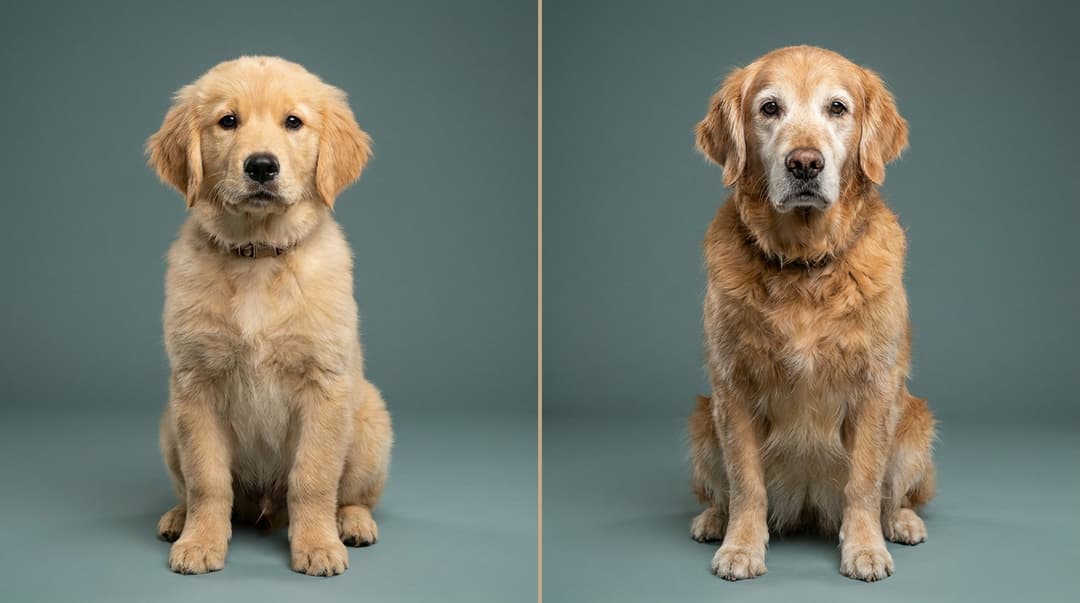
Step 3 — Choose your dog's life stage. This is one of the most important inputs. Puppies need 2–3x more calories per kilogram than adult dogs to support bone growth and organ development. Senior dogs need 20–30% fewer calories due to reduced muscle mass and slower metabolism. Selecting the wrong life stage will produce a significantly incorrect result.
Step 4 — Select spayed or neutered status. Spayed and neutered dogs have lower energy requirements than intact dogs — typically 15–20% lower. This is because sex hormones influence metabolic rate. If your dog is intact, leave this unchecked.
Step 5 — Choose activity level. Be honest here. Most owners overestimate their dog's activity. Low means mostly indoor with short toilet walks. Moderate means one or two 30-minute walks daily. High means running, hiking, agility, or working dog duties. Choosing High when your dog is actually Moderate will overfeed by 20–30%.
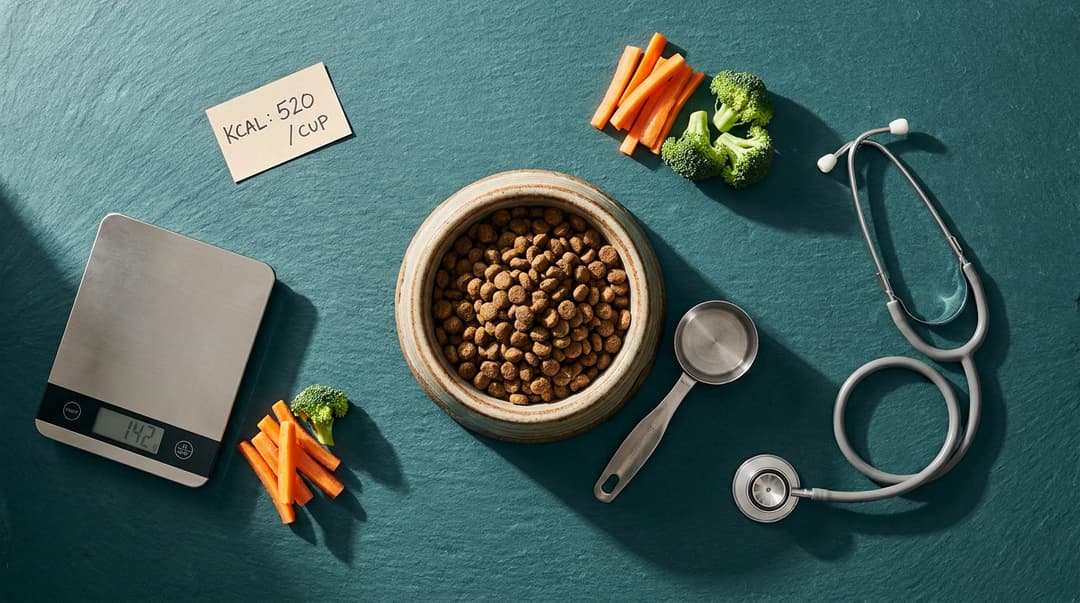
Step 6 — Enter your food's kcal per cup. This is printed on the back of every dog food bag, usually near the guaranteed analysis. It is the single most important number for accuracy. The default of 350 kcal/cup is an industry average — your food may be 280 or 420. Using the wrong number throws off the cup measurement even when the calorie target is correct.
Step 7 — Click Calculate. Your daily portion appears in both cups and grams, split across your chosen meal schedule. Download the PDF to keep it handy or share it with a dog sitter.
Understanding Your Results
The calculator outputs three numbers: RER, DER, and your daily portion. Here is what each means and why it matters.
RER — Resting Energy Requirement. This is the number of calories your dog needs at complete rest — just to breathe, circulate blood, and maintain organ function. It is calculated using the NRC formula endorsed by veterinary nutritionists worldwide: RER = 70 × (body weight in kg)0.75. For a 20kg dog this equals approximately 674 kcal. This number does not change based on activity — it is your dog's baseline metabolic floor.
DER — Daily Energy Requirement. This is RER multiplied by a life stage and activity factor. The multiplier accounts for everything on top of baseline: movement, growth, reproduction, age-related slowdown. A moderately active adult dog has a DER multiplier of approximately 1.6, meaning their daily calorie need is RER × 1.6. A growing puppy under 4 months uses a multiplier of 3.0. A working sled dog can reach 8.0. Your DER is the actual calorie target your food portions must hit.
Daily portion in cups. This is DER divided by the kcal-per-cup value of your specific food. If your dog needs 900 kcal and your food has 360 kcal/cup, the result is 2.5 cups. Splitting this across two meals gives 1.25 cups per meal. If your food's kcal/cup is different from the default, always update it — a difference of 50 kcal/cup across a year adds up to significant over or underfeeding.
Why your result might differ from the bag's feeding guide. Dog food bags show feeding guides based on average dogs at average activity. They do not account for neuter status, breed metabolism, or life stage beyond broad categories. Studies show bag guides overestimate portions by 15–25% on average for indoor adult dogs. The RER/DER formula is more accurate for your specific dog.
What to do if your dog gains or loses weight on the recommended portion. The calculator gives a starting point. Monitor your dog's body condition score over four weeks. If ribs become hard to feel, reduce by 10%. If ribs become prominent, increase by 10%. Adjust in small increments and reassess monthly.
Feeding Guide by Breed Size
Daily calorie needs vary significantly by size, life stage, and activity. Use this table as a reference alongside your calculator result.
Small breeds have faster metabolisms relative to body weight. They burn more calories per kilogram than large breeds. Toy breeds in particular are prone to hypoglycemia if underfed — never reduce below the RER floor without vet guidance.
Medium Breeds (10–25 kg / 22–55 lbs)
Examples: Beagle, Cocker Spaniel, Border Collie, Australian Shepherd, Whippet
Weight
Neutered Adult
Intact Adult
Active Adult
Puppy (4–12 mo)
Senior
10 kg
560 kcal
640 kcal
755 kcal
1,235 kcal
475 kcal
15 kg
750 kcal
855 kcal
1,010 kcal
1,650 kcal
640 kcal
20 kg
925 kcal
1,055 kcal
1,245 kcal
2,035 kcal
785 kcal
25 kg
1,090 kcal
1,245 kcal
1,470 kcal
2,400 kcal
925 kcal
Medium breeds are the most common weight category and the most often misfed. Beagles in particular are notorious for acting hungry regardless of portion size — use the calculator result, not the dog's behaviour, as your guide.
Large Breeds (25–45 kg / 55–100 lbs)
Examples: Labrador Retriever, Golden Retriever, German Shepherd, Boxer, Siberian Husky
Weight
Neutered Adult
Intact Adult
Active Adult
Puppy (4–12 mo)
Senior
30 kg
1,245 kcal
1,420 kcal
1,675 kcal
2,735 kcal
1,055 kcal
35 kg
1,390 kcal
1,590 kcal
1,875 kcal
3,060 kcal
1,180 kcal
40 kg
1,535 kcal
1,750 kcal
2,065 kcal
3,375 kcal
1,300 kcal
45 kg
1,670 kcal
1,910 kcal
2,250 kcal
3,680 kcal
1,420 kcal
Large breed puppies require special attention. While their calorie needs are high, excess calcium and rapid growth increase the risk of developmental orthopedic disease. Use a large-breed puppy formula and keep growth steady rather than fast.
Giant Breeds (over 45 kg / 100 lbs)
Examples: Great Dane, Saint Bernard, Newfoundland, Irish Wolfhound, Mastiff
Weight
Neutered Adult
Intact Adult
Active Adult
Senior
50 kg
1,800 kcal
2,060 kcal
2,430 kcal
1,530 kcal
60 kg
2,055 kcal
2,350 kcal
2,775 kcal
1,745 kcal
70 kg
2,300 kcal
2,630 kcal
3,105 kcal
1,955 kcal
80 kg
2,540 kcal
2,905 kcal
3,430 kcal
2,160 kcal
Giant breeds have slower metabolisms relative to body weight compared to small breeds. They also age faster — a Great Dane is considered senior at 5 years. Giant breed puppies should never be fed to appetite as rapid weight gain directly increases joint stress and the risk of bloat.
By Food Type — Approximate Cup Equivalents at 900 kcal Target
Always check your specific food's kcal/cup on the packaging. Do not use the table above as a substitute — use it only to sanity-check your result.
Food Type
Typical kcal/cup or 100g
Approx. Amount for 900 kcal
Dry kibble (standard)
320–380 kcal/cup
2.4–2.8 cups
Dry kibble (high density)
400–450 kcal/cup
2.0–2.25 cups
Wet food (canned)
80–100 kcal/100g
900–1,125g
Raw (BARF)
120–180 kcal/100g
500–750g
Homemade (mixed)
Varies widely
Use kcal count from recipe
Frequently asked
Questions about this calculator
It uses the same RER × DER formulas vets use. The math is exact; the inputs are estimates. For most healthy adult dogs, you should be within ±10% of true requirements — well within normal variation.
How we calculate
The math, openly documented.
01
Inputs
Weight, breed, life stage, activity, neuter status — only what changes the math.
weight = 42 lbs
activity = "moderate"
02
Resting (RER)
NRC formula for resting calorie burn.
RER = 70 × (kg^0.75)
    ≈ 633 kcal
03
Daily (DER)
RER × activity and life-stage factor.
DER = RER × factor
    ≈ daily kcal
04
Output
Convert to cups, grams, and meal split.
cups ≈ DER ÷ kcal/cup
meals = 2 × g/2
Safety check
What to never feed your dog
Even tiny amounts can be fatal. If your dog ingested any of these, call your vet or the ASPCA poison line (888-426-4435) immediately.