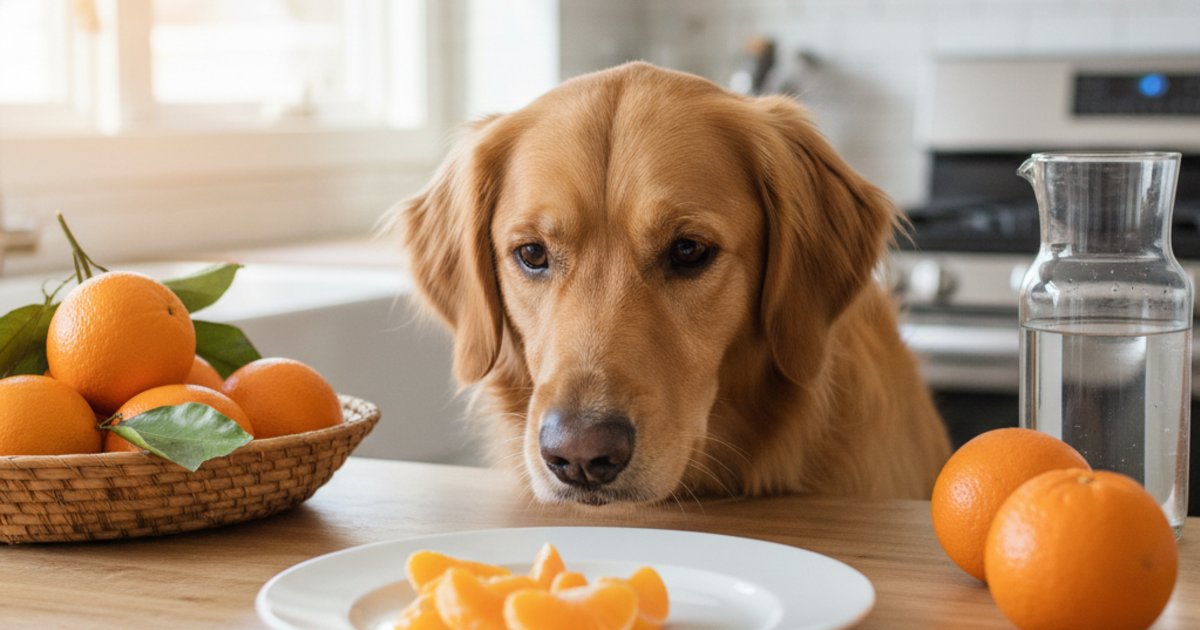
Yes, most dogs can eat a few peeled orange segments. Remove the peel, the white pith and the seeds, offer small portions, and skip orange juice, marmalade and candied peel. Oranges aren't toxic, but they're acidic and sugary, so they suit a rare treat, and dogs with diabetes should only have them with vet approval.
Oranges and other citrus fruits cause a lot of confusion for dog owners, because some citrus parts (peel, leaves, seeds and essential oils) can upset a dog's stomach, while the flesh is generally fine. Many dogs also simply dislike the smell. This guide explains what's safe, how much to give and what to avoid. Check other foods in our food safety checker.
Are oranges good for dogs?
A medium orange (about 130 g) has roughly 62 kcal, 15 g of carbohydrate (12 g sugar) and 3 g of fiber. It also provides:
- Vitamin C, which dogs make themselves, so they don't need extra.
- Potassium and folate in small amounts.
- Fiber, mostly in the membranes.
- Water, about 86% of the fruit.
Oranges are a pleasant, low-fat treat, but they aren't a health booster for dogs. Giving a dog extra vitamin C from oranges won't prevent colds or fix any health problem.
Peel, pith, seeds and leaves
- Peel: tough, bitter and hard to digest. It contains essential oils (like limonene) that can irritate the stomach and, in larger amounts, cause vomiting and diarrhea. A swallowed piece can also contribute to a blockage in small dogs.
- Pith: the white stringy layer isn't toxic, but it's bitter and can upset some stomachs.
- Seeds: small, contain trace compounds you don't need to risk, and can be a minor choking hazard. Remove them.
- Leaves and stems: contain oils and compounds that can be toxic in larger amounts.
How much orange can a dog eat?
Treats should stay at around 10% of daily calories. A mandarin-size segment (about 10 g) has roughly 5 kcal.
| Dog size | Weight | Portion |
|---|---|---|
| Toy | Under 10 lb (4.5 kg) | A small piece of one segment |
| Small | 10-25 lb (4.5-11 kg) | 1 segment |
| Medium | 25-50 lb (11-23 kg) | 1-2 segments |
| Large | 50-90 lb (23-41 kg) | 2-3 segments |
| Giant | Over 90 lb (41 kg) | 3-4 segments |
Too much can cause gas, diarrhea or vomiting. Offer it occasionally and watch the next stool.
Worked example
Meet Milo, a neutered 8 kg (17.6 lb) dog.
- RER: 70 × 8^0.75 = 70 × 4.76 = about 333 kcal.
- Daily calories at 1.6 × RER: about 530 kcal.
- Treat allowance at 10%: about 53 kcal.
- One 10 g segment: about 5 kcal, which is about 9% of his allowance.
- Result: a segment is a modest treat in calorie terms. If Milo also gets training treats and a chew, stick to one piece.
Work out your dog's treat allowance with the dog calorie calculator.
Oranges vs mandarins, tangerines and clementines
Mandarins, tangerines and clementines are similar to oranges in what's safe: peel, seeds and pith should be removed, and the flesh is fine in small amounts. They're smaller and usually sweeter, so portion by segment. Lemons and limes are much more acidic, and many dogs react badly to them, so skip those. Grapefruit contains compounds that can irritate the stomach, and the peel and seeds can be more problematic. Avoid it.
Orange products to avoid
- Orange juice: concentrated sugar with no fiber, and some juices contain added sugar.
- Marmalade, jam and orange sauce.
- Candied or sugar-coated orange peel.
- Orange-flavored candy and drinks: sugar and possibly xylitol.
- Essential oil products and cleaners containing citrus oils: limonene and other oils can irritate a dog's skin and airways, and ingestion can be harmful.
- Orange cake and desserts: sugar, fat, chocolate and dried fruit.
Who should be careful?
- Dogs with diabetes: orange sugar needs vet input.
- Dogs with acid reflux, frequent vomiting or sensitive stomachs: citrus acidity may worsen signs.
- Dogs with kidney disease: ask your vet about potassium.
- Overweight dogs: choose cucumber, carrot or green beans.
- Puppies: a tiny piece is fine, but keep treats small.
Why some dogs hate citrus
Dogs have a powerful sense of smell, and citrus oils smell intense to them. Many dogs avoid oranges on their own. If your dog turns away, don't push it. Citrus peel is sometimes used as a deterrent to keep dogs out of certain areas, but evidence is mixed and it shouldn't replace fencing or training.
When to call your vet
Call your vet if your dog has repeated vomiting, diarrhea longer than a day, drooling, lethargy or belly pain after eating orange, or if your dog swallowed a large amount of peel or seeds. For suspected toxic ingestion, such as citrus essential oils or products containing xylitol: ASPCA Animal Poison Control Center, 888-426-4435; Pet Poison Helpline, 855-764-7661.
Frequently asked questions
PawCalculator Editorial
We combine veterinary references, published guidelines, and calculator-grade modeling. This article is for education, not a substitute for an exam.
+ Follow on PawTalk