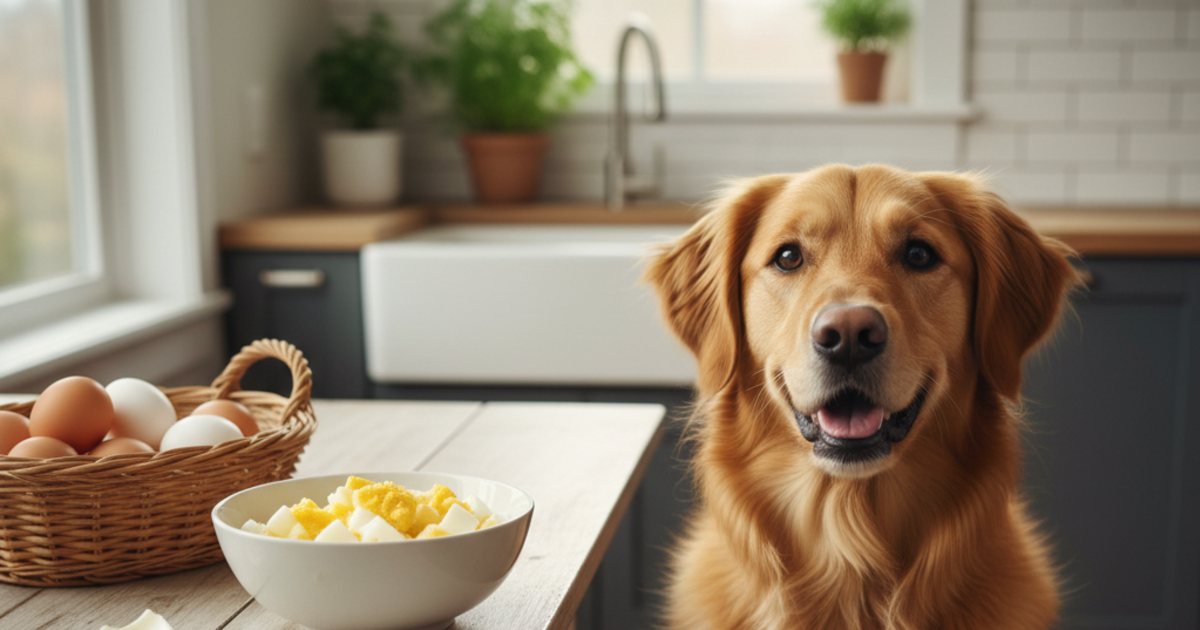
Yes, plain cooked eggs are a safe, protein-rich treat for most dogs. Skip raw eggs, avoid butter, oil, salt and seasoning, and count the roughly 72 kcal in a large egg toward the 10% treat limit. Eggs are calorie-dense for small dogs, so portion by size and offer them a few times a week at most.
Eggs are one of the most popular "human food" toppers for picky eaters, and they're a real nutrition bargain: complete protein, vitamins and minerals in a small package. But eggs are also rich, and the way they're cooked changes everything. This guide covers the benefits, the raw egg debate, eggshells, portions by size and when to skip them. Check other foods in our food safety checker.
Are eggs good for dogs?
A large cooked egg (about 50 g) has roughly 72 kcal, 6 g of protein and 5 g of fat. Eggs provide:
- High-quality protein with a complete amino acid profile.
- Riboflavin, vitamin B12, folate and other B vitamins.
- Selenium, iodine and iron.
- Choline, important for brain and liver function.
- Vitamin A, vitamin D and vitamin E in small amounts.
Dogs on a complete and balanced diet don't need eggs, but they make a nutritious addition for healthy dogs, and a small piece is a well-liked reward. Their main drawback is calorie density for small dogs.
Cooked vs raw eggs
- Cooked (boiled, poached, scrambled in a dry non-stick pan): best. Cooking destroys Salmonella and makes the protein easier to digest.
- Raw: not recommended. Raw eggs can carry Salmonella and other bacteria, which can sicken dogs and the people who handle the eggs. Raw egg white also contains avidin, which binds biotin (vitamin B7). A large, regular amount of raw whites could contribute to a biotin deficiency over time, although cooked eggs don't pose this problem.
- Fried in oil or butter, or with bacon, cheese, salt, onion, garlic or chives: avoid. Fat, salt and alliums are all concerns.
- Egg dishes like quiche, omelets with fillings and egg salad: check every ingredient.
Eggshells: should dogs eat them?
Eggshell powder is sometimes suggested as a natural calcium source, but it's not needed on a complete diet, and too much calcium can be harmful, especially to puppies and large breeds, where excess calcium can interfere with bone development. Sharp shell pieces can also irritate the mouth and gut. Unless your vet or a veterinary nutritionist specifically recommends eggshell powder in a formulated homemade diet, skip the shells.
How much egg can a dog eat?
Keep eggs within the 10% treat allowance and offer them a few times a week, not daily.
| Dog size | Weight | Portion |
|---|---|---|
| Toy | Under 10 lb (4.5 kg) | About a quarter egg |
| Small | 10-25 lb (4.5-11 kg) | About half an egg |
| Medium | 25-50 lb (11-23 kg) | Up to 1 egg |
| Large | 50-90 lb (23-41 kg) | Up to 1 egg |
| Giant | Over 90 lb (41 kg) | 1 egg, occasionally 2 |
Worked example
Meet Penny, a spayed 5 kg (11 lb) dog.
- RER: 70 × 5^0.75 = 70 × 3.34 = about 234 kcal.
- Daily calories at 1.6 × RER: about 375 kcal.
- Treat allowance at 10%: about 37 kcal.
- A whole large egg (72 kcal): about 195% of her allowance, so far too much for one day.
- A quarter egg (about 18 kcal): about 49% of her allowance. That's a reasonable portion, and she should have few other treats that day.
Now Ranger, a 25 kg (55 lb) dog: RER 782 kcal, daily need about 1,250 kcal, treat allowance about 125 kcal. A whole egg is 72 kcal, about 58% of his allowance. Same food, very different impact. Use the dog calorie calculator to set your own dog's number.
Serving ideas
- Hard-boiled and chopped as a topper.
- Scrambled dry in a non-stick pan with no fat.
- Mashed into a lick mat for a slow, calming treat.
- A small piece as a pill pocket.
Let eggs cool before serving, and refrigerate leftovers and use them within 2-3 days.
Who should be careful?
- Dogs with pancreatitis, obesity or high blood fat: eggs are rich; ask your vet.
- Dogs with egg allergy: watch for itching, hives, face swelling, ear problems or digestive upset.
- Dogs with kidney disease: protein and phosphorus need vet guidance.
- Puppies: a small bite is fine, but avoid making it routine.
When to call your vet
Call your vet if your dog has repeated vomiting, diarrhea longer than a day, belly pain, itchiness, hives or facial swelling after eating egg. Call urgently for trouble breathing. If your dog ate eggs prepared with onion, garlic or chives, or ate a large amount of raw egg with signs of illness, contact your vet or poison control: ASPCA Animal Poison Control Center, 888-426-4435; Pet Poison Helpline, 855-764-7661.
Frequently asked questions
PawCalculator Editorial
We combine veterinary references, published guidelines, and calculator-grade modeling. This article is for education, not a substitute for an exam.
+ Follow on PawTalk