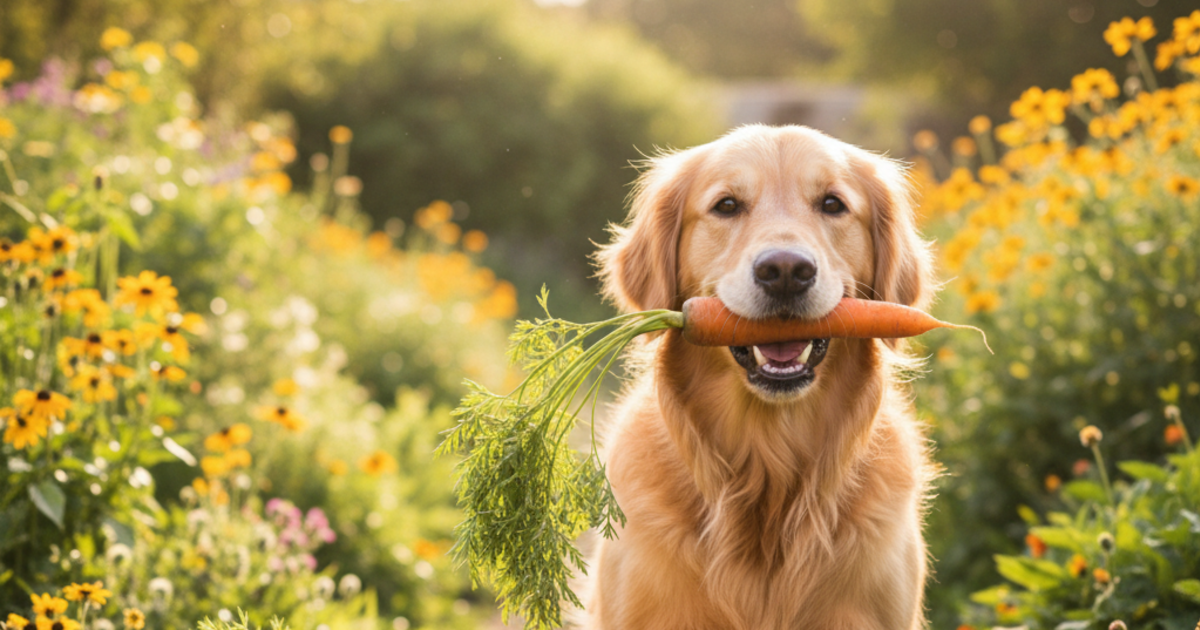
Yes, carrots are a safe, low-calorie treat for dogs, raw or cooked. Cut them to a safe size to prevent choking, keep them within the 10% treat limit and skip glazed, buttered or seasoned carrots. Raw carrots are crunchy and satisfying, while cooked carrots are easier to digest for small dogs and seniors.
Carrots are crunchy, cheap and about 41 kcal per 100 g, which is why they show up on nearly every list of dog-safe vegetables. They're a genuinely good treat, with a few caveats about size, sugar and preparation. Check other foods in our food safety checker.
Are carrots good for dogs?
Raw carrots are roughly 88% water and provide:
- Beta-carotene, which the body converts to vitamin A for vision, skin and immune health.
- Fiber, about 2.8 g per 100 g, which supports digestion.
- Potassium and vitamin K.
- Natural sugars, about 4.7 g per 100 g, which are modest.
The idea that carrots "clean teeth" is partly true: chewing a hard carrot may scrape off a little plaque. It isn't a substitute for tooth brushing, dental chews approved by the VOHC or veterinary dental care.
Dogs don't need carrots nutritionally, but they're a healthy, low-fat swap for higher-calorie biscuits.
Raw vs cooked carrots
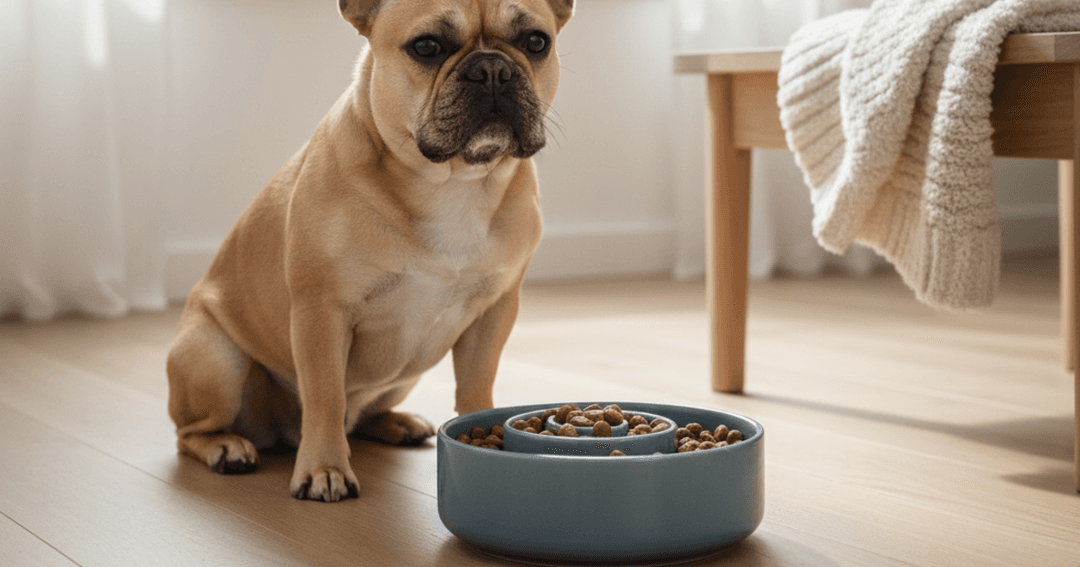
- Raw: crunchy and satisfying, and the crunch slows a fast eater. They're harder to digest and a choking risk if pieces are large or hard.
- Steamed or boiled (plain): softer and easier to chew and digest, which suits small dogs, seniors and dogs with dental problems. Cooking also makes beta-carotene easier to absorb.
- Avoid: glazed carrots, butter, oil, salt, garlic, onion, honey, brown sugar and seasoning.
Choking-safe cuts
- Toy and small dogs: grate carrot, or cut into thin coins or matchsticks.
- Medium dogs: thicker sticks, supervised.
- Large dogs: whole chilled carrots are fine under supervision, but take away the last small piece so it isn't swallowed whole.
- Puppies: frozen carrot sticks can soothe teething gums. Supervise closely and discard small remnants.
- Seniors: steam until soft.
How many carrots can a dog eat?
Treats should stay at around 10% of daily calories. A medium carrot (about 60 g) is roughly 25 kcal; a baby carrot (about 10 g) is about 4 kcal.
| Dog size | Weight | Portion |
|---|---|---|
| Toy | Under 10 lb (4.5 kg) | 1-2 baby-carrot pieces, chopped |
| Small | 10-25 lb (4.5-11 kg) | About 1 baby carrot |
| Medium | 25-50 lb (11-23 kg) | 1-2 baby carrots |
| Large | 50-90 lb (23-41 kg) | Up to 1 medium carrot |
| Giant | Over 90 lb (41 kg) | 1-2 medium carrots |
Too many carrots can cause gas or loose stool because of the fiber.
Worked example
Meet Moose, a neutered 25 kg (55 lb) dog.
- RER: 70 × 25^0.75 = 70 × 11.18 = about 782 kcal.
- Daily calories at 1.6 × RER: about 1,250 kcal.
- Treat allowance at 10%: about 125 kcal.
- One medium carrot (60 g): 60 × 0.41 = about 25 kcal.
- Result: 20% of his treat allowance, leaving about 100 kcal for other treats.
For a 5 kg dog with a treat allowance of about 37 kcal, a whole medium carrot would use about two thirds of the allowance, so half a carrot or a baby carrot is plenty. Use the dog calorie calculator for your own dog, and see the dog food calculator for weight loss if your dog needs to slim down.
Serving ideas
- Frozen carrot sticks as a summer chew.
- Shredded carrot mixed into regular food for a fiber boost.
- Steamed coins as a soft training reward.
- Mashed carrot in a lick mat.
- Homemade baked carrot chips with no oil or seasoning.
Skip store-bought "dog carrots" with added sugar or flavorings, and canned carrots in brine, which are high in sodium.
Carrot tops
Carrot greens aren't toxic and some people give small amounts. They can cause stomach upset, so most owners skip them.
Orange poop?
Large amounts of carrot can tint stool orange, which is harmless. See your vet if stool is black and tarry, bloody, or your dog seems unwell.
Who should be careful?
- Dogs with diabetes: carrots contain natural sugar; ask your vet.
- Dogs with pancreatitis or sensitive stomachs: start small.
- Dogs with dental disease: hard raw carrots may be uncomfortable, so steam them.
- Puppies: small amounts only.
When to call your vet
Call your vet if your dog is choking, gagging, has repeated vomiting or diarrhea, belly pain or no stool after eating carrots. If your dog ate carrots prepared with garlic, onion or xylitol, contact poison control: ASPCA Animal Poison Control Center, 888-426-4435; Pet Poison Helpline, 855-764-7661.
Frequently asked questions
PawCalculator Editorial
We combine veterinary references, published guidelines, and calculator-grade modeling. This article is for education, not a substitute for an exam.
+ Follow on PawTalk