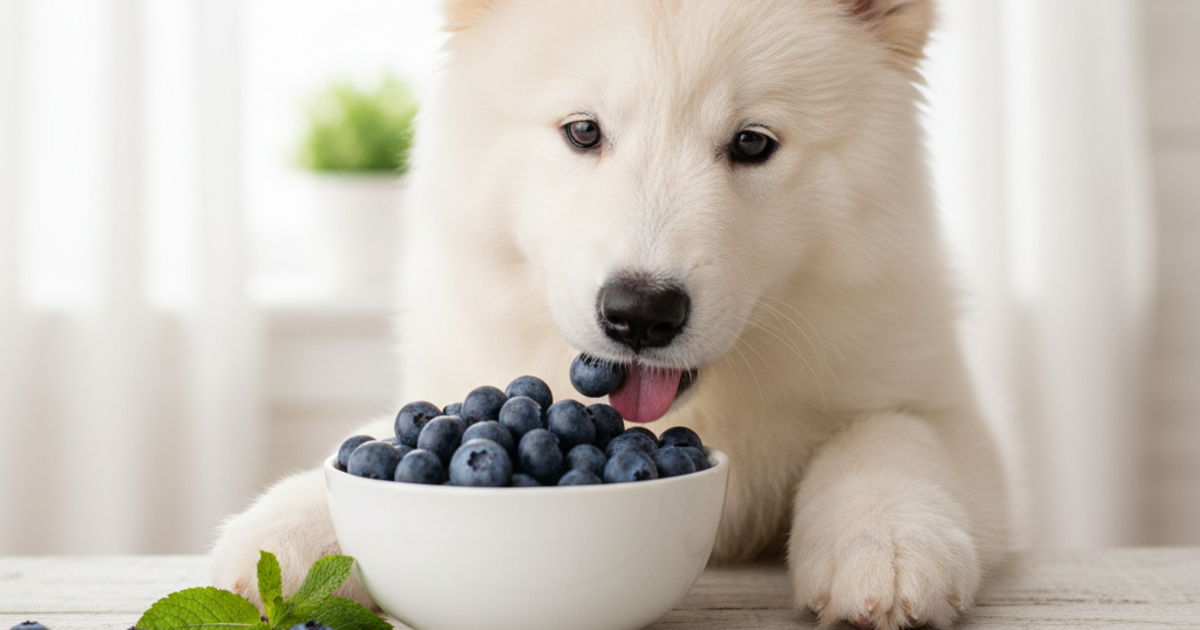
Yes, blueberries are a safe, low-calorie treat for dogs. Serve a few fresh or frozen berries (fewer for small dogs), keep them within the 10% treat limit, and avoid blueberry baked goods, sweetened dried berries and any product containing xylitol or chocolate.
Blueberries are small, sweet and need no preparation, which makes them one of the best fruit treats for training. Each berry weighs only a gram or two, so the calories are tiny. The main cautions are portion size, choking in very small dogs and the processed products made from them. Check other foods in our food safety checker.
Are blueberries good for dogs?
Blueberries have about 57 kcal per 100 g, roughly 84% water, and they provide:
- Anthocyanins, the antioxidants that give blueberries their color.
- Vitamin C and vitamin K in modest amounts.
- Fiber, about 2.4 g per 100 g.
- Manganese and small amounts of other minerals.
You'll see claims that blueberries "fight aging" or "boost the immune system" in dogs. The evidence in dogs specifically is limited. What's solid is that they're a healthy, low-fat swap for higher-calorie treats. Dogs don't need them nutritionally.
How many blueberries can a dog eat?
Treats should make up no more than about 10% of daily calories. One blueberry is roughly 1 kcal, so calories aren't the limit. Gas and loose stool are.
| Dog size | Weight | Portion per day |
|---|---|---|
| Toy | Under 10 lb (4.5 kg) | 2-3 berries |
| Small | 10-25 lb (4.5-11 kg) | 3-6 berries |
| Medium | 25-50 lb (11-23 kg) | 6-10 berries |
| Large | 50-90 lb (23-41 kg) | 10-15 berries |
| Giant | Over 90 lb (41 kg) | 15-20 berries |
These are upper limits for a treat day, not targets. Start with a few berries and watch the next stool.
Worked example: blueberries as training rewards
Meet Pip, a neutered 6 kg (13 lb) dog in a training class.
- RER: 70 × 6^0.75 = 70 × 3.83 = about 268 kcal.
- Daily calories at 1.6 × RER: about 430 kcal.
- Treat allowance at 10%: about 43 kcal.
- A 30-minute class using 20 blueberries: about 20-25 kcal.
- Compare: 20 pea-sized commercial training treats at about 3 kcal each would be 60 kcal, which is 140% of Pip's allowance.
That's the real benefit: blueberries let you reward generously without pushing calories over the line. Work out your dog's allowance with the dog calorie calculator.
Fresh, frozen or dried?
- Fresh: ideal. Rinse first.
- Frozen: a cold, crunchy summer treat. For very small dogs, halve the berries, because a hard frozen berry can be a choking risk.
- Freeze-dried: fine in small amounts, but concentrated, and they swell with moisture.
- Dried (like raisins): concentrated sugar and calories. Avoid sweetened varieties. Never confuse dried blueberries with raisins, which are toxic.
- Canned blueberries in syrup and pie filling: too sugary.
Blueberry products to avoid
- Muffins, pancakes, pie and other baked goods: sugar, fat, and often butter, chocolate chips, raisins or xylitol.
- Blueberry yogurt and smoothies: added sugar, and sometimes artificial sweeteners.
- Jam and sauce.
- Supplements and "blueberry treats" with unknown ingredients. Check labels.
What about other berries?
- Strawberries, raspberries and blackberries: generally fine in small amounts. Raspberries contain a small natural amount of xylitol, so keep portions to a few berries.
- Cranberries: small amounts are fine, but sweetened dried cranberries aren't.
- Holly berries, mistletoe berries, juniper berries, baneberries and pokeweed: toxic. Keep dogs away from wild berries and garden shrubs.
If you aren't sure what your dog ate outdoors, call poison control right away with a photo of the plant.
Who should be careful?
- Dogs with diabetes: blueberries have natural sugar; ask your vet how to count them.
- Dogs with a sensitive stomach or pancreatitis history: start with one or two.
- Overweight dogs: blueberries are a fine low-calorie reward but still count.
- Puppies: a few berries are okay in addition to complete puppy food.
What about blue poop?
Blueberries can tint stool dark blue, green or black. That's harmless. See your vet if stool is tarry and black without blueberries involved, if there's blood, or if your dog seems unwell, because black, tarry stool can signal bleeding higher in the gut.
When to call your vet
Call your vet if your dog has repeated vomiting, diarrhea longer than a day, belly swelling or lethargy. Call immediately if your dog ate a blueberry baked good containing chocolate, raisins or xylitol, or ate wild berries you can't identify. ASPCA Animal Poison Control Center: 888-426-4435. Pet Poison Helpline: 855-764-7661.
Frequently asked questions
PawCalculator Editorial
We combine veterinary references, published guidelines, and calculator-grade modeling. This article is for education, not a substitute for an exam.
+ Follow on PawTalk