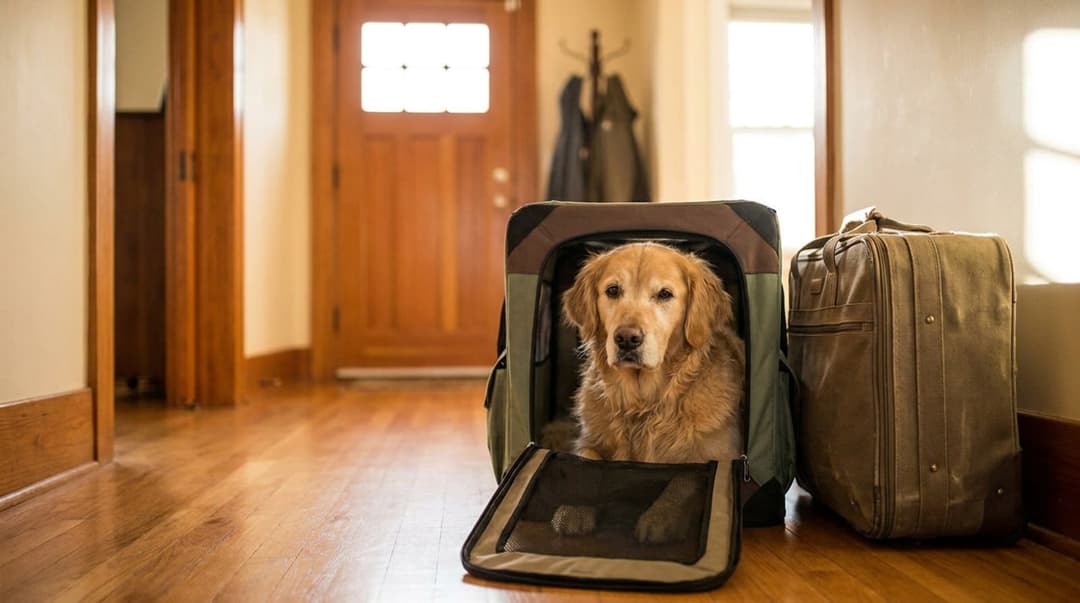
Pet Travel Estimator
Costs and logistics for flying or long-distance trips with pets.
Weight determines cabin eligibility and carrier requirements
In-cabin fees are typically charged per flight segment, each direction. Book your pet when you purchase your ticket — spots are limited.
- Pet + carrier must weigh less than 20 lbs total
- Carrier must fit under the seat
- Health certificate from veterinarian (within 10 days of travel)
- Current vaccinations required
- Pet may be too large for cabin travel - consider cargo
- Book pet travel when booking your ticket
- Arrive at airport early for pet check-in
- Bring familiar items for comfort
- Consider travel insurance for pets
Keep going with a related calculator.
How to Use the Pet Travel Estimator
Step 1 — Select pet type: Dog or Cat. Dogs and cats have different travel requirements, carrier specifications, and documentation needs. Some destinations have species-specific entry requirements — Hawaii, for example, has a rigorous rabies quarantine programme for dogs that does not apply the same way to cats. The calculator applies species-appropriate cost baselines and flags relevant documentation requirements.
Step 2 — Enter your pet's weight. Weight is the single most important factor in determining how your pet travels. Most airlines allow pets in the cabin if the pet plus carrier combined weight is under 15–20 lbs (6.8–9kg). Pets over this threshold must travel as checked baggage or cargo. Weight also determines carrier size requirements, which affects both cost and comfort. Weigh your pet plus their travel carrier together before booking — many owners are surprised to find their pet exceeds cabin limits once the carrier is included.
Step 3 — Select travel type: Domestic or International. Domestic travel within the same country involves minimal paperwork — typically just a health certificate from a vet within 10 days of travel. International travel adds significant complexity and cost: import permits, country-specific vaccination requirements, microchip verification, rabies titre testing (which can take months), and in some cases mandatory quarantine. International pet travel to countries like the UK, Australia, New Zealand, Japan, and Hawaii requires planning 3–6 months in advance minimum.
Step 4 — Select travel method: Cabin or Cargo. In-cabin travel keeps your pet with you in the passenger cabin in an approved soft-sided carrier under the seat. It is available only for small pets within weight limits, costs $95–$150 per flight segment on most US airlines, and is significantly less stressful for most animals. Cargo travel places your pet in a temperature-controlled hold in an IATA-approved hard-sided crate. It costs $200–$600 for domestic flights and $500–$2,000+ for international. Some breeds — particularly brachycephalic dogs and cats — are banned from cargo travel by most airlines due to respiratory risk. Size the kennel with our Dog Crate Size Calculator (home and IATA airline modes).
Step 5 — Click Calculate Travel Costs. Your estimate shows airline fees, required documentation costs, carrier requirements, and a total trip cost range. For international travel the estimate includes health certificate, import permit, and titre testing costs where applicable.
Understanding Your Results
Why the estimate is a range, not a fixed number. Pet travel costs vary by airline, route, season, and destination country requirements. The low estimate assumes a straightforward trip with no complications — correct carrier dimensions, valid health certificate, no quarantine requirements. The high estimate accounts for: last-minute health certificate from a specialist vet, IATA-approved crate purchase, pet-friendly hotel surcharges, and one rebooking fee if travel dates change. Budget to the high end — surprises in pet travel are almost always more expensive, not less.
Health certificate requirements. Almost all domestic air travel and all international travel requires a Certificate of Veterinary Inspection (CVI) — a health certificate signed by a licensed vet within 10 days of departure. Some countries require the certificate to be endorsed by your national veterinary authority (USDA APHIS in the US) adding $38–$100 and 2–5 business days. Some destinations require an Accredited Veterinarian for the endorsement. Factor this into your timeline — do not book non-refundable flights before confirming your vet can provide the correct documentation on the required timeline.
Microchip requirements. The EU, UK, and most developed countries require pets to have an ISO 11784/11785 compliant microchip (15-digit) before entry. US microchips are often 10-digit and may not be readable by international scanners. If your pet travels internationally and has a 10-digit chip, have a 15-digit ISO chip implanted well in advance of travel — this must be done before any rabies vaccination used for titre testing counts. The order matters: chip first, then vaccine, then titre test.
Rabies titre testing for international travel. Travelling to rabies-free destinations — UK, EU, Japan, Australia, New Zealand, Hawaii — requires proof that your pet's rabies vaccination produced adequate antibodies. This involves a blood test at an approved laboratory, which takes 2–4 weeks for results. If the titre passes, most countries then require a waiting period of 3 months before entry is permitted. This means international travel to these destinations requires a minimum of 3–4 months planning from the titre test appointment. The test costs $150–$300 plus the lab processing fee.
Brachycephalic breed travel restrictions. Most major airlines ban brachycephalic (flat-faced) breeds from cargo travel due to the elevated risk of respiratory distress in the hold environment. Affected breeds include French Bulldogs, English Bulldogs, Pugs, Boston Terriers, Boxers, Shih Tzus, Persian cats, and Himalayan cats. Some airlines also restrict these breeds from cabin travel in hot weather. If you own a brachycephalic breed, verify your specific airline's policy before booking — policies change and violations result in your pet being refused boarding at the gate with no refund.
Pet Travel Cost Reference Tables
Domestic Air Travel — US Airline Pet Fees 2026
| Airline | In-Cabin Fee (per segment) | Cargo Fee (domestic) | Cabin Weight Limit | Brachycephalic Policy |
|---|---|---|---|---|
| United Airlines | $125 | $275–$400 | 20 lbs (pet + carrier) | Restricted breeds banned from cargo |
| Delta | $125 | $200–$400 | 20 lbs | Banned from cargo May–Sep |
| American Airlines | $125 | $200–$400 | 20 lbs | Banned from cargo |
| Southwest | $95 | Not available | 20 lbs | Cabin only, limited breeds |
| Alaska Airlines | $100 | $100–$150 | 20 lbs | Restricted breeds banned from cargo |
| JetBlue | $125 | Not available | 20 lbs | Cabin only |
Fees are per one-way segment and are charged each direction. Round trip = 2× the fee shown. Always verify directly with the airline before booking — fees and policies change.
International Pet Travel — Cost by Destination Category
| Destination Category | Examples | Approx. Total Cost | Lead Time Required | Key Requirements |
|---|---|---|---|---|
| Low-restriction (US to Canada/Mexico) | Canada, Mexico | $200–$600 | 2–4 weeks | Health certificate, rabies vaccine |
| Moderate (US to EU) | France, Germany, Spain, Italy | $500–$1,500 | 4–6 months | ISO microchip, rabies titre, EU health cert, USDA endorsement |
| High-restriction (rabies-free islands) | UK, Ireland, Japan, Singapore | $800–$3,000 | 6–12 months | Titre test + 3-month wait, import permit, sometimes quarantine |
| Strictest (Australia, New Zealand) | Australia, New Zealand | $2,000–$8,000+ | 6–12 months | Quarantine mandatory (10 days Australia), extensive testing |
| Hawaii (domestic but quarantine rules) | Hawaii | $500–$2,000 | 3–6 months | Rabies titre, microchip, FAVN test, 5-day-or-less quarantine if compliant |
Full Cost Breakdown — Example Trips
| Trip | Pet Size | Method | Airline Fee | Health Cert | Carrier | Hotel Surcharge | Total Est. |
|---|---|---|---|---|---|---|---|
| NYC to LA (domestic, small dog) | 8 lbs | Cabin | $250 (r/t) | $75 | $0 (existing) | $50/night | $375+ |
| NYC to LA (domestic, 45 lb dog) | 45 lbs | Cargo | $550 (r/t) | $75 | $150 (IATA crate) | $50/night | $825+ |
| US to France | 10 lbs | Cabin | $300 (r/t) | $250 (USDA endorsed) | $80 | $30/night | $800–$1,200 |
| US to UK | 30 lbs | Cargo | $1,200 (r/t) | $350 (USDA + APHA) | $200 | $40/night | $2,500–$4,000 |
| US to Australia | 20 lbs | Cargo | $1,500 (r/t) | $500 | $200 | Quarantine: $2,000+ | $5,000–$8,000 |
Pet-Friendly Hotel Cost Surcharges — US 2026
| Hotel Category | Pet Fee Structure | Typical Cost | Notes |
|---|---|---|---|
| Budget chains (Motel 6, La Quinta) | Per stay flat fee | $10–$25 | Weight limits often 25–50 lbs |
| Mid-range (Holiday Inn, Marriott) | Per night fee | $25–$50/night | Most accept pets under 50 lbs |
| Boutique/independent | Varies widely | $0–$100/night | Some genuinely pet-free |
| Luxury chains | Per stay + damage deposit | $100–$300 deposit + $50–$150/night | Higher weight limits common |
| Vacation rentals (Airbnb, VRBO) | Per stay cleaning fee | $50–$200 | Filter specifically for pet-friendly |
Documents Checklist by Trip Type
| Document | Domestic US | US to EU | US to UK | US to Australia |
|---|---|---|---|---|
| Health certificate (CVI) | Required | Required | Required | Required |
| USDA APHIS endorsement | Not required | Required | Required | Required |
| ISO 15-digit microchip | Not required | Required | Required | Required |
| Rabies vaccination record | Recommended | Required | Required | Required |
| Rabies titre test (FAVN) | Not required | Required | Required | Required |
| Import permit | Not required | Not required | Required | Required |
| Tapeworm treatment record | Not required | Not required | Dogs only | Required |
| Quarantine booking | Not required | Not required | Not required | Mandatory |
Questions about this calculator
Domestic in-cabin: $190–$250 round trip in fees plus $50–$150 for a health certificate. Cargo for larger dogs: $200–$400 per segment. International: $800–$3,000+ depending on destination.
The math, openly documented.
Inputs
You enter the facts that change the estimate.
species · age · weight · lifestyle
Normalize
We validate ranges and convert units when needed.
lbs ↔ kg · months ↔ years
Formula
Published veterinary or industry-standard calculations.
result = f(valid inputs)
Results
Rounded outputs — schedules, ranges, or targets — with disclaimers.
display + notes
More from Lifestyle & care

Adoption Cost Calculator
First-year budgets — supplies, vet, food.
Open tool
Pet Transport Cost Calculator
Flying or ground shipping costs, with brachycephalic flags.
Open tool
Dog Walking Calculator
Distance and schedules by breed and age.
Open toolArticles from Insights



Got an edge case the calculator can't handle?
247 active threads about pet travel and transport. Verified vets and experienced owners answer within hours.